Blog

CORPORATE RESTRUCTURING: MERGERS AND ACQUISITIONS

CORPORATE RESTRUCTURING: MERGERS AND ACQUISITIONS

AUTHOR – MANTHANI MEDHA REDDY, STUDENT AT BENNETT UNIVERSITY

BEST CITATION – MANTHANI MEDHA REDDY, CORPORATE RESTRUCTURING: MERGERS AND ACQUISITIONS, Indian Journal of Legal Review (IJLR), 3 (2) of 2023, Pg. 266-274, APIS – 3920 – 0001 & ISSN – 2583-2344.

Abstract

The corporate world is evolving quickly in terms of science and technology, rivalry, goods, people, places, marketplaces, and clients. Keeping up with such enhancements is not enough; instead, firms must be creative and outperform their rivals so they can consistently maximize the value they offer shareholders. Inorganic development methods like mergers, acquisitions, reorganizations, and spin-offs are viewed as crucial tools that help businesses go into emerging markets, increase their client base, reduce opponents, strengthen, and expand rapidly, and use emerging technologies pertaining to their products, employees, and procedures. Corporate restructuring’s reach includes boosting economic growth (savings) and boosting effectiveness (profitability). A corporation must reorganize itself and put its focus on its edge in the market if it intends to expand or survive in a world of competition. The advantages that shareholders obtain from restructuring are less favorable than for corporations in their prior position. Despite the abundance of studies on corporate restructuring, research will either concentrate on the opinions of shareholders of corporate restructuring methods at organizations or the actual application of the approaches at those firms. By creating predictions of what to anticipate and ensuring the organization can get the financing necessary to execute those adjustments, the conclusions will also assist a company during the restructuring technique. In mergers and acquisitions (M&A), businesses combine their activities through an acquisition or transfer of ownership. M&A is a prevalent type of corporate restructuring. This paper will cover the advantages, difficulties, and strategies of corporate restructuring in mergers and acquisitions.


PUBLIC OPINION ON A BRIDGE BETWEEN STUDENTS AND EDUCATION

PUBLIC OPINION ON A BRIDGE BETWEEN STUDENTS AND EDUCATION

AUTHOR – THANGA SIVA .T & NIVITHRA .S, STUDENTS AT SAVEETHA SCHOOL OF LAW, SIMATS

BEST CITATION – THANGA SIVA .T & NIVITHRA .S, PUBLIC OPINION ON A BRIDGE BETWEEN STUDENTS AND EDUCATION, Indian Journal of Legal Review (IJLR), 3 (2) of 2023, Pg. 257-265, APIS – 3920 – 0001 & ISSN – 2583-2344.

Abstract

     This study identifies Language is a tool of communication. Communication entails much more than mere passing information. It involves conceptualization of objects and experiences, their identification and classification, argumentation and disputation about the nature, processes and relationship among objects, thoughts and expressions, and comprehension of the realities and rules governing them. The research was conceded among the people residing in developing areas because the influence of languages from rural-urban in some selected areas can be observed. It was carried out in Madurai, Chennai and Bangalore because the city has a massive amount of migrants from its nearby rural areas. Data was gathered by using online interview techniques so that correct and authentic information from the concerned people should be collected. The study reveals that language is the major reason for influencing education among established as well. They too have been in the line of striving for achieving the same aim. This study, however, gives out some new findings regarding languages and education. Language rights as a subset of human rights in an area of the world exhibiting particular linguistic diversity. Likewise, in the rural areas, the insufficient social ease and amenities are discouraged because of their conventional mode of lifestyle. The main route of information is gathered with the help of a set of questions through area research containing a set of questions that was designed according to Problems Faced by the People Who faced hardships in adopting various languages. To save cost and time and to maintain the cooperation and goodwill of the respondents; the questions were kept simple and straight to the point.

Keywords : Rural, Urban, Linguistic minority, Education, Language , Complexity

Blog

THE NEED FOR SPECIFIC LEGAL PROTECTION OF INTERSEX INDIVIDUALS IN INDIA: A GENDER THAT HAS WALKED THE EARTH AS LONG AS MAN BUT HAS REMAINED LARGELY INVISIBLE TO SOCIETY

AUTHOR – NIKARA LIESHA FERNANDEZ, STUDENT AT SCHOOL OF LAW, CHRIST (DEEMED TO BE UNIVERSITY), BANGALORE

Best Citation – NIKARA LIESHA FERNANDEZ, THE NEED FOR SPECIFIC LEGAL PROTECTION OF INTERSEX INDIVIDUALS IN INDIA: A GENDER THAT HAS WALKED THE EARTH AS LONG AS MAN BUT HAS REMAINED LARGELY INVISIBLE TO SOCIETY, Indian Journal of Legal Review (IJLR), 3 (2) of 2023, Pg. 167-181, APIS – 3920 – 0001 & ISSN – 2583-2344.

I. Introduction

Intersex is a term that many people are not familiar with as they do not come across it everyday lives. Even those who are familiar with the term seldom understand the true nature and intricacies that form a part of the lives of individuals who identify as intersex. While conducting the research for this paper, the researcher was shocked to find the dismal lack of information, especially from the Indian perspective, about intersex individuals. Internationally as well, it has only been in the last couple of decades that individuals identifying as ‘intersex’ have been more vocal about their plight and have tried to spearhead movements to fight for the recognition and protection of their rights. This lack of awareness of a largely invisible population is clearly visible in the reflection of the handful of countries that actually have laws protecting the rights of intersex individuals. It is saddening to note that India has no comprehensive legislative framework to adequately deal with the specific issues faced by intersex individuals. From the legislative standpoint, the Transgender Persons (Protection of Rights) Act, 2019 merely defines ‘person(s) with intersex variations’ once in its definition[1] section but makes no efforts to distinguish it from the term ‘transgender’, as a result of which the two are treated as one and the same. From a judicial standpoint as well, there have only been a few judgements that dabble around the topic of ‘intersex.’ The progressive and widely celebrated judgement in National Legal Services Authority v. Union of India[2], has no doubt made great progress for the transgender community, but on careful scrutiny, it can be seen that there has been no acknowledgement or action taken to allay the specific concerns of the intersex community. The lacunae in the aforementioned judgement were corrected with the recent case of Arunkumar v. Inspector General of Registration[3] wherein the judiciary took an active step in ordering the Tamil Nadu Government to prohibit medical interventions on intersex infants


[1] The Transgender Persons (Protection of Rights) Act 2019, s 2(i), No.40, Acts of Parliament, 2019 (India)

[2] National Legal Services Authority v. Union of India, (2014) 5 SCC 438 (hereinafter referred to as the NALSA judgement)

[3] Arunkumar v. Inspector General of Registration, 2019 SCC OnLine Mad 8779 (hereinafter referred to as the Arunkumar judgement)

INSIDER TRADING IN INDIA: COMPARATIVE ANALYSIS

INSIDER TRADING IN INDIA: COMPARATIVE ANALYSIS

Author – AAYUSH GUPTA, STUDENT AT BENNETT UNIVERSITY

Best Citation – AAYUSH GUPTA, INSIDER TRADING IN INDIA: COMPARATIVE ANALYSIS, Indian Journal of Legal Review (IJLR), 3 (2) of 2023, Pg. 156-166, APIS – 3920 – 0001 & ISSN – 2583-2344.

ABSTRACT

Insider trading is a controversial practice that involves trading securities based on material, non-public information. This comparative analysis aims to explore and compare the regulations, enforcement, and implications of insider trading in different jurisdictions. The analysis delves into the legal frameworks, key regulatory bodies, and landmark cases that have shaped the approach to combating insider trading in these regions. This research paper start with analysis of insider trading in India, with a focus on SEBI and  major cases related to insider trading in India. Then this research will compare the regulatory frameworks for insider trading in other jurisdictions, such as United States, European Union, and United Kingdom. Based on this comparison recommendation will be made on how to improve insider trading laws of India by identifying the challenges in enforcing such regulations in India.

AN OVERVIEW ON CHILD MARRIAGES IN INDIA

AN OVERVIEW ON CHILD MARRIAGES IN INDIA

Author– KHUSBU DEDAVAT, STUDENT AT THAKUR RAMNARYAN COLLEGE OF LAW, UNIVERSITY OF MUMBAI 

Best Citation – KHUSBU DEDAVAT, AN OVERVIEW ON CHILD MARRIAGES IN INDIA, Indian Journal of Legal Review (IJLR), 3 (2) of 2023, Pg. 150-155, APIS – 3920 – 0001 & ISSN – 2583-2344.

ABSTRACT

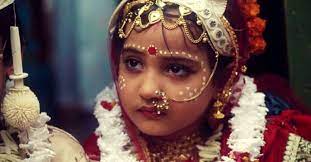
Marriage is one of the important thing but child marriage is not a legitimate thing to do as violating child right to marry her or him at early stage and taking away his childhood and also committing a crime of sexual offences as mentioned in POCSO Act, 2012. In this research will see how In India child marriage involved and who take action towards this child marriage made a major reform by Child Marriage Restraint Act, 1872 and subsequently ,The Child Marriage Restraint Act, 1929 and the final legislation of The Prohibition of Child Marriage Act ,2006 which is made since lastly with the increasing legal provisions to restrain child marriage will see in this article with all over in world wide the child marriage is supported to be banned by many organizations  by supporting and making law in many conference which will see in this article. And also the recent 2022 Issues on Child Marriage and how the law is applied and implemented in India by providing stringent fine on it.

KEYWORDS – Child Marriage, Prohibition, High Court Judgement, Child and Minor

PUBLIC OPINION ON CHEATING ON EXAMS 

PUBLIC OPINION ON CHEATING ON EXAMS 

AUTHORS – THANGA SIVA .T, STUDENT AT SAVEETHA SCHOOL OF LAW, SIMATS & DR. D. VEZHAVENTHAN, ASSISTANT PROFESSOR, SAVEETHA SCHOOL OF LAW, SIMATS.

Best Citation – THANGA SIVA .T & DR. D. VEZHAVENTHAN, PUBLIC OPINION ON CHEATING ON EXAMS, Indian Journal of Legal Review (IJLR), 3 (2) of 2023, Pg. 139-149, APIS – 3920 – 0001 & ISSN – 2583-2344.

Abstract

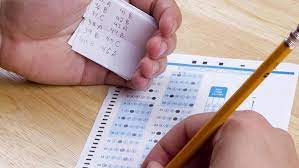
Cheating on the examinations is the one which is done due to the forces triggered by the peers.  Cheating during examinations defeats the purpose of understanding, applying and creating ideas as stipulated. This study discovered that friendship is manipulated, for it makes doing the right things unacceptable and things to be avoided like cheating seem right and acceptable. The behavior about cheating during examination is deeply rooted in the culture of social acceptance/liking and debt of gratitude. This paper then argues that honesty should not be just a policy; rather, honesty in this case, is the only policy. Condemning academic dishonesty must not merely rest in the enrollment forms, but by constant moral reminder and intervention of teachers who have a responsibility to hone learners’ decorum on honesty and maturity. Data was gathered by using online interview techniques so that correct and authentic information from the concerned people should be collected. The total sample size is 200. This study, however, gives out some new findings regarding both the pros and cons of comparison among students. The main route of information is gathered with the help of a set of questions through area research containing a set of questions that was designed according to Problems Faced by the adolescents as well as people who are being compared.

Keywords: academic cheating; examination; academic performance; friends, cheating practices; social connection.

PUBLIC OPINION ON IDEA OF DIGITALISING RURAL COMMUNITY

PUBLIC OPINION ON IDEA OF DIGITALISING RURAL COMMUNITY

AUTHOR – THANGA SIVA. T, STUDENT AT SAVEETHA SCHOOL OF LAW, SIMATS & DR. D. VEZHAVENTHAN, ASSISTANT PROFESSOR OF LAW, SAVEETHA SCHOOL OF LAW, SIMATS

BEST CITATION – THANGA SIVA. T & DR. D. VEZHAVENTHAN, PUBLIC OPINION ON IDEA OF DIGITALISING RURAL COMMUNITY, Indian Journal of Legal Review (IJLR), 3 (2) of 2023, Pg. 297-307, APIS – 3920 – 0001 & ISSN – 2583-2344.

Abstract

Today’s basic amenity is digital connectivity. The main aim of the Digital India Programme is to expand the digital infrastructure to connect the entire country and provide a digital platform for banking, governance, healthcare and educational services. Smart Villages are places where rural communities are empowered and are taking the initiative to find solutions to the challenges they face. Digitisation can be a powerful force for change – as long as it is adapted to the rural context and implemented with the involvement of rural communities themselves. The research was conceded in the same areas around the villages surrounding Madurai, Chennai and Bangalore because these areas have a massive amount of villages from its nearby rural areas. Data was gathered by using online interview techniques so that correct and authentic information from the concerned people should be collected. This study, however, gives out some new findings regarding the idea of digitalising rural communities. The main route of information is gathered with the help of a set of questions through area research containing a set of questions that was designed according to Problems Faced by the Rural People Who seems it difficult to get used to the technologies. To save cost and time and to maintain the cooperation and goodwill of the respondents; the questions were kept simple and straight to the point.

Keywords : Rural, Urban, Technologies, Education, Old age people, Difficulty

PROTECTION OF WOMEN AGAINST VOILENCE WITH SPECIAL REFRENCE TO INTERNATIONAL PERSPECTIVE

PROTECTION OF WOMEN AGAINST VOILENCE WITH SPECIAL REFRENCE TO INTERNATIONAL PERSPECTIVE

Author – ANITA VERMA, RESEARCH SCHOLAR AT AP GOYAL SHIMLA UNIVERSITY H.P

Best Citation – ANITA VERMA, PROTECTION OF WOMEN AGAINST VOILENCE WITH SPECIAL REFRENCE TO INTERNATIONAL PERSPECTIVE, Indian Journal of Legal Review (IJLR), 3 (2) of 2023, Pg. 126-132, APIS – 3920 – 0001 & ISSN – 2583-2344.

Abstract

Violence against women is defined as any act of gender-based violence that results in, or is likely to result in, physical, sexual or mental harm or suffering to women and girls, including threats of such acts, coercion or arbitrary deprivation of liberty, whether occurring in public or in private life. Domestic violence is a global issue reaching across national boundaries as well as socio-economic, cultural, racial and class distinctions. Domestic violence against women is an age-old phenomenon. Women were always considered weak, vulnerable and in a position to be exploited. Violence has long been accepted as something that happens to women. Cultural mores, religious practices, economic and political conditions may set the precedence for initiating and perpetuating domestic violence, but ultimately committing an act of violence is a choice that the individual makes out of a range of options. This problem is not only widely dispersed geographically, but its incidence is also extensive, making it a typical and accepted behaviour. Domestic violence is wide spread, deeply ingrained and has serious impacts on women’s health and well-being. Its continued existence is morally indefensible. The main aim of present research paper to know about the different international perspective of word Domestic violence against women and protect women through different conventions, declaration etc.

Keywords: Domestic Violence, Women, International, Act of Violence

THE CONSTITUTION AND REALITY OF THE GOVERNOR'S ROLE IN INDIA: AN EXAMINATION OF THE POWERS, DUTIES, AND RESPONSIBILITIES OF THE GOVERNOR

THE CONSTITUTION AND REALITY OF THE GOVERNOR’S ROLE IN INDIA: AN EXAMINATION OF THE POWERS, DUTIES, AND RESPONSIBILITIES OF THE GOVERNOR

Author – Ekshita Jain, Student at Christ (Deemed to be) University

Best Citation – Ekshita Jain, The Constitution and Reality of the Governor’s Role in India: An Examination of the Powers, Duties, and Responsibilities of the Governor, Indian Journal of Legal Review (IJLR), 3 (2) of 2023, Pg. 120-125, APIS – 3920 – 0001 & ISSN – 2583-2344.

Abstract

A controversial discussion about the governors’ discretionary power has been going on since the Indian Constitution was adopted. Being an unelected constitutional government member, the Governor’s Office has been caught in the middle of turmoil. According to the Constitution of India, the governor is responsible for maintaining law and order in the state, appointing the chief minister and other ministers, and ensuring the functioning of the state’s legislative and executive bodies. However, in the reality of Indian politics, the governor’s role and power can vary widely depending on various factors, such as the political composition of the state, the ruling party at the Centre, and the personal beliefs and biases of the governor. In some cases, governors may act as a mere rubber stamp for the ruling party at the Centre, while in others, they may exercise significant influence over the state’s politics. There are several instances of the Governor’s position being abused, frequently at the direction of the Centre’s ruling party. Typically, the appointment process is what causes it. In several instances, the central government has selected politicians and former bureaucrats who identify with a specific political ideology as governors. This violates the neutral seat required by the constitution and has led to bias, as it appears to have in Karnataka and Goa. President’s Rule (Article 356) recommendations from governors have sometimes been based on ‘objective facts,’ but rather on political whims or preferences. Hence, this paper analyses some of the issues pertaining to choosing the chief minister, determining when to demonstrate legislative majority, requesting information about daily operations, appearing to take a long time to assent to bills or reserving bills for the President, criticizing specific state government policies. Therefore, the methodology used in this paper is primarily analytical and supported by statistical data. There are a lot of recommendations and suggestions given by various commissions like Punchhi and Sarkaria to solve these kinds of issues coming up. The “Punchhi panel – 2010” advocated including a clause allowing the state assembly to remove the governor from office. The governor’s appointment should include input from the state’s top minister. The Sarkaria Commission advised against frequently using Article 365. Enhancing India’s federal system is necessary to stop gubernatorial abuse. The governor must exercise his discretion and personal judgment while acting responsibly, impartially, and effectively for the smooth operation of the government.

SOCIAL STOCK EXCHANGE: A GLOBAL PERSPECTIVE WITH INDIAN FEASIBILITY

SOCIAL STOCK EXCHANGE: A GLOBAL PERSPECTIVE WITH INDIAN FEASIBILITY

Authors – HIMAJA CHALLAPALLI & MAANASI PILLA, STUDENTS AT BENNETT UNIVERSITY

Best Citation – HIMAJA CHALLAPALLI & MAANASI PILLA, SOCIAL STOCK EXCHANGE: A GLOBAL PERSPECTIVE WITH INDIAN FEASIBILITY, Indian Journal of Legal Review (IJLR), 3 (2) of 2023, Pg. 107-119, APIS – 3920 – 0001 & ISSN – 2583-2344.

Abstract

In recent years, the idea of Social Stock Exchange (SSEs) has become more well-known as a way to support social enterprises and organizations with an impact.  Are stock exchanges that make it easier to trade shares issued by nonprofit organizations, social businesses, and other organizations with a social mission. A new generation of investors who are interested in social effects as well as financial profits may be drawn to since they have created new opportunities for socially conscious investing. With an emphasis on the viability of SSE in India under SEBI norms, this research study intends to understand what SSE is, and how they work and undertake a comparative analysis of SSE globally.

The paper’s structure broadly is as follows: The methodology of the study is described here and then a comprehensive case study on India. An outline of the SSE, including its features, and prospective effects, is given in this research paper. Then follows, an analysis of the major conclusions for each country SSE is presented. In order to make a comprehensive and informative comparison of SSE implemented world over including that of India’s, this study will explore and analyze their organizational frameworks, legal frameworks, and regulatory frameworks. Six SSE that had been implemented—or, in the case of India, newly established—in various countries were chosen for research. The report mostly uses secondary research.

The intention of this paper is to comprehend the idea of SSE and their history.

  • To assess international efforts related to SSE.
  • To venture into the advantages and disadvantages of SSE.
  • To delve into legal structure of SSE.
  • To determine whether social stock markets in India are feasible under SEBI regulations.
  • To offer advice on the challenges faced by SSE in India.