Blog

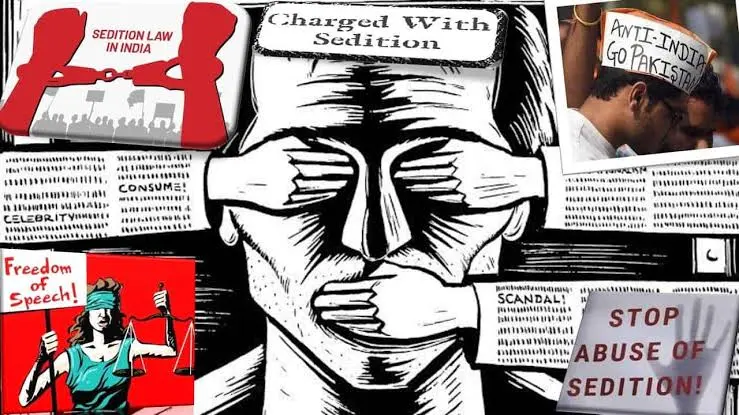
A COMPARATIVE ANALYSIS ON THE SEDITION LAW REGIME IN INDIA AND THE UNITED STATES

A COMPARATIVE ANALYSIS ON THE SEDITION LAW REGIME IN INDIA AND THE UNITED STATES

Author – ANINDYA BHAN, STUDENT AT CHRIST (DEEMED TO BE UNIVERSITY)

Best Citation – ANINDYA BHAN, A COMPARATIVE ANALYSIS ON THE SEDITION LAW REGIME IN INDIA AND THE UNITED STATES, Indian Journal of Legal Review (IJLR), 3 (2) of 2023, Pg. 100-106,  APIS – 3920 – 0001 & ISSN – 2583-2344.

ABSTRACT

All legislative and executive activities in India must comply with the provisions of the Constitution because it is the country’s supreme law. The most fundamental, inherent, and natural right that each man is endowed with from the moment of his birth is the right to free expression, which is protected by Article 19(1)(a). The most fundamental human right is therefore the freedom of speech and expression, whose restriction is a flagrant breach of human rights and cannot be permitted in any contemporary democratic government. Not always is the right to free speech guaranteed. By criminalising any kind of expression that incites hatred, contempt, or disaffection toward a legally created government in India, Section 124A of the Indian Penal Code, 1860 places restrictions on the right to freedom of speech and expression of the people. The punishment outlined in this section seems somewhat irrational considering that those found guilty under this part may get a life sentence. Its effectiveness in the contemporary democratic system is called into question as a result. There is constant discussion about the necessity and applicability of this clause in a democratic and independent India. There have been examples of the law of sedition being misused both before and after independence, which has raised major questions about whether such a legislation is necessary today. The First Amendment, on the other hand, guarantees the right to freedom of speech and expression in the USA, a country whose government is built on democratic principles. Despite having liberal and democratic beliefs, the US continues to have a sedition legislation, although the US Supreme Court has gradually limited its use over time.  The Sedition Act, passed in 1798, established sedition as a criminal offence for the first time in the US. This paper, revolves around the effort to analyse the current sedition statute in light of Article 19(1)(a) and seeks to determine if such a law is necessary in the current Indian context by doing a comparative analysis of the sedition laws in the United States.

Key Words: Sedition, Constitution of India, Comparative Public Law, US Constitution.

CASE COMMENTARY ON DR. RAM RAJ SINGH V. BABULAL (AIR 1982 ALL 285)

CASE COMMENTARY ON DR. RAM RAJ SINGH V. BABULAL (AIR 1982 ALL 285)

Author – GOWRI R NAIR, Student at MAR GREGORIOS COLLEGE OF LAW

Best Citation – GOWRI R NAIR, CASE COMMENTARY ON DR. RAM RAJ SINGH V. BABULAL (AIR 1982 ALL 285), Indian Journal of Legal Review (IJLR), 3 (2) of 2023, Pg. 95-99,  APIS – 3920 – 0001 & ISSN – 2583-2344.

ABSTRACT

The given case that is Dr. Ram Raj Singh v. Babulal is based on the principle known as “nuisance”. The word nuisance originates from the Latin word “nocumentum” of which the French equivalent is “nuisance” which means no more than harm. Nuisance as a tort means an unlawful interference with a plaintiff’s use or enjoyment of land without physically entering into one’s property that is without a direct act of trespass. The interference can be in any way. It can be noise, vibrations, heat, smoke, smell, fumes, water, gas, electricity, disease-producing germs e t c…. Nuisance as tort law protects the citizens against discomfort. Nuisance can be distinguished from trespass. Trespass is a direct physical interference with the plaintiff’s possession of land through some material or tangible objects. In nuisance, there is unlawful interference without entering into one’s property. For example, if one plants a tree on another person’s land it is trespass whereas, if one plants a tree on his land and the roots or branches from the tree grows into or over another person’s land then that is a nuisance.

THE IMPACT OF JUS SOLI AND JUS SANGUINIS ON THE CONDITION OF STATELESSNESS

THE IMPACT OF JUS SOLI AND JUS SANGUINIS ON THE CONDITION OF STATELESSNESS

Authors – PRAJAL JOSHI & SANYA SINGHAL, STUDENTS AT SYMBIOSIS LAW SCHOOL, HYDERABAD

Best Citation – PRAJAL JOSHI & SANYA SINGHAL, THE IMPACT OF JUS SOLI AND JUS SANGUINIS ON THE CONDITION OF STATELESSNESS, Indian Journal of Legal Review (IJLR), 3 (2) of 2023, Pg. 86-94,  APIS – 3920 – 0001 & ISSN – 2583-2344.

ABSTRACT

Humans as a species have always been curious about finding new territories and defending their existing beliefs and areas. This has led to many wars, communal disputes and other vices that lead to displacement of people and various problems such as Statelessness. It may also be caused by various discrimination which may be based on race or gender or religion of the people. According to a report by the United Nation Refugee Agency over 4.3 million people are stateless in 95 countries[1]. The problem was realised at an international scale after the world war and Convention on Reduction of Statelessness[2] was introduced by the United Nation where the different states agreed to reduce the cases of statelessness around the world. Countries and International organisations over the years have recognized the human rights of Stateless People and have conducted various awareness drives to increase awareness about the same. The object of the present research paper firstly is to see the impact of “Jus Soli and Jus Sanguinis” on statelessness. Secondly the research paper will also look at the current causes of statelessness around the world and give suggestions to prevent the same.

Keywords: Statelessness, Jus Soli, Jus Sanguinis, citizenship, UNHCR.


[1] UNHRC, https://www.unhcr.org/refugee-statistics/ (last visited April 3, 2023).

[2] Convention on the Reduction of Statelssness, 1961, 989 U.N.T.S 175.

CRITICAL ANALYSIS ON SUSTAINABLE DEVELOPMENT AS PER THE STOCKHOLM DECLARATION

CRITICAL ANALYSIS ON SUSTAINABLE DEVELOPMENT AS PER THE STOCKHOLM DECLARATION

Author – ISHITA JHA, STUDENT AT AMITY LAW SCHOOL, AMITY UNIVERSITY, UTTAR PRADESH

Best Citation – ISHITA JHA, CRITICAL ANALYSIS ON SUSTAINABLE DEVELOPMENT AS PER THE STOCKHOLM DECLARATION, Indian Journal of Legal Review (IJLR), 3 (2) of 2023, Pg. 78-85,  APIS – 3920 – 0001 & ISSN – 2583-2344.

ABSTRACT

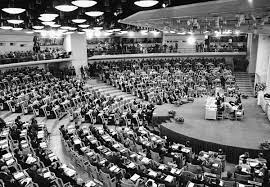
In this paper, we will be discussing the concept of sustainable development as per the Stockholm Declaration. This paper will conduct an in-depth study as to how and why did the concept of sustainable development emerge. We shall start the research paper by answering certain basic questions in brief as to what the role of the United Nations Environment Programme is, what is Stockholm Declaration, why was is required, what is sustainable development, etc. Once we understand the basics we shall move to the deeper analysis where we analyse the concept of sustainable development as per the Stockholm Declaration looking at it from a multidisciplinary viewpoint. Most of the nations were rapidly consuming and depleting their natural resources at an alarming rate which led to the international organisations taking strict actions to control the damage for not just the present generations but also using resources in a judicious manner so that they can be replenished and be used by the future generations as well. There were multiple other reasons that led to the development of sustainable development, we shall discuss them all in this paper.

COSMETICS INCLUDE HEAVY METALS: LAWS RELATED TO IT AROUND THE WORLD

COSMETICS INCLUDE HEAVY METALS: LAWS RELATED TO IT AROUND THE WORLD

AUTHOR – ANJANAH G J, STUDENT AT SASTRA DEEMED TO BE UNIVERSITY

Best Citation – ANJANAH G J, COSMETICS INCLUDE HEAVY METALS: LAWS RELATED TO IT AROUND THE WORLD, Indian Journal of Legal Review (IJLR), 3 (2) of 2023, Pg. 71-77, APIS – 3920 – 0001 & ISSN – 2583-2344.

ABSTRACT

Beauty creates an impression of an individual when someone meets or looks at him/her. Beauty is gender neutral but it is mostly women who fall for this trap of looking better than men. The picturization of women is always done in an imaginary way and in such way, she is depicted as beautiful. But it is often not imagined that she is also a human being, having hormonal secretion and whatever way she looks it’s just “her”. In order to attain of what is being picturized, the consumers fall for these cosmetic products. These products deceive the consumers by saying that they it is safe and will add various kinds of contaminants. One such contaminant being the heavy metals puts the health of the consumers in huge trouble and continuous use of which might even affect the nervous system, kidney system and even reproductive system of the human body[1]. The author in this paper has tried to explain the hazardous outcome which emanates along with the use of cosmetics including personal and hygiene care products. The paper also tries to throw light on the laws related to cosmetics enacted in India as well as major countries with similar or better regulations. This paper is majorly based upon the study conducted by the Centre for Science and Environment (CSE)[2] on Heavy Metals in Cosmetics, January 2014[3].

Keywords: Cosmetics Product, Heavy Metal, Drug and Cosmetics Act, 1940, ppm (parts per million), Coloring Agent


[1] (Kim et al., 2015Bocca et al., 2014Senesse et al., 2004Agoramoorthy et al., 2008Al Amry et al., 2011Smith et al., 2015) and also in “Evaluation of heavy metals in cosmetic products and their health risk assessment” by Hamna Arshad,Moniba Zahid MehmoodMunir Hussain Shah, and Arshad Mehmood Abbasi (https://www.ncbi.nlm.nih.gov/pmc/articles/PMC7335825/) (visited on 24.03.2023)

[2] Centre for Science and Environment (CSE) is a not-for-profit public interest research and advocacy organisation based in New Delhi, India. Established in 1980, CSE works as a think tank on environment-development issues in India, poor planning, climate shifts devastating India’s Sundarbans and advocates for policy changes and better implementation of the already existing policies. https://www.cseindia.org/ (Visited on 22.03.2023)

[3] Heavy Metals in Cosmetics, Investigators: Mr. Ramakant Sahu, Ms. Poornima Saxena and Dr. Sapna Johnson; PML/PR-45/2014 (https://cdn.cseindia.org/userfiles/Heavy_Metals_in_Cosmetics_Report.pdf) (Visited on: 26.03.2023)

INCLUSIVE JUSTICE: THE JUDICIARY'S RESPONSIBILITY IN ADVANCING THE MARRIAGE RIGHTS OF THE LGBTQ+ COMMUNITY

INCLUSIVE JUSTICE: THE JUDICIARY’S RESPONSIBILITY IN ADVANCING THE MARRIAGE RIGHTS OF THE LGBTQ+ COMMUNITY

Author – K R SPANDANA, STUDENT ATBENNETT UNIVERSITY

Best Citation – K R SPANDANA, INCLUSIVE JUSTICE: THE JUDICIARY’S RESPONSIBILITY IN ADVANCING THE MARRIAGE RIGHTS OF THE LGBTQ+ COMMUNITY, Indian Journal of Legal Review (IJLR), 3 (2) of 2023, Pg. 64-70, APIS – 3920 – 0001 & ISSN – 2583-2344.

ABSTRACT

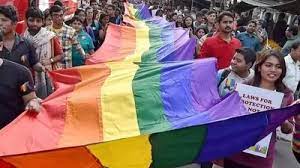
A culture such as India places a high level of significance on the institution of marriage. Over the course of many millennia, ceremonies have always been performed in the same approach. The idea that a man and a woman are united in some way by means of these rites carries with it a great deal of weight and import. The recognition of a category of people who have always been a part of society but were never accepted is evolving along with the shifting times. These are people who have always been a part of society but were never accepted. The desires and hopes of the members of the LGBTQ+ community to have the same level of recognition and treatment that is accorded to heterosexual people. A person’s desire to be legally and spiritually bound to their partner is something that they are still working hard to achieve.

THE CURRENT INDIAN FINTECH INDUSTRY: EXPLORING THE EXPANSION, CONFUSIONS, AND OPPORTUNITIES FOR MSME’S

THE CURRENT INDIAN FINTECH INDUSTRY: EXPLORING THE EXPANSION, CONFUSIONS, AND OPPORTUNITIES FOR MSME’S

Author – MUSKAAN AGGARWAL, Student at O. P. JINDAL GLOBAL UNIVERSITY

Best Citation – MUSKAAN AGGARWAL, THE CURRENT INDIAN FINTECH INDUSTRY: EXPLORING THE EXPANSION, CONFUSIONS, AND OPPORTUNITIES FOR MSME’S, Indian Journal of Legal Review (IJLR), 3 (2) of 2023, Pg. 53-63, APIS – 3920 – 0001 & ISSN – 2583-2344.

ABSTRACT

Over the years, access to finances has been one of the key issues faced by MSMEs, especially considering that the emerging companies lack a proper CIBIL score, or the required credit history, making it difficult for them to secure loans, especially through the traditional methods of Banking. Regulatory and privacy concerns continue to surround the growing plans of the sector, leading to a precarious situation of unclear regulations and frequent changes. While it might be argued that the precarious situation shall only pave way for a robust ecosystem of lending in India, however, it cannot be denied that the current stage of confusion is capable of having a negative effect on the growth of MSMEs, especially considering the various regulations that are coming in and going out related to digital lending.Therefore, this article shall aim to highlight the regulatory concerns with the current digital lending regime, especially in the context of MSMEs, considering that they shall be the first to bear the brunt of the unclear fintech landscape. The first part of the article shall provide a brief summary about the historical transformation from traditional lending to digital lending in India, through a discussion on the shortcomings of traditional lending and the advantages of digital lending. The second part shall discuss the growth of fintech industries and digital lending, along with a discussion on Budget 2023. The third part of the article shall discuss RBIs digital lending regulations. The fourth part shall discuss the concerns with the current regime of digital lending, and the last part shall provide some recommendations for the government to provide a suitable lending mechanism for MSMEs in India.

DEMAT ACCOUNT AS A TOOL FOR PREVENTING INSIDER TRADING: A LEGAL ASSESSMENT

DEMAT ACCOUNT AS A TOOL FOR PREVENTING INSIDER TRADING: A LEGAL ASSESSMENT

Author – KAMANDLA ABHIRAM, Student at Bennett University

Best Citation – KAMANDLA ABHIRAM, DEMAT ACCOUNT AS A TOOL FOR PREVENTING INSIDER TRADING: A LEGAL ASSESSMENT, Indian Journal of Legal Review (IJLR), 3 (2) of 2023, Pg. 44-52, APIS – 3920 – 0001 & ISSN – 2583-2344.

Abstract

Insider trading is a major concern for investors, regulators, and the general public. It undermines the integrity of the securities market and erodes public trust in the fairness of the market. In recent years, there has been a growing recognition of the role that Demat Accounts can play in preventing insider trading. This research paper aims to assess the legal framework surrounding the use of Demat Accounts as a tool for preventing insider trading in India.

The paper begins by providing a background on the concept of Demat Accounts and insider trading, and the legal framework governing them. It then examines the effectiveness of Demat Accounts in preventing and detecting insider trading, using case studies from India and other jurisdictions. The paper also analyses the legal implications of using Demat Accounts to prevent insider trading, including the regulatory framework and the rights of investors.Based on the analysis, the paper provides recommendations for strengthening the legal framework governing Demat Accounts to prevent insider trading. These recommendations include measures to enhance transparency, increase penalties for violators, and improve investor education. The paper concludes that Demat Accounts can be a powerful tool for preventing insider trading, but their effectiveness depends on the strength of the legal framework and the vigilance of regulators.

LIMITS OF “COMPLETE JUSTICE”: A CRITICAL APPRAISAL OF ARTICLE 142 OF INDIAN CONSTITUTION

LIMITS OF “COMPLETE JUSTICE”: A CRITICAL APPRAISAL OF ARTICLE 142 OF INDIAN CONSTITUTION

Authors – Avinsh Kumar & Jainendra Kumar Sharma, PG Students at The Indian Law Institute, New Delhi

Best Citation – Avinsh Kumar & Jainendra Kumar Sharma, LIMITS OF “COMPLETE JUSTICE”: A CRITICAL APPRAISAL OF ARTICLE 142 OF INDIAN CONSTITUTION, Indian Journal of Legal Review (IJLR), 3 (2) of 2023, Pg. 30-43, APIS – 3920 – 0001 & ISSN – 2583-2344.

ABSTRACT

“I incarnate myself to protect the righteous and destroy the wicked from age to age whenever there is decline of righteousness and rise of unrighteousness.

Shirimadbhagwatgeeta

The thought of conducting research on the true scope and limit of Article 142 was prompted by the highest court of India frequent invocation of its authority under this Article and the manner in which that authority is being exercised in the case ranging from Bhopal gas tragedy case[1]  to Ram Janmabhoomi case[2] and recently in A. G Perarivalan case[3] and irretrievable breakdown of marriage case[4].This item is now frequently used, despite the fact that its intended use was limited. The supreme court has directed a number of orders that violate the powers of the other two organs. The question of the theory of separation of powers has been brought into focus by this occurrence. This has raised questions regarding the Supreme Court’s actions’ legality. This point of view is used to examine the provisions of Article 142.The words “complete justice” and “justice” make up the phrase “complete justice. “The Dictionary defines “complete” as “having all necessary parts, elements, or steps or thorough or concluded,” whereas various jurist , scholar  and social scientists have interpreted and defined “justice” in a variety of ways. Plato puts it this way: Equity is a legitimate, amicable connection between the fighting pieces of the individual or city’. According to Hobbes and Rousseau, “justice” is the process of granting and safeguarding a person’s liberties and rights. The court has used this authority to issue a number of orders that invade the authority of the other two organs. The doctrine of separation of powers has come under scrutiny as a result of this phenomenon, casting doubt on the highest court actions. In this context the provision of Art. 142 is studied.

Keywords- Justice, Constitution, Court, Power, Rights.


[1] Union Carbide Corporation v. Union of India 1989 SCC (2) 540

[2]M SiddiqvsMahant Suresh Das &Ors 2019 SCC OnLine 1440,

[3]2022 SCC OnLine SC 755

[4]R.Srinivas Kumar vsR.Shametha

WORKERS OF THE DARK THAT NO ONE CARES ABOUT: THE STUDY OF THE SHAMED WOMEN IN THE CONTEXT OF THE INDIAN SOCIETY

WORKERS OF THE DARK THAT NO ONE CARES ABOUT: THE STUDY OF THE SHAMED WOMEN IN THE CONTEXT OF THE INDIAN SOCIETY

AUTHORS – SOURAV CHAKRABORTY & AMAN KUMAR, STUDENT AT CHRIST (DEEMED TO BE) UNIVERSITY

Best Citation – SOURAV CHAKRABORTY & AMAN KUMAR, WORKERS OF THE DARK THAT NO ONE CARES ABOUT: THE STUDY OF THE SHAMED WOMEN IN THE CONTEXT OF THE INDIAN SOCIETY, Indian Journal of Legal Review (IJLR), 3 (2) of 2023, Pg. 18-29, APIS – 3920 – 0001 & ISSN – 2583-2344.

ABSTRACT

In the beginning, the paper delves into the historical roots of prostitution in India, tracing its origins back to ancient scriptures and texts such as the Rig Veda, Sam Veda, Yajur Veda, Mahabharata, and Ramayana. It explores how prostitution, initially associated with beauty, entertainment, and art, gradually degraded value. The paper highlights the pivotal moment in history when the prominence and respectability of sex workers, known as devadasis, were abruptly shattered during British colonial rule. British officials began to exploit these women for sexual pleasure, leading to the degradation of their status and reputation within society. Examining the aspect of morality, the paper presents contrasting viewpoints. While some argue that prostitution commodifies human bodies and objectifies women, others contend that it is a legitimate form of work. The societal perception of prostitution as morally wrong stems from the belief that sexual intercourse can only occur within the confines of marriage. The paper explores the concept of public and private morality and the stigmatization and discrimination faced by them. Further ahead, the paper elaborates on the favouring arguments that justify the legalization of prostitution as a profession and Occupation. After that, the paper explains the critical legislation and statutory provisions which regulate prostitution in India. Lastly, it lists relevant landmark judgments of the Apex Court that further mutate the validity and regulation of Prostitution as a legalized profession.  Lastly, the paper explains the need to hear the plight of sex workers and work for their cause.