Blog

THE RISE OF RETAIL INVESTING: A GLOBAL PHENOMENON

THE RISE OF RETAIL INVESTING: A GLOBAL PHENOMENON

AUTHOR – ANSHUMAN SINGH*

STUDENT AT BENNETT UNIVERSITY

Best Citation – ANSHUMAN SINGH, THE RISE OF RETAIL INVESTING: A GLOBAL PHENOMENON, Indian Journal of Legal Review (IJLR), 3 (2) of 2023, Pg. 201-209, APIS – 3920 – 0001 & ISSN – 2583-2344.

Abstract

With the expansion of retail investment over the past ten years, the landscape of the financial industry has undergone a substantial change. The purpose of this research study is to examine the mechanisms behind this change and any ramifications it may have for the financial market, individual investors, and wealth distribution. The study uses a mixed-methods approach, combining qualitative interviews with individual retail investors with quantitative data analysis of financial market movements. Advances in technology, easier access to information, and the advent of zero-commission trading platforms are some of the main factors contributing to the growth of retail investing. These elements have opened up investing options to everyone, allowing for easy decision-making and market participation by private investors.This paper emphasises the potential advantages of the boom in retail investment, including improved financial knowledge, diversified portfolios, and wealth democratisation. However, it also discusses the possible risks, such as market volatility, information asymmetry, and retail investors’ propensity for manipulation and herd behaviour. The results of this study have important ramifications for financial institutions, governments, and individual investors. It emphasises the need of investor safety and financial literacy while simultaneously acknowledging the contribution of small-scale investors to the development of the financial industry. This study contributes to the continuing discussion concerning the development of the financial system and its effects on society by investigating the emergence of retail investment

RECENT PUBLICATION FROM INSTITUTE OF LEGAL EDUCATION (MAY BE USED FOR REFERENCE/BIBLIOGRAPHY)

  1. Prasanna, S., et al. EMPOWERMENT AND EQUALITY NAVIGATING HUMAN RIGHTS LAW IN A COMPLEX WORLD. Institute of Legal Education, 2023. Access Here – https://scholar.google.com/scholar?cluster=8073531615629308019
  2. PRASANNA, S., and P. LAVANYA. “NAVIGATING THE MAZE: UNDERSTANDING KEY DATA PRIVACY AND SECURITY LAWS WORLDWIDE.” Access Here – https://scholar.google.com/scholar?cluster=14275456488561985070
  3. Gopala, Bhagyamma. “A constitutional imperative for gender equality and dignity: a discourse on menstrual leave in India.” ILE Constitutional Review 2 (2023). Access Here – https://scholar.google.com/scholar?cluster=14542656713228494739
  4. Tulsyan, Aryan. “Cannabis and the constitution:’High time for amending the NDPS act?.” ILE Human Rights Law Review 1.1 (2022). Access Here – https://scholar.google.com/scholar?cluster=1620071720487117886
  5. SINGH, UJJWAL. “CUSTODIAL VIOLENCE IN MODERN INDIA.” Journal of the Indian Law Institute 36.3 (1994). Access Here – https://scholar.google.com/scholar?cluster=4641833531038214506
  6. Azizfan, Sayed Malik Shah. “A BLUEPRINT FOR SUSTAINABLE POVERTY ALLEVIATION AND UNEMPLOYMENT MITIGATION: SYNTHESIZING SOCIOECONOMIC TRANSFORMATION IN AFGHANISTAN.” Access Here – https://scholar.google.com/scholar?cluster=17585185253194219063
  7. PRASANNA, S., and P. LAVANYA. “PROTECTING PERSONAL DATA: A COMPREHENSIVE GUIDE TO DATA PRIVACY REGULATION.” Access Here – https://scholar.google.com/scholar?cluster=2736636049548842283
  8. PRASANNA, S., and P. LAVANYA. “NAVIGATING THE MAZE: UNDERSTANDING KEY DATA PRIVACY AND SECURITY LAWS WORLDWIDE.”. Access here – https://scholar.google.com/scholar?cluster=14275456488561985070
  9. PRASANNA, S., and P. LAVANYA. “DATA PRIVACY IN THE DIGITAL AGE: COMPLIANCE WITH INDIAN LAWS.”. Access Here – https://scholar.google.com/scholar?cluster=2482682029322735326
  10. SRIVASTAVA, AVANTIKA. “A CRITICAL ANALYSIS OF LAWS PERTAINING TO RAPE AND FALSE MARRIAGE PROMISES.” Access Here – https://scholar.google.com/scholar?cluster=15122870610367691037
  11. Abdurahim Zai, Mohammad Edris, and Naseebullah Amani. “The Impact of Green Supply Chain Management on Climate Change: Cursory Glance on the Food Industry.” International Environmental Legal Research Journal 1.1 (2023): 150-161. Access Here – https://scholar.google.com/scholar?cluster=9866710733130422173
  12. JAYAL, HARDIK, and SHREYA SINGH THAKUR. “A COMPREHENSIVE ANALYSIS REGARDING THE PRACTICE OF BONDED LABOUR IN INDIA.” Access Here – https://scholar.google.com/scholar?cluster=16247068770278814586


A JUDICIAL VICTORY FOR MOTHERHOOD: KARNATAKA HIGH COURT SUPPORTS A SINGLE MOM

A JUDICIAL VICTORY FOR MOTHERHOOD: KARNATAKA HIGH COURT SUPPORTS A SINGLE MOM

AUTHOR – SNIGDHA GHOSE*

STUDENT FROM GUJARAT NATIONAL LAW UNIVERSITY

Best Citation – SNIGDHA GHOSE, A JUDICIAL VICTORY FOR MOTHERHOOD: KARNATAKA HIGH COURT SUPPORTS A SINGLE MOM, Indian Journal of Legal Review (IJLR), 3 (2) of 2023, Pg. 210-212, APIS – 3920 – 0001 & ISSN – 2583-2344.

Abstract

This article is written with the intention of provoking contemplative discussions among policymakers in regard to the recent case of Ms. Nancy Nithya. It highlights the needs of single parents who face many problems even in their daily conduct due to the lack of properly laid rules and guidelines.

Keywords: Single mother, passport, family, legality, parenthood

RECENT PUBLICATION FROM INSTITUTE OF LEGAL EDUCATION (MAY BE USED FOR REFERENCE/BIBLIOGRAPHY)

  1. Prasanna, S., et al. EMPOWERMENT AND EQUALITY NAVIGATING HUMAN RIGHTS LAW IN A COMPLEX WORLD. Institute of Legal Education, 2023. Access Here – https://scholar.google.com/scholar?cluster=8073531615629308019
  2. PRASANNA, S., and P. LAVANYA. “NAVIGATING THE MAZE: UNDERSTANDING KEY DATA PRIVACY AND SECURITY LAWS WORLDWIDE.” Access Here – https://scholar.google.com/scholar?cluster=14275456488561985070
  3. Gopala, Bhagyamma. “A constitutional imperative for gender equality and dignity: a discourse on menstrual leave in India.” ILE Constitutional Review 2 (2023). Access Here – https://scholar.google.com/scholar?cluster=14542656713228494739
  4. Tulsyan, Aryan. “Cannabis and the constitution:’High time for amending the NDPS act?.” ILE Human Rights Law Review 1.1 (2022). Access Here – https://scholar.google.com/scholar?cluster=1620071720487117886
  5. SINGH, UJJWAL. “CUSTODIAL VIOLENCE IN MODERN INDIA.” Journal of the Indian Law Institute 36.3 (1994). Access Here – https://scholar.google.com/scholar?cluster=4641833531038214506
  6. Azizfan, Sayed Malik Shah. “A BLUEPRINT FOR SUSTAINABLE POVERTY ALLEVIATION AND UNEMPLOYMENT MITIGATION: SYNTHESIZING SOCIOECONOMIC TRANSFORMATION IN AFGHANISTAN.” Access Here – https://scholar.google.com/scholar?cluster=17585185253194219063
  7. PRASANNA, S., and P. LAVANYA. “PROTECTING PERSONAL DATA: A COMPREHENSIVE GUIDE TO DATA PRIVACY REGULATION.” Access Here – https://scholar.google.com/scholar?cluster=2736636049548842283
  8. PRASANNA, S., and P. LAVANYA. “NAVIGATING THE MAZE: UNDERSTANDING KEY DATA PRIVACY AND SECURITY LAWS WORLDWIDE.”. Access here – https://scholar.google.com/scholar?cluster=14275456488561985070
  9. PRASANNA, S., and P. LAVANYA. “DATA PRIVACY IN THE DIGITAL AGE: COMPLIANCE WITH INDIAN LAWS.”. Access Here – https://scholar.google.com/scholar?cluster=2482682029322735326
  10. SRIVASTAVA, AVANTIKA. “A CRITICAL ANALYSIS OF LAWS PERTAINING TO RAPE AND FALSE MARRIAGE PROMISES.” Access Here – https://scholar.google.com/scholar?cluster=15122870610367691037
  11. Abdurahim Zai, Mohammad Edris, and Naseebullah Amani. “The Impact of Green Supply Chain Management on Climate Change: Cursory Glance on the Food Industry.” International Environmental Legal Research Journal 1.1 (2023): 150-161. Access Here – https://scholar.google.com/scholar?cluster=9866710733130422173
  12. JAYAL, HARDIK, and SHREYA SINGH THAKUR. “A COMPREHENSIVE ANALYSIS REGARDING THE PRACTICE OF BONDED LABOUR IN INDIA.” Access Here – https://scholar.google.com/scholar?cluster=16247068770278814586

CAPITAL PUNISHMENT- AN ANALYTICAL STUDY

CAPITAL PUNISHMENT- AN ANALYTICAL STUDY

AUTHOR – AVIKA SINGHAL

STUDENT AT MANIPAL UNIVERSITY JAIPUR

Best Citation – AVIKA SINGHAL, CAPITAL PUNISHMENT- AN ANALYTICAL STUDY, Indian Journal of Legal Review (IJLR), 3 (2) of 2023, Pg. 213-218, APIS – 3920 – 0001 & ISSN – 2583-2344.

ABSTRACT

Capital punishment refers to the authority given by law to slaughter a person who has committed a serious crime. There are various theories of punishments like retributive theory, reformative theory, preventive theory and deterrent theory. Punishment of death has been in use since ancient times, with some societies believing it to be a necessary form of deterring crime. However, some believe it to be an inhumane and cruel practice, violating human rights law and hence it has been a subject of heated debate since time immemorial. In India, the provision of capital punishment is legal, however its imposition is strictly reserved for those exceptional cases which fall under the doctrine of “rarest of rare” as elucidated by the Indian judiciary through its various judgements. Apart from this, there are other provisions and precedents of supreme court that ensures the rational use of punishment of death, like, pardoning power of president and governor, bachan singh guidelines, etc . In the present paper, I have also included the status of other countries regarding the provision of capital punishment. When analysed globally, it is seen that the globe is divided majorly into two perspective- the Retentionist and the Abolitionist. The Retentionist are the ones who have retained the provision of capital punishment as they believe that deterrence is an effective way by which crimes can be prevented in a society. The Abolitionist are the ones who have abolished this provision as they perceive it to be a violation of basic human rights i.e. Right to life.

RECENT PUBLICATION FROM INSTITUTE OF LEGAL EDUCATION (MAY BE USED FOR REFERENCE/BIBLIOGRAPHY)

  1. Prasanna, S., et al. EMPOWERMENT AND EQUALITY NAVIGATING HUMAN RIGHTS LAW IN A COMPLEX WORLD. Institute of Legal Education, 2023. Access Here – https://scholar.google.com/scholar?cluster=8073531615629308019
  2. PRASANNA, S., and P. LAVANYA. “NAVIGATING THE MAZE: UNDERSTANDING KEY DATA PRIVACY AND SECURITY LAWS WORLDWIDE.” Access Here – https://scholar.google.com/scholar?cluster=14275456488561985070
  3. Gopala, Bhagyamma. “A constitutional imperative for gender equality and dignity: a discourse on menstrual leave in India.” ILE Constitutional Review 2 (2023). Access Here – https://scholar.google.com/scholar?cluster=14542656713228494739
  4. Tulsyan, Aryan. “Cannabis and the constitution:’High time for amending the NDPS act?.” ILE Human Rights Law Review 1.1 (2022). Access Here – https://scholar.google.com/scholar?cluster=1620071720487117886
  5. SINGH, UJJWAL. “CUSTODIAL VIOLENCE IN MODERN INDIA.” Journal of the Indian Law Institute 36.3 (1994). Access Here – https://scholar.google.com/scholar?cluster=4641833531038214506
  6. Azizfan, Sayed Malik Shah. “A BLUEPRINT FOR SUSTAINABLE POVERTY ALLEVIATION AND UNEMPLOYMENT MITIGATION: SYNTHESIZING SOCIOECONOMIC TRANSFORMATION IN AFGHANISTAN.” Access Here – https://scholar.google.com/scholar?cluster=17585185253194219063
  7. PRASANNA, S., and P. LAVANYA. “PROTECTING PERSONAL DATA: A COMPREHENSIVE GUIDE TO DATA PRIVACY REGULATION.” Access Here – https://scholar.google.com/scholar?cluster=2736636049548842283
  8. PRASANNA, S., and P. LAVANYA. “NAVIGATING THE MAZE: UNDERSTANDING KEY DATA PRIVACY AND SECURITY LAWS WORLDWIDE.”. Access here – https://scholar.google.com/scholar?cluster=14275456488561985070
  9. PRASANNA, S., and P. LAVANYA. “DATA PRIVACY IN THE DIGITAL AGE: COMPLIANCE WITH INDIAN LAWS.”. Access Here – https://scholar.google.com/scholar?cluster=2482682029322735326
  10. SRIVASTAVA, AVANTIKA. “A CRITICAL ANALYSIS OF LAWS PERTAINING TO RAPE AND FALSE MARRIAGE PROMISES.” Access Here – https://scholar.google.com/scholar?cluster=15122870610367691037
  11. Abdurahim Zai, Mohammad Edris, and Naseebullah Amani. “The Impact of Green Supply Chain Management on Climate Change: Cursory Glance on the Food Industry.” International Environmental Legal Research Journal 1.1 (2023): 150-161. Access Here – https://scholar.google.com/scholar?cluster=9866710733130422173
  12. JAYAL, HARDIK, and SHREYA SINGH THAKUR. “A COMPREHENSIVE ANALYSIS REGARDING THE PRACTICE OF BONDED LABOUR IN INDIA.” Access Here – https://scholar.google.com/scholar?cluster=16247068770278814586

MARITAL DISSOLUTION UNDER HINDU LAW: A OMPREHENSIVE ANALYSIS OF DIVORCE PROCEEDINGS AND LEGAL IMPLICATIONS

MARITAL DISSOLUTION UNDER HINDU LAW: A OMPREHENSIVE ANALYSIS OF DIVORCE PROCEEDINGS AND LEGAL IMPLICATIONS

AUTHORS– PRIYA AGGARWAL & YASH KUMAR GUPTA, STUDENTS AT HIMGIRI ZEE UNIVERSITY, DEHRADUN

Best Citation – PRIYA AGGARWAL & YASH KUMAR GUPTA, MARITAL DISSOLUTION UNDER HINDU LAW: A OMPREHENSIVE ANALYSIS OF DIVORCE PROCEEDINGS AND LEGAL IMPLICATIONS, Indian Journal of Legal Review (IJLR), 3 (2) of 2023, Pg. 219-228, APIS – 3920 – 0001 & ISSN – 2583-2344.

ABSTRACT

In Hinduism, marriage is an obligatory samskara, every Hindu must marry. According to Manu, the relation of husband and wife is of seven births, this sacred tie cannot be broken.  Before 1955, there was no existence of divorce but with the advancement in socio-economic conditions, divorce was introduced under Hindu Marriage Act, 1955. This paper analysis the various grounds of divorce under Hindu law wherein either spouse can obtain decree of divorce and the major amendments that takes place under law. It briefly elucidates the grounds that are only at the hand of the wife on which she can seek divorce. It specifies the conditions wherein both the parties can be agreed for mutual divorce. Apart from this, the paper also highlights, the provisions of Irretrievable Breakdown of Marriageare available to both the parties. The paper also discusses when the divorcee can remarry. The utmost objective of the paper to legally analysis the various ways of obtaining a divorce when one spouse cannot live with other spouse and how did Hindus adopt this theory of divorce when it was in their religion?

Keywords: Marriage, Hindu law, Divorce, India

SCOPE FOR GRANTING RELIEF TO THE POOR UNDERTRIAL PRISONERS THROUGH “PLEA BARGAINING- SECTION 265 OF CODE OF CRIMINAL PROCEDURE, 1973”

SCOPE FOR GRANTING RELIEF TO THE POOR UNDERTRIAL PRISONERS THROUGH “PLEA BARGAINING- SECTION 265 OF CODE OF CRIMINAL PROCEDURE, 1973”

AUTHOR – ANJANI KUMAR SINGH, STUDENT AT DEPT. OF LAW, DHARM SAMAJ COLLEGE, ALIGARH

Best Citation – ANJANI KUMAR SINGH, SCOPE FOR GRANTING RELIEF TO THE POOR UNDERTRIAL PRISONERS THROUGH “PLEA BARGAINING- SECTION 265 OF CODE OF CRIMINAL PROCEDURE, 1973”, Indian Journal of Legal Review (IJLR), 3 (2) of 2023, Pg. 229-233, APIS – 3920 – 0001 & ISSN – 2583-2344.

Abstract

Government of India has proposed a scheme “Support for Poor Prisoners” to provide financial support to states in order to extend relief to those prisoners who are unable to avail bail or get released from prisons due to non-payment of fine on account of financial constraints. This article analyses the present critical state of Indian Prisons filled with undertrial prisoners, especially those who might have otherwise got bail but for their inability to afford the penalty or the bail amount are still languishing in the jails. The data available in the public domain through National Crime Records Bureau has been discussed for profiling the correlation between acts of crimes and the social, economic and educational background of people indulging in criminal acts. Another very important factor discussed here is the age profile of prisoners which clearly reflects that major chunk of prison inmates belonged to the age group of 18-30 years.  The provisions of Plea Bargaining given at Chapter XXIA, Section 265 of Code of Criminal Procedure 1973, has been dwelt upon for exploring its existing provisions for finding a durable solution by the Central Government for decongesting the Indian prisons by granting bails to those inmates whose are not accused of heinous crime.

EXAMINING THE CONTOURS OF SINGLE ECONOMIC ENTITY UNDER INDIAN COMPETITION LAW

EXAMINING THE CONTOURS OF SINGLE ECONOMIC ENTITY UNDER INDIAN COMPETITION LAW

AUTHOR – TANVI SHARMA & AYUSHI RAJ, LAWYER / YOUNG PROFESSIONAL WORKING WITH THE COMPETITION COMMISSION OF INDIA IN COMBINATION DIVISION.

Best Citation – TANVI SHARMA & AYUSHI RAJ, EXAMINING THE CONTOURS OF SINGLE ECONOMIC ENTITY UNDER INDIAN COMPETITION LAW, Indian Journal of Legal Review (IJLR), 3 (2) of 2023, Pg. 234-246, APIS – 3920 – 0001 & ISSN – 2583-2344.

Abstract

The doctrine of single economic entity signifies that two or more entities may be so closely connected that they form part of a single economic unit albeit their separate legal form. The entities forming a single unit may either defend themselves or incur liability contingent on the circumstances which are dealt forthwith. The concept of single economic entity emanated from Europe and has been recognized in Indian jurisprudence through judicial precedents. This study assays the concept of single economic entity in the European Union, the United States and India. Further, this article delves into the concept of single economic entity in India through case studies to demonstrate how this doctrine has evolved in India. Lastly, this paper critically analyses both combination and antitrust cases to provide a complete overview of this concept as dealt by the Competition Commission of India.

Keywords: Single economic entity, group, control, material influence, common management, merger, antitrust

CONCEPT OF LEGAL PRECEDENT AND ITS IMPORTANCE IN COMMON LAW SYSTEMS: WITH SPECIAL REFERENCE TO HUMAN RIGHTS

CONCEPT OF LEGAL PRECEDENT AND ITS IMPORTANCE IN COMMON LAW SYSTEMS: WITH SPECIAL REFERENCE TO HUMAN RIGHTS

AUTHOR – LINGALA MOKSHA, STUDENT AT ALLIANCE UNIVERSITY, BANGLORE

Best Citation – LINGALA MOKSHA, CONCEPT OF LEGAL PRECEDENT AND ITS IMPORTANCE IN COMMON LAW SYSTEMS: WITH SPECIAL REFERENCE TO HUMAN RIGHTS, Indian Journal of Legal Review (IJLR), 3 (2) of 2023, Pg. 247-256, APIS – 3920 – 0001 & ISSN – 2583-2344.

ABSTRACT

Legal precedent is a central concept in common law systems, serving as a guiding principle in the interpretation and application of the law. It refers to the principle that decisions made by higher courts serve as binding authority for lower courts in similar cases. This means that courts must follow the legal reasoning and outcomes of previous cases, ensuring consistency and predictability in the law. The concept of legal precedent is vital in common law systems, as it promotes fairness and justice, helps to establish legal certainty, and contributes to the development and evolution of the law. This paper examines the concept of legal precedent in common law systems and its importance, including its role in promoting consistency and predictability in the law, the development of legal doctrine, and the protection of individual rights.

Keywords: Judicial Precedent, Decision making, common law legal system, Human rights Law

LEGISLATION REVIEW - THE MUSLIM WOMEN [PROTECTION OF RIGHTS ON MARRIAGE] ACT, 2019

LEGISLATION REVIEW – THE MUSLIM WOMEN [PROTECTION OF RIGHTS ON MARRIAGE] ACT, 2019

AUTHOR – ISHIKA SHARMA & MAHESH KHATRI, STUDENTS AT UNIVERSITY OF PETROLEUM AND ENERGY STUDIES

BEST CITATION – ISHIKA SHARMA & MAHESH KHATRI, LEGISLATION REVIEW – THE MUSLIM WOMEN [PROTECTION OF RIGHTS ON MARRIAGE] ACT, 2019, Indian Journal of Legal Review (IJLR), 3 (2) of 2023, Pg. 289-296, APIS – 3920 – 0001 & ISSN – 2583-2344.

ABSTRACT

The Muslim Women [Protection of rights on marriage] act 2019 declared the practice of Instant Triple Talaq as unconstitutional, illegal and void. Muslim Husband indulging in this practice after the enforcement of this act will be subject to punishment of 3 year imprisonment with the imposition of fine. The issue of custody and maintenance is also resolved in this act. The backbone of the act is the criminalisation of the divorce. This research paper is indulge in explaining the types of Talaq in Islam, what is the act about. It will critically examine the grey areas of the act and history of the act. The paper will further explore the case of [Shayara Bano v. Union of India] that lead to the formation of this act and will compare the Muslim Personal law of our country with the other countries and will also compare it with the other religion.

ABORTION: LEGAL AND MORAL ASPECTS

ABORTION: LEGAL AND MORAL ASPECTS

AUTHOR – MANTHANI MEDHA REDDY, Student at BENNETT UNIVERSITY

BEST CITATION – MANTHANI MEDHA REDDY, ABORTION: LEGAL AND MORAL ASPECTS, Indian Journal of Legal Review (IJLR), 3 (2) of 2023, Pg. 282-288, APIS – 3920 – 0001 & ISSN – 2583-2344.

ABSTRACT

The key issues are examined, and a synopsis of the legal and moral ramifications of abortion is given in this paper. The major moral question is whether there is a biologically relevant stage in the development of the embryo from its conception as a single-celled zygote to birth itself that can allow for the subsequent general prohibition of abortion. Major proponents of the socially relevant point include awareness, the ability to act, being able to feel pain, and survival. The primary legal problem at the root of the abortion debate is whether either foetus has a basic constitutional right to life.The central issue in the abortion debate is the potentiality of the fetus as a living being and whether it should be afforded the same treatment. The determination of personhood relies on a combination of scientific and ethical arguments. As the paper concludes, a practical approach is considered, which suggests that justifications for abortion must be evaluated on a case-by-case basis. For example, it would be unfair and insensitive to force a rape victim to carry a pregnancy to term. Therefore, under this practical explanation, certain abortions may be morally permissible while others may not be.

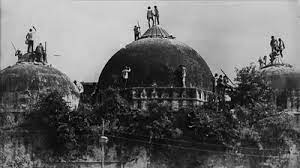
BABRI MAZID: REVISIT ON COMMUNAL VIOLENCE

BABRI MAZID: REVISIT ON COMMUNAL VIOLENCE

AUTHOR – SANYA SINGHAL, STUDENT AT SYMBIOSIS LAW SCHOOL, HYDERABAD

BEST CITATION – SANYA SINGHAL,, BABRI MAZID: REVISIT ON COMMUNAL VIOLENCE, Indian Journal of Legal Review (IJLR), 3 (2) of 2023, Pg. 275-281, APIS – 3920 – 0001 & ISSN – 2583-2344.

ABSTRACT

India was once a group of 565 independent princely state rich in social composition with a number of religions at the time of independence when the constitution was being written by the constituent assembly it was important to declare India as a secular country for peace and integrity within this 565 princely states secularism has always been the most important feature of the Constitution of India but when there are so many religions living on the same piece of land, disputes are bound to happen. As happened on 6th December 1992 when Babri Masjid was demolished at Ayodhya. The political agenda can be clearly seen behind the Babri Masjid Ram Janmabhoomi case as the dispute took fire in around 1984 when Vishva Hindu Parishad (VHP) wanted to claim the land as Ram Janmabhoomi. This article discusses about the history of Babri Masjid, the facts and figures used by Supreme Court in his decision. Prior judgement from various Sports. How political parties use religion in their election campaign and how communal riots can cause destruction all around the country. It further discusses the constitutional aspects of the Babri Mazid Case.

KEYWORDS– Babri Mazid, Religion, Politics, Ownership, Possession