Author: PRASANNASRI26092001

  • An empirical research on provisions related to the health and safety of women garbage collectors in Chennai.

    An empirical research on provisions related to the health and safety of women garbage collectors in Chennai.

    An empirical research on provisions related to the health and safety of women garbage collectors in Chennai.

    Authors: K. Niranjana Devi, Student of Central University of Tamil Nadu

    Best Citation – K. Niranjana Devi, An empirical research on provisions related to the health and safety of women garbage collectors in Chennai, Indian Journal of Legal Review (IJLR), 3 (1) of 2023, Pg. 106-116, ISSN – 2583-2344.

    Abstract

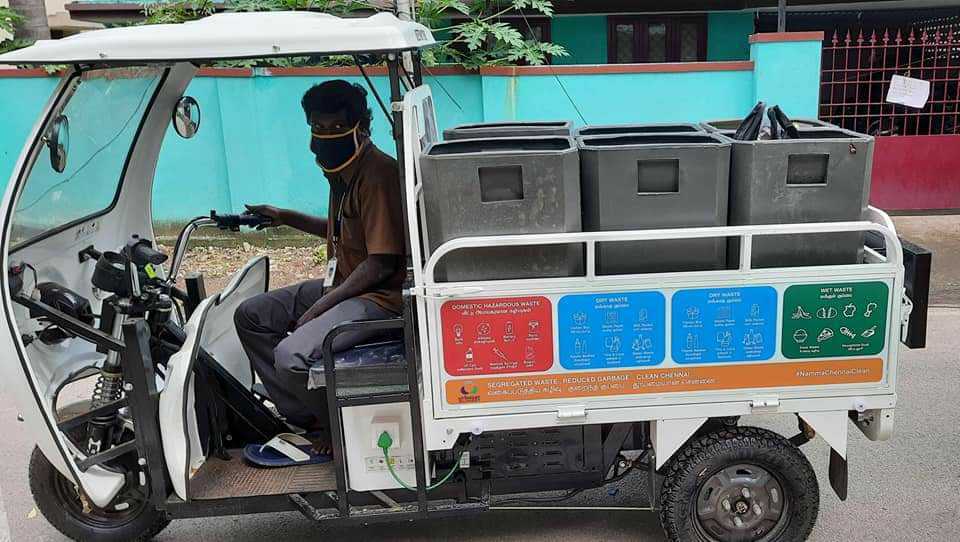
    In India, ragpickers type the bottom of the hierarchy of the informal sector of solid waste management. Assessment of general and gender-specific health of women is conducted during this study seeable of the dearth of revealed proof. India is a well-developing country at the same time lots of problems occurred in India. In India, there are lots of provisions related to women. Much of women’s work has traditionally been carried out within the context of the family:  growing food on a family plot; finding fuel, gathering water and preparing foods for family  members; spinning, weaving, and sewing the garments worn by that family; cooking and washing  for the family and looking after its children and its sick and elderly members. As women move beyond their traditional occupations, they meet new health hazards which may  either replace or add to their existing occupational exposure. Women’s labour force participation  rates have increased steadily, and not only in industrialized countries. The dramatic economic  successes of the newly industrialized states of Asia, for example, are substantially a reflection of  the increasing feminization of labour in this region. In these economies, female workforce  participation rates increased far more rapidly than male from the 1960s, although their jobs were  largely less-skilled and poorly paid. Women workers formed the largest pool of workers in  export-oriented light industries, such as electronics and textiles, which underpinned economic expansion and conditions. In this research, the author mainly takes surveys from 1500 people and analyses whether garbage collectors have safety gloves and other safety equipment with them and how they have ensured safety from health disorders.

    KEYWORDS: Management, labour force, women, garbage, hazard.

  • AN ANALYSIS OF ATTEMPT UNDER PENAL LAWS

    AN ANALYSIS OF ATTEMPT UNDER PENAL LAWS

    AN ANALYSIS OF ATTEMPT UNDER PENAL LAWS

    Authors: ADITYA RAJ PANDEY, Student of SYMBIOSIS LAW SCHOOL, HYDERABAD

    Best Citation – ADITYA RAJ PANDEY, AN ANALYSIS OF ATTEMPT UNDER PENAL LAWS, Indian Journal of Legal Review (IJLR), 3 (1) of 2023, Pg. 100-105, ISSN – 2583-2344.

    ABSTRACT

    Attempt, an offence and now a days very debatable topic as well. The main debate is to decide the punishment for the attempt, as it is also considered as a crime under Indian penal Code. Attempt is a an inchoate crime whose literal meaning is those crimes or wrongs which is just started or it is in budding stage only. By adding some more to inchoate crimes, we can say that it can be left unfinished or just incomplete. Now, as we all know that everything which is wrongful or which violates any law is a punishable and hence we called it as a crime. With the objective to tackle the rate of crimes and hence to lowered it, we passed and enacted some set of rules and regulations by the name of Indian Penal Code. These set of rules was passed during the pre independence period and since then we are applying IPC to punish the wrongdoers. Indian Penal Code contains different punishments for various different crimes but there are always some dilemmas when it comes to attempt to commit any crime. Attempt in general sense, it the efforts we made for the completion of any work. In this research paper, we try to define attempt in the better manner and also try to study on attempt in the more thorough and comprehensive way possible. 

    Keywords – Inchoate Crimes, Attempt, Mens Rea, Actus Reus.

  • ADVENT OF ONLINE DISPUTE RESOLUTION IN INDIA

    ADVENT OF ONLINE DISPUTE RESOLUTION IN INDIA

    ADVENT OF ONLINE DISPUTE RESOLUTION IN INDIA

    Authors: K Veena Subashree, Student of Christ School of Law, Bengaluru

    Best Citation – K Veena Subashree, ADVENT OF ONLINE DISPUTE RESOLUTION IN INDIA, Indian Journal of Legal Review (IJLR), 3 (1) of 2023, Pg. 88-99, ISSN – 2583-2344.

    ABSTRACT

    The current eminence of online dispute resolution is gaining momentum and pace, regarding the pandemic period and the post pandemic period in the modern world. Though the expeditious growth of Online Dispute Resolution was a result of pandemic, it served quite the significant change in the current set up of dispute settlement sphere. The basic intent of this kind of mechanism is to negotiate and resolve disputes between parties, who are either restricted by distance or are in a need to seek a solution that fits all. The process of online arbitration in depth regarding electronic forms of mediation, conciliation, negotiation, med- arbitration and few others are given importance. The paper also throws light on some of the relevant provisions under various acts regarding the given topic. It tends to examine the relatable case laws and current trends coming into the digital market, with the rise of wave of innovation. With the influence of technology, e-governance has gone a long way in making the dispute settlement process more effective and reliable in recent times. The paper shall also focus on covering the shortcomings of the present provisions, and drawbacks of the mechanism and give recommendations to the same. Moreover, emphasis shall also be laid on the suggestions as to what more new innovative things can be incorporated in order to make the process of online arbitration run more smoothly and effectively.

    Key words:  convenience of parties, witness tampering, collaborative mechanism, legal framework, synchronized communications.

  • A STUDY ON THIRD PARTY FUNDING IN COMMERCIAL ARBITRATION

    A STUDY ON THIRD PARTY FUNDING IN COMMERCIAL ARBITRATION

    A STUDY ON THIRD PARTY FUNDING IN COMMERCIAL ARBITRATION

    Authors: Elamathi. J & Soorya. S, Students of Christ (Deemed to be University), Bangalore

    Best Citation – Elamathi. J & Soorya. S, A STUDY ON THIRD PARTY FUNDING IN COMMERCIAL ARBITRATION, Indian Journal of Legal Review (IJLR), 3 (1) of 2023, Pg. 78-87, ISSN – 2583-2344.

    Abstract:

    The growth of third-party funding is inevitable given the complexity of international commercial disputes and the variety of requests for dispute resolution. The third-party funding model compensates for the absence of a legal aid system in the arbitration field, which indirectly enhances the quality of arbitration trials, thereby promoting the better development of arbitration as a dispute settlement method. It also provides investment opportunities for the funders and shares the financial burden and arbitration risks with the parties to disputes. However, the practice of arbitration also faces considerable difficulties due to resulting conflicts of interest, case confidentiality, enforcement issues, and other dangers. Therefore, it is essential to set up reliable regulatory frameworks to safeguard the advancement of third-party finance models. The hazards that the model faces in practice are examined in this study, and the pertinent issues that prevent the model from developing more effectively are made clear. This foundation allows for the consideration of all subjects’ interests, the detailed regulation of each stage of the process, and the overall organisation of the “regulation” of third-party funding.

    Keywords: Arbitration, Third party funding

  • POLLEN AS EVIDENCE

    POLLEN AS EVIDENCE

    POLLEN AS EVIDENCE

    Authors: Alpesh Kumar, Students of CHANAKYA NATIONAL LAW UNIVERSITY PATNA

    Best Citation – Alpesh Kumar, POLLEN AS EVIDENCE, Indian Journal of Legal Review (IJLR), 3 (1) of 2023, Pg. 71-77, ISSN – 2583-2344.

    Abstract: –

    Pollen from spermatophytes, fungi, ferns, and bryophytes, as well as other organic-walled microfossils like dinoflagellates and acritarches, are all included under the umbrella term palynomorph. The area of forensic botany has been significantly impacted by developments in plant genetics. More lately, forensic paleontology has been effectively utilized and applied to criminal inquiry. Pollen DNA profiling has yet to be used in forensic investigations, nevertheless.

    Pollen was once used as a sort of botanical dust debris in several forensic examinations that used dust traces. Comparative morphological information, hints to unanticipated elements of breeding systems, pollination biology, and hybridization can all be found in the study of pollen grains.[1]

    To better comprehend the conditions necessary for its development, forensic palynology is examined in relation to other forensic sciences. Additionally, recent developments are examined. Palynomorphs have the potential to produce great trace evidence since they may transmit, remain, and be detected with ease. Palynological evidence can offer incredibly strong associative and investigative evidence. Nevertheless, the effectiveness of palynology in forensic research has been uneven. There are numerous anecdotal instances when pollen evidence has achieved outstanding results.

    But because it is labor-intensive, takes a great deal of knowledge and experience, lacks oversight over sample collection, lacks proper resources and funding, and is not widely renowned for its ability to solve crimes, it is grossly underutilized in most countries. Palynology has been applied to forensic issues in an unorganized manner, leaving the basic ideas without systematic debate. There is a need to establish palynological evidence through validation-type investigations and experiments, the introduction of independent proficiency testing, and the reevaluation of the acceptability of most evidence forms in the current legal climate.[2]

    Keywords – Pollen, Evidence, Palynology, Forensic, Investigation


    [1] Mildenhall, D., Wiltshire, P.E. & Bryant, V.M. (2006). Forensic palynology: why do it and how it works, Forensic Science International

    [2] Woodhouse, R.P. (1935). Pollen Grains, McGraw Hill, New York

  • CRIME SCENE INVESTIGATION & TECHNICIANS

    CRIME SCENE INVESTIGATION & TECHNICIANS

    CRIME SCENE INVESTIGATION & TECHNICIANS

    Authors: S.INDHU, Student of KARNATAKA STATE LAW UNIVERSITY & DR.N.KARTHIKEYAN, CLINICAL CARDIOLOGIST OF SREE ABIRAMI HOSPITAL PRIVATE LIMITED

    Best Citation – S.INDHU, CRIME SCENE INVESTIGATION & TECHNICIANS, Indian Journal of Legal Review (IJLR), 3 (1) of 2023, Pg. 64-70, ISSN – 2583-2344.

    ABSTRACT

                    Crime Scene Investigation is primarily a collection of information and evidence or can be said as the reconstruction of a past event to identify or apprehend a suspect and to convict the same. Crime Scene Investigation involves a series of processes and deductions to connect a person to the crime. In this paper, we are explaining the importance of Forensic Technicians aiding in the process of identifying, apprehending, and deducting crime. Expert Analysis is highly availed by crime scene investigators in solving crimes and utilizing scientific methods to process the crime more efficiently. In a crime scene, the place of occurrence of a crime is considered to be three-dimensional and the evidence is scattered around the crime scene. Various Forensic Technicians are brought into service by the investigative officers to interpret multiple aspects of a crime scene. In this technological era, crimes being committed had also evolved alongside other developments and traditional investigation methods do not help in solving the crime nor convicting the suspect the investigators require cybercrime experts to deduce the crime and to find the source of the crime. Similarly, every Crime has advanced and criminals are adopting new methods in the commission of crimes. Forensic Technicians provide evidentiary support to connect a person to the crime scene and make it easier for the Justice system to conclude. The Forensic Community is of a wide range consisting of conglomerates of experts aiding the investigators by providing factual assertions and opinions about a crime. This paper primarily focuses on all the Forensic Expert Communities and their support in interpreting a crime. In addition to this, the paper also explains various forensic technics adopted by the experts in processing a crime scene and the latest development in forensic technologies that are being availed by Crime Scene Investigators.

    Keywords: crime scene, fingerprint. Latent, patent, toxins, drugs, posions, autopsy, projectile, residues, firearms,arson, radioassay, spectroscopy

  • A Critical Assessment of Artificial Intelligence in Law

    A Critical Assessment of Artificial Intelligence in Law

    A Critical Assessment of Artificial Intelligence in Law

    Authors: Ayesha Khan, Student of SVKM’s NMIMS’ Kirit P. Mehta School of Law

    Best Citation – Ayesha Khan, A Critical Assessment of Artificial Intelligence in Law, Indian Journal of Legal Review (IJLR), 3 (1) of 2023, Pg. 59-63, ISSN – 2583-2344.

    Abstract

    The widespread coverage of Artificial Intelligence, its history, development and future prospects has made people more familiar with the concept of AI and its usage. However, the amalgamation of AI and law is an area which has just begun to be studied and examined by academicians and scholars primarily. The delay in the study of this area is primarily due to the ‘human-centric’ nature of law. This research provides a preliminary understanding of AI’s integration into legal and judicial systems, and its assistive and replacive capabilities in law. AI models have several predictive capabilities which function by processing large amounts of information which form, predictive models for legal assistance. For example, detecting the chances of a convict reoffending, providing low-cost legal remedies, eliminating biases etc. Recent developments have also seen the emergence of Robot lawyers, which function through AI chatbots and provide speedy and cost-effective legal aid. This research further looks at the complications and obstacles in AI systems, which have proved to be significant drawbacks in implementing and utilizing them to achieve justice.

    Keywords: Artificial Intelligence, Law, Robot Lawyers, Predictive systems, Biases

  • THE BEIJING RULES ON JUVENILE DELINQUENCY: IMPLEMENTATION IN INDIA.

    THE BEIJING RULES ON JUVENILE DELINQUENCY: IMPLEMENTATION IN INDIA.

    THE BEIJING RULES ON JUVENILE DELINQUENCY: IMPLEMENTATION IN INDIA.

    Authors: Mrunmayi Vaidya, Assistant Professor, V. M. Salgaocar College Of Law, Goa

    Best Citation – Mrunmayi Vaidya, THE BEIJING RULES ON JUVENILE DELINQUENCY: IMPLEMENTATION IN INDIA, Indian Journal of Legal Review (IJLR), 3 (1) of 2023, Pg. 55-58, ISSN – 2583-2344.

    Introduction

    Childhood is expected to be a happy phase of individuals life. A life of health, proper nutrition, recreation and an environment; safe and conducive for wholesome growth, is a rosy picture of childhood. However, not all children are fortunate to enjoy such a favourable life. Most children in the world are undernourished, deprived and abused. Therefore, a world suitable for the happy growing up, seems a distant dream. Children face a number of challenges all around, which impact their mind and body. This many a times leads to their deviance, thus pushing them to delinquency. A delinquent child is looked down by the society as well as the justice delivery system which has pre-conceived notions about its guilt.

  • Rape Laws In India: Gender Neutral?

    Rape Laws In India: Gender Neutral?

    Rape Laws In India: Gender Neutral?

    Authors: Dhruv Bhanushali, student of SVKM’s NMIMS’ Kirit P. Mehta School of Law & Lekisha Daga, student of Jindal Global Law School

    Best Citation – Dhruv Bhanushali, Rape Laws In India: Gender Neutral?, Indian Journal of Legal Review (IJLR), 3 (1) of 2023, Pg. 49-54, ISSN – 2583-2344.

    Abstract

    The Oxford Dictionary defines rape as the unlawful act of forcing someone to have intercourse when they do not want to or are unable to consent. This definition is a very gender-neutral definition. S.375 of the Indian Penal Code defines what is ‘Rape’. It starts by saying ‘A man is said to have committed rape if he-’. There is an emphasis on the person who is committing the act to be a man. A woman cannot be said to have ‘raped’ another woman. At maximum, she can be held for outraging another woman’s modesty, but not rape. This was held in Priya Patel v. State of Madhya Pradesh, which we will explain in depth in the paper. Another interesting aspect of the Indian Penal Code is that a man cannot be said to be ‘raped’. He can be held as to be ‘sodomized’ as covered under S.377 of the IPC but not ‘raped’. Even socially people believe that a man cannot be raped. Is this country in the right state of society now to make provisions for sexual offenses of the highest degree gender neutral? Will it result in a higher number of countersuits to rape accusations, or will it result in higher chances of justice for male victims? This is a question that needs to be discussed in greater detail. 

    Keywords: Rape, Gender Neutral, Indian Penal Code

  • INTERNATIONAL BUSINESS MERGER AND LEGALITY OF INTERNATIONAL TRADE

    INTERNATIONAL BUSINESS MERGER AND LEGALITY OF INTERNATIONAL TRADE

    INTERNATIONAL BUSINESS MERGER AND LEGALITY OF INTERNATIONAL TRADE

    Author: Kaarthik Balaji V.G & Lathangi G, Students, VIT School of Law, VIT Chennai.

    Best Citation – Kaarthik Balaji V.G & Lathangi G, INTERNATIONAL BUSINESS MERGER AND LEGALITY OF INTERNATIONAL TRADE, Indian Journal of Legal Review (IJLR), 3 (1) of 2023, Pg. 40-48, ISSN – 2583-2344.

    ABSTRACT

    There is a rapid growth in Business, Trade, and commerce. Due to the underlying competence in the global market and monopolistic competition the concept of International Business Merger has become indispensable. When a business merges with or acquires another business across international borders, this is referred to as an international merger or acquisition. International Business Merger is a huge term. It is also known as global merger. It involves an inbound merger, Outbound Merger with respect to Indian Context in terms of Cross Border Merger and there many also be a Cross Border Demerger. There may be a variety of reasons for a company to merge. These include market growth, reduce competition, diversify business, tax evasion, improve supply chain, acquire new technology etc. Customs laws, trade remedies, and anti-corruption laws are all included in the body of international trade law. Loss of tasks and inputs for the production process may result from this. Due to the inclusion of retroactive assessment of taxes, tariffs, and penalties, liability may be much higher, if the vendor’s assets are no longer reachable. After mergers, there won’t be any indemnity if the validity of these laws isn’t verified. A secure thorough due diligence can stop these trade concerns.

     This paper discusses about the rules and regulation associated with International Business Mergers such as FEMA, Companies Act, Tax Act and enables to devise a proper structure to gain control over the whole process efficiently and highlights important due diligence steps to mitigate the shortcomings. Further this paper also set out an analogy between international mergers and legality of Trade.

    Keywords: Corporate restructuring, Inbound Mergers, Cross Border Merger, Due Diligence, Trade