Author: PRASANNASRI26092001

  • “DEVELOPMENT OF THE DOCTRINE OF SOVEREIGN IMMUNITY IN ENGLAND AND INDIA- COMPARATIVE ANALYSIS”

    “DEVELOPMENT OF THE DOCTRINE OF SOVEREIGN IMMUNITY IN ENGLAND AND INDIA- COMPARATIVE ANALYSIS”

    “DEVELOPMENT OF THE DOCTRINE OF SOVEREIGN IMMUNITY IN ENGLAND AND INDIA- COMPARATIVE ANALYSIS”

    Authors: Neelagowri B C, Student of Christ (deemed to be university) Bengaluru

    Best Citation – Neelagowri B C, “DEVELOPMENT OF THE DOCTRINE OF SOVEREIGN IMMUNITY IN ENGLAND AND INDIA- COMPARATIVE ANALYSIS”, Indian Journal of Legal Review (IJLR), 3 (1) of 2023, Pg. 192-198, ISSN – 2583-2344.

    ABSTRACT

                    According to the Doctrine of Sovereign Immunity, a king is immune from punishment. Around the world, this idea has been widely adopted. King is above the Law. Throughout the period of and during the reign of the monarchy, this principle was created. Today, it is considered that this theory must have lost its lustre in this era of democracy where voters make or break governments. But the sad reality is that governments all across the world have opted to rely on this antiquated principle even after proclaiming democracy. According to the Rule of Law No one is above the law, in essence, A government’s sovereign immunity prevents it from being sued in its own courts without its approval. The British Common Law has established sovereign immunity. “Rex non potest peccare” or “the king can do no wrong,” is a legal principle. However, most international constitutions prohibit holding politicians accountable in the same way as regular people. The idea has its origins in the notion that the King of England, who exercised divine power, was impervious to wrongdoing. The courts would not permit a lawsuit against the king as a result, with a few carefully stated exceptions. The English colonisers later took this idea of sovereign immunity to the Indian colonies, and it eventually made its way into our legal system as well. Sovereign immunity, in its most basic definition, is the legal immunity enjoyed by governmental bodies. The writings of Bodin, Austin, and Hege provided the philosophical foundation for the early concepts of sovereign immunity. The article charts the development of the doctrine of sovereign immunity in India and the UK, focusing in particular on the state’s tort responsibility. The emphasis is on using case law to draw analogies and define and explain the application and repeal of this concept.

    KEYWORDS: Sovereign Immunity, State, King, India, US, Doctrine

  • CUSTODIAL DEATHS AND POLICE BRUTALITY: ROLE OF JUDICIARY AND NHRC

    CUSTODIAL DEATHS AND POLICE BRUTALITY: ROLE OF JUDICIARY AND NHRC

    CUSTODIAL DEATHS AND POLICE BRUTALITY: ROLE OF JUDICIARY AND NHRC

    Authors: ANIKETAN S, Student of School of Law, Christ university

    Best Citation – ANIKETAN S, CUSTODIAL DEATHS AND POLICE BRUTALITY: ROLE OF JUDICIARY AND NHRC, Indian Journal of Legal Review (IJLR), 3 (1) of 2023, Pg. 176-191, ISSN – 2583-2344.

    ABSTRACT:

    In today’s world violation of basic human rights have become very rampant, especially in the cases of Custodial Death, Police Brutality and Encounters, basically extra-judicial killings. These kinds of abhorrent acts are usually deemed as “Instant Justice”. India, which is considered to be the largest democracy in the world, has failed to uphold the promises of the constitution to carryout transparency in extrajudicial incidents. The very purpose of rule of law and constitutionalism has not been entrusted in veracious manner. Over the years the term extra-judicial killings have gained popularity and has been misinterpreted. It wouldn’t be wrong to say that these incidents have led to despotism form of government instead of democracy. Custodial tortures and brutality violate prisoners’ basic rights.

    “Encounter” has been misused by the police department in the name of ‘SELF-DEFENCE’.  Especially in country like India, it has gained lots of popularity and importance unfortunately its very prevalent even today.  In most of the cases, encounters have been self-proclaimed as badge of honor to the concerned authorities, which also makes way for political mileage to the ruling and opposition parties who in turn give it an emotional and sentimental angle to it creating celebrations in the public in any high-profile cases. Over the years this has made the public to lose hopes and trusts in the judiciary. Despite several statutory provisions, conventions, constitutional safeguards, directions of the supreme court, the cases of custodial death and police brutality have not come down and has been rampant till date. Judiciary and other agencies have a huge responsibility on back of their shoulders to gain back the trust of the public and upload the constitution and vindicate the rule of law concept.

    KEYWORDS:  Human Rights, Encounters, Brutality, Extra-Judicial Killings, Custodial tortures.

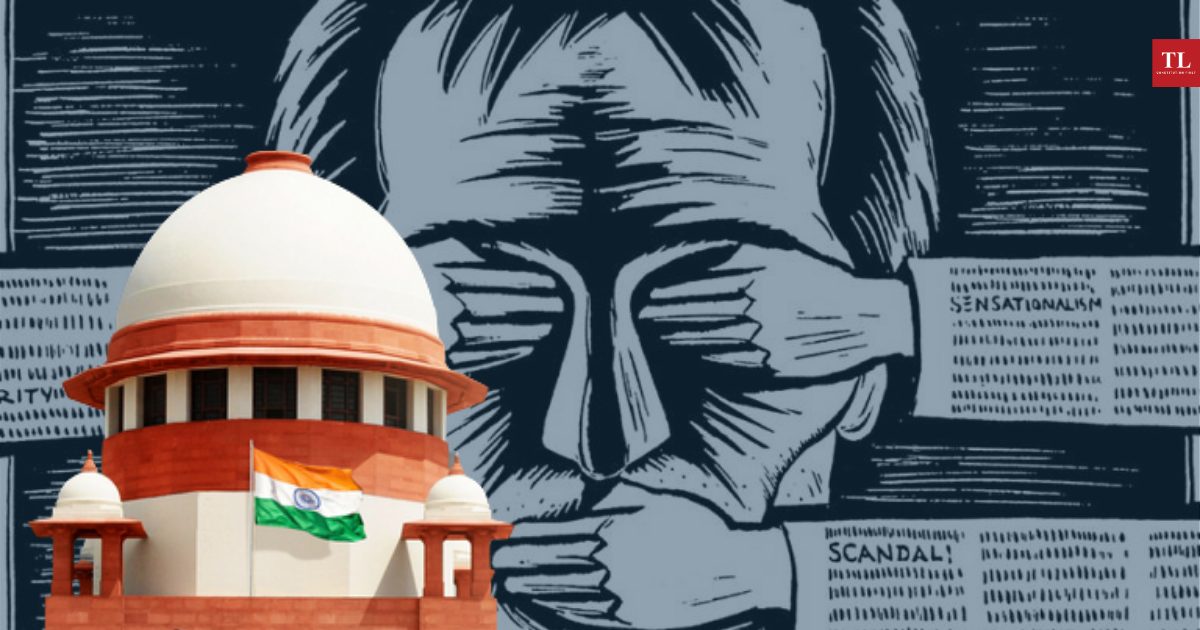
  • CRITICAL EXAMINATION OF THE USE AND MISUSE OF SEDITION LAW IN INDIA VIS-À-VIS THE TOOLKIT CASE

    CRITICAL EXAMINATION OF THE USE AND MISUSE OF SEDITION LAW IN INDIA VIS-À-VIS THE TOOLKIT CASE

    CRITICAL EXAMINATION OF THE USE AND MISUSE OF SEDITION LAW IN INDIA VIS-À-VIS THE TOOLKIT CASE

    Authors: Arushi Amod Tripathi, Student of NMIMS School of Law

    Best Citation – Arushi Amod Tripathi, CRITICAL EXAMINATION OF THE USE AND MISUSE OF SEDITION LAW IN INDIA VIS-À-VIS THE TOOLKIT CASE, Indian Journal of Legal Review (IJLR), 3 (1) of 2023, Pg. 169-175, ISSN – 2583-2344.

    ABSTRACT:

    The sedition statute, which may be found in the Indian Penal Code under section 124A, dates back to the time of the colonial government. The British were the ones who initially introduced it into the IPC in the year 1870. However, the legislation seems to be misused on several occasions, despite rare conviction. Further, the law is also often contended to be against the freedom of speech and expression enshrined in the constitution The law has been repealed in several other nations, inclusion England. This paper aims to critically examine the sedition law in India through the Supreme Court’s bail order in the case of Disha A. Ravi vs State (NCT of Delhi) & Ors.

    Keywords: Sedition, Bail, Supreme Court, Indian Penal Code 124A

  • CRITICAL ANALYSIS OF THE PRISONERS’ RIGHTS VIZ A VIZ ARTICLE 21

    CRITICAL ANALYSIS OF THE PRISONERS’ RIGHTS VIZ A VIZ ARTICLE 21

    CRITICAL ANALYSIS OF THE PRISONERS’ RIGHTS VIZ A VIZ ARTICLE 21

    Authors: Shejal Harichandan, Student of School of Law, Christ University

    Best Citation – Shejal Harichandan, CRITICAL ANALYSIS OF THE PRISONERS’ RIGHTS VIZ A VIZ ARTICLE 21, Indian Journal of Legal Review (IJLR), 3 (1) of 2023, Pg. 163-168, ISSN – 2583-2344.

    ABSTRACT

    The world’s justice system revolves around punishing the individual who has acted or omitted in a way that has resulted in the loss of our self-evident rights. The laws relating to the rights of prisoners are very dynamic. The rights now granted to prisoners may not have been available to them during the period of independence or British rule. The pre-Independence period was a dark period for the Indian Criminal Justice System in terms of treatment of prisoners, when the British used incarceration and even minor offenses could result in the individual’s execution. The purpose of this study is to probe into the treatment of the prisoners in the prison with respect to whether a violation of Article 21[1], which talks about the life and personal liberties’ rights that are vested with us, is occurring or not. As we know, our Indian society is based on the principles of respect for each other, non-violence, and the dignity of the human being, so if a person acted or omitted something resulting in him committing a crime, it does not mean that he will or should be considered a human being again. And if there is any violation of Article 21, this leads to a violation of Article 14[2]. Here, Article 14 talks about the “A.V. Dicey’s Rule of Law” where equality before the law and equal protection of the laws are emphasized. So, everybody is equal in the eyes of law, so violating it would mean that they are not being treated as human beings by giving them their unalienable rights.

    Keywords: Indian Criminal Justice System, Article 21, Article 14, Unalienable rights


    [1] The Constitution of India, 1950

    2 Ibid.

  • “CRITICAL ANALYSIS OF MOVABLE & IMMOVABLE PROPERTY.”

    “CRITICAL ANALYSIS OF MOVABLE & IMMOVABLE PROPERTY.”

    “CRITICAL ANALYSIS OF MOVABLE & IMMOVABLE PROPERTY.”

    Authors: Spandana Reddy Bommu, Student of Symbiosis Law School, Hyderabad

    Best Citation – Spandana Reddy Bommu, CRITICAL ANALYSIS OF MOVABLE & IMMOVABLE PROPERTY, Indian Journal of Legal Review (IJLR), 3 (1) of 2023, Pg. 153-162, ISSN – 2583-2344.

    ABSTRACT:

    The paper “A Critical Analysis of Movable and Immovable Property” examines the numerous elements associated with the concept of property within the Indian legislative structure. The initial chapter briefly introduces the subject property and its application to The Transfer of Property Act. The Act’s particular legislative elements are presented in the subsequent section, which outlines the distinctions between moveable and immovable property. The researcher also addressed how ambiguous terms and concepts have resulted in ambiguity in establishing clear delineations among the two types of property structures within the legislative system of India. The author also examines the debate in the Law Commission’s findings over what characterises “movable and immovable property”. The fifth and the last section explore the legal decisions which opened ground for the development and evolution of the moveable versus immovable property conflict. It also distinguishes English and Indian law. In addition, Indian cases have been thoroughly discussed later, where the Judiciary has articulated specific rules to clarify the ambiguity about this property categorisation.

    KEYWORDS: Movable, Property; Immovable, Law Commission, Transfer of Property Act.

  • Critical Analysis of Character Merchandising and its impact on Intellectual Property Rights

    Critical Analysis of Character Merchandising and its impact on Intellectual Property Rights

    Critical Analysis of Character Merchandising and its impact on Intellectual Property Rights

    Authors:  Pooja, Student of Christ Deemed to be University

    Best Citation – Pooja, Critical Analysis of Character Merchandising and its impact on Intellectual Property Rights, Indian Journal of Legal Review (IJLR), 3 (1) of 2023, Pg. 148-152, ISSN – 2583-2344.

    Abstract

    Many entertainment firms started a separate channel for cartoons to cover the global level audience of children. The customizable products allow the customers to choose which character they want in their product. A character is used as a tool for the promotion of products and it leads to a brand image for business firms. Such brand images are liable to be protected from commercial exploitation. The lacuna that is found in the Indian Legal system is the absence of specific legislation regarding personality rights and image merchandising. This paper analyzes the growth and impact of character merchandising in market and its implications on constitutional rights of individual. In addition to that, the relationship between intellectual property violation and character merchandize is also brought out. The research methodology adopted is a combination of qualitative and doctrinal research method.

  • CRITICAL ANALYSIS OF ADOPTION UNDER MUSLIM LAW

    CRITICAL ANALYSIS OF ADOPTION UNDER MUSLIM LAW

    CRITICAL ANALYSIS OF ADOPTION UNDER MUSLIM LAW

    Authors: HARSHADI RAJESH PATEL, Student of SYMBIOSIS LAW SCHOOL, HYDERABAD

    Best Citation – HARSHADI RAJESH PATEL, CRITICAL ANALYSIS OF ADOPTION UNDER MUSLIM LAW, Indian Journal of Legal Review (IJLR), 3 (1) of 2023, Pg. 141-147, ISSN – 2583-2344.

    ABSTRACT

    Due to COVID, which resulted in many of the children losing both of their parents, adoption level increased in today’s society. The significance of adoption has been widely acknowledged, and many people view it as a noble deed. Adoption is frequently chosen by couples who are unable to have children naturally for various reasons. So, why does Islam or Muslim law forbid adoption in its faith at this age where in comparison every other religion promotes it? This research paper looks at the history of the well-known prophet Mohammad and tries to explain why Muslim law forbids adoption in its culture. During his reign, the Prophet Mohammad expressed a range of views on adoption. This research study cites numerous books, papers, and written works in order to understand learn about various legal scholars’ perspectives and how they interpret the prohibition on adoption. This research paper will also examine the current state of adoption rights in India and how they are being used, as well as how they have changed in relation to Muslim law in particular and whether or not the society is accepting of these changes. Finally, this paper will examine whether the Muslim legal system currently in place is adequate to address the adoption procedure, as well as the inheritance, legacy, and lineage rights of the adopted kid and the adoptive parents. As the ideas are Sunnah (what is perceived to be the consensus), there has been relatively little research on the rights of adoption in Muslim law.

    KEYWORDS: Adoption, Muslim Law, Quran, Sponsoring, Inheritance.

  • CONSTITUTIONAL SAFEGUARDS TO CIVIL SERVANTS

    CONSTITUTIONAL SAFEGUARDS TO CIVIL SERVANTS

    CONSTITUTIONAL SAFEGUARDS TO CIVIL SERVANTS

    Authors: ALEENA MARIA MONCY, Student of Christ (Deemed to be University)

    Best Citation – ALEENA MARIA MONCY, CONSTITUTIONAL SAFEGUARDS TO CIVIL SERVANTS, Indian Journal of Legal Review (IJLR), 3 (1) of 2023, Pg. 134-140, ISSN – 2583-2344.

    ABSTRACT

    In this evolving era, there has been an increase in the demand for civil servants where special emphasis on the conduct of civil servants has been given. The rules and legislations concerning the conduct and safeguards for civil servants has been an issue of concern where various developments have been made based on changing conditions. This paper focuses on the constitutional safeguards concerning civil servants where the rules, regulations, legislations and so on are discussed. The researcher has emphasized on various processes like disciplinary proceedings where an in-depth analysis on the same has been done with the help of different case laws. As civil servants have an integral role in the overall functioning of the society, the significance of safeguarding their interest has been studied considering the surrounding circumstances. The services made available to people by the civil servants as per their needs and requirements are regulated through use of effective rules and laws. The main focus of the researcher is on the safeguards provided to the civil servants where apt measures are taken to enhance the overall functioning of the system.

    The processes concerning administrative officials and civil servants have been discussed in this paper where the researcher has analyzed various instances to explain the functions and operations carried out by such authorities. Here the researcher has analyzed various conditions in which the dismissal or removal of civil servants can be done along with other exceptions to get a clear idea on the same. As there is a significant role for the civil servants in the present society, the researcher has analyzed the concept with the help of different case laws and legal provisions to develop an enhanced understanding about the services provided by civil servants. In this paper, various provisions in the Constitution of India have been analyzed to understand the application of the same with exceptions. The changes in the nature of the civil services can have an impact on the overall functioning of various systems in the society which is carefully analyzed to conduct a better study on various related aspects.

    KEYWORDS Safeguards, constitutional remedies, authority, civil servants

  • Chronicle Causes for the Failure of the Afghan Government: Past Imperfect and Future Tense of Afghanistan

    Chronicle Causes for the Failure of the Afghan Government: Past Imperfect and Future Tense of Afghanistan

    Chronicle Causes for the Failure of the Afghan Government: Past Imperfect and Future Tense of Afghanistan

    Authors: Prof. (Dr.) TR Maruthi, Professor of Law, University of Mysore

    Best Citation – Prof. (Dr.) TR Maruthi, Chronicle Causes for the Failure of the Afghan Government: Past Imperfect and Future Tense of Afghanistan, Indian Journal of Legal Review (IJLR), 3 (1) of 2023, Pg. 128-133, ISSN – 2583-2344.

    Abstract

    This article examines the chronicle causes that fuelled the collapse of the Afghan government and the contention of this paper is to highlight what went wrong, that Afghanistan experienced with the failure of the Constitution 2004 and the republic also dissolved.  The study employed doctrinal legal research in which normative approaches were to evaluate the literature to acquire the required legal propositions. The literature gathered and used in this study will include secondary, primary, and legal documents. Keywords: Afghanistan Crisis, Afghan Government, Taliban regime, and US Withdrawal

  • Analysis of Cross Border Insolvency in India: A suggestive approach

    Analysis of Cross Border Insolvency in India: A suggestive approach

    Analysis of Cross Border Insolvency in India: A suggestive approach

    Authors: Venkata Sai Revanth Rao Maddi & Pranav Deepankar Ketheneni, Students of Alliance University

    Best Citation – Venkata Sai Revanth Rao Maddi & Pranav Deepankar Ketheneni, Analysis of Cross Border Insolvency in India: A suggestive approach, Indian Journal of Legal Review (IJLR), 3 (1) of 2023, Pg. 117-127, ISSN – 2583-2344.

    ABSTRACT

    In India the regulatory body for all the banks i.e. the banking Centre is Reserve Bank of India which is established under Reserve Bank of India Act 1934 under Hilton Young Commission. It regulates all the commercial banks in the state and controls them by giving licenses to involve in the activities of finance. So, basically it is the “banker to the bank”. In its annual report for the year 2020-21 it has stated that almost crores of money in frauds and Insolvency. And almost 74% of citizens of India who are actually directly depositing their sum in banks have never received the money from the banks through which it was lost in frauds and scandals. This is actually not a good sign for a developing country like India where there is population which is middle class is more and the rate of poverty is more at the same time. If there are no such measures taken and adopted in order to cope with such frauds then it would ultimately lead to financial crisis and the citizens who are actually depositing their sums in banks might change their opinion and slowly lose faith in banks. So, if that is the case the RBI will not have any such control on the currency and banks would not be able to maintain Statutory Liquidity Ration.

    So, considering this as a point for our research we would like to analyze two major financial Cross border Insolvency scams in India and the loopholes of such undertaking. Accordingly we would even analyze at the same point of the advantages which were being in favour of such Economic offenders. And then conclude our research with the measures in order which can undertake to avoid them through our analysis.

    Keywords: Regulator, Statutory Liquidity Ratio, Financial Fraud, Economic Offenders, Insolvency