Author: PRASANNASRI26092001

  • TRAVERSING THE BANKING LAW ON PUBLIC SECTOR BANKS IN INDIA

    TRAVERSING THE BANKING LAW ON PUBLIC SECTOR BANKS IN INDIA

    TRAVERSING THE BANKING LAW ON PUBLIC SECTOR BANKS IN INDIA

    Authors: Shrey Sahai, Student of CHRIST (Deemed To Be University) Bangalore.

    Best Citation – Shrey Sahai, TRAVERSING THE BANKING LAW ON PUBLIC SECTOR BANKS IN INDIA, Indian Journal of Legal Review (IJLR), 3 (1) of 2023, Pg. 263-270, ISSN – 2583-2344.

    ABSTRACT

    In India, several reforms over the past few decades have been taken on by the country’s public sector banks. Currently, there is a major crisis in the public sector banking industry. The purpose of this study is to suggest ways forward in the effort to create a reliable Public sector Banking system in India. An overview of the background is provided, and a statistical analysis of the current state is performed so that appropriate solutions can be proposed. The difficulties are listed under many topics, including nonperforming assets (NPAs), the need for recapitalization, governance problems, a dearth of qualified workers, and more. Based on these difficulties, suggestions have been made to improve the government and the economy. The authors made an effort to critically analyze the issue by drawing parallels to other countries while keeping their Indian heritage in mind. Finally, without placing too much emphasis on privatization, alternatives have been presented that will allow Public Sector Banks to retain their identity. Extreme measures for rebuilding have been emphasized. The primary challenges experienced by PSBs have been addressed to the best of our abilities.

    KeyWords: Public Banks, Government, Banking Law, Non-Performing Assets, Nationalisation.

  • The Tiff between Intention of the Legislature and Judicial Interpretation in the Interpretation of Statutes.

    The Tiff between Intention of the Legislature and Judicial Interpretation in the Interpretation of Statutes.

    The Tiff between Intention of the Legislature and Judicial Interpretation in the Interpretation of Statutes.

    Authors: Pragathi U Bhat, Student of Faculty of Law, PES University

    Best Citation – Pragathi U Bhat, The Tiff between Intention of the Legislature and Judicial Interpretation in the Interpretation of Statutes, Indian Journal of Legal Review (IJLR), 3 (1) of 2023, Pg. 256-262, ISSN – 2583-2344.

    Abstract:

    The term legislation or statute is commonly defined as the will of the legislature that is backed by sanction and enacted by a competent authority. Interpretation of a statute is the process by which the meaning behind the legislature is sought. In countries that follow the doctrine of separation of powers, the rule of thumb is that the legislature makes the law and the judiciary administers the law and in doing so interprets the law. Over time, the Courts have devised various rules to guide the process of interpretation of legislations. The rule of giving effect to the intention of the legislature holds a significant position in the principles of interpretation of statutes. This rule entails that the interpretation should be such that it achieves the intention of the makers of the legislation. It is expected of the courts to enforce the intention with which the legislature was enacted. This paper aims to examine the principle of interpretation regarding the intention of the legislature. The paper seeks to highlight the defects of the principle of legislative intent and the need to eliminate the defects for efficient interpretation of statutes. Furthermore,the paper also aims to analyse the power of the principle of legislative intent in overriding the power of the judiciary to interpret laws.

  • THE ROLE OF PUBLICATION IN DELEGATED LEGISLATION: A CRITICAL STUDY

    THE ROLE OF PUBLICATION IN DELEGATED LEGISLATION: A CRITICAL STUDY

    THE ROLE OF PUBLICATION IN DELEGATED LEGISLATION: A CRITICAL STUDY

    Authors: Adv. NAVEEN SAJU, Student of CHRIST (Deemed To Be University) Bangalore.

    Best Citation – Adv. NAVEEN SAJU, THE ROLE OF PUBLICATION IN DELEGATED LEGISLATION: A CRITICAL STUDY, Indian Journal of Legal Review (IJLR), 3 (1) of 2023, Pg. 250-255, ISSN – 2583-2344.

    ABSTRACT

    “Delegated legislation does not come into force until published – Griffith & Street”

                    India unlike many other countries who adopted democracy as the creed of the Constitution, was able to continue as a democratic nation even after its 75th year of Independence. One of the major reasons for the same is the trust of the people in our Constitution and on other governing authorities. The three organs of the government, that is, the legislature, the executive and the judiciary play a very prominent role in the administration and rendering of justice that can be availed by the common citizens. The legislation is mainly done by the legislature and the authorities coming under these legislative wings proposes and made laws that are used for governing as. Sometimes the legislative powers are sub delegated from one person to another based on various circumstances. Here comes the importance of the aspect of delegated legislation. It is possible to pass these legislative functions to another person unless and until the law prohibits the same, but it is essential to make the concerned publication regarding the matters related to delegated legislation to the common public also. The problem with the publication of delegated legislation arises at many times in many cases in India itself and the Supreme Court also stated that unless the delegated legislation is published, it cannot be enforced[1]. So, it is a necessary matter to publish the same towards the common public to let them know that so and so things are delegated from one authority to another.

    Keywords:Delegated Legislation, Publication of Delegated Legislation, Executive Authorities, Procedural Ultra Vires


    [1] Harla v The State of Rajasthan (1951 AIR 467, 1952 SCR 110)

  • THE IMPORTANCE OF RELIGIOUS AND MINORITY RIGHTS IN INDIA: A CRITICAL STUDY

    THE IMPORTANCE OF RELIGIOUS AND MINORITY RIGHTS IN INDIA: A CRITICAL STUDY

    THE IMPORTANCE OF RELIGIOUS AND MINORITY RIGHTS IN INDIA: A CRITICAL STUDY

    Authors: TANIYA SALIM, Student of CHRIST (Deemed To Be University) Bangalore.

    Best Citation – TANIYA SALIM, THE IMPORTANCE OF RELIGIOUS AND MINORITY RIGHTS IN INDIA: A CRITICAL STUDY, Indian Journal of Legal Review (IJLR), 3 (1) of 2023, Pg. 244-249, ISSN – 2583-2344.

    ABSTRACT

    “One of the benefits of a properly functioning democracy is minority rights and majority rule”

    Noam Chomsky

                       India is a secular state which does not have any state religion. People are absolutely free to practice any religion according to their wish. With the 42nd amendment of the constitution of India in the year 1976, the preamble to the constitution asserted that India is a “secular” nation. The meaning of a secular state is that it does not prioritize any one religion for the country and its people.[1] The persons belonging to minorities have the right to participate effectively in decisions on the national and, where appropriate, regional level concerning the minority to which they belong or the regions in which they live, in a manner not incompatible with national legislation. The persons belonging to national or ethnic, religious and linguistic minorities have the right to enjoy their own culture, to profess and practice their own religion, and use their own language, in private and public freely and without interference or any form of discrimination. Article 29 protects the interests of minorities by making a provision that any citizen or section of citizens having a distinct language, script or culture have the right to conserve the same. It also mandates that no discrimination would be done on the ground of religion race, caste, language or any of them and highlights the rights of minorities, different vulnerable groups in India, historical background of religious minorities in India and constitutional provisions for minorities as well.

    KEYWORDS:Minority Rights, Secularism, Religious Rights, Personal Laws, Constitution of India, Non-Discrimination, Right to Equality


    [1] S M A W Chishti, Secularism in India: An Overview, The Indian Journal of Political Science, April-June, 2004, Vol. 65, No. 2 (April-June, 2004), pp. 183-198, Indian Political Science Association, https://www.jstor.org/stable/41855808

  • SAPINDA AND DEGREES OF PROHIBITED RELATIONSHIP- AN ANALYSIS

    SAPINDA AND DEGREES OF PROHIBITED RELATIONSHIP- AN ANALYSIS

    SAPINDA AND DEGREES OF PROHIBITED RELATIONSHIP- AN ANALYSIS

    Authors: Muskaan Dalal, Student of Bennett University, Times of India Group

    Best Citation – Muskaan Dalal, SAPINDA AND DEGREES OF PROHIBITED RELATIONSHIP- AN ANALYSIS, Indian Journal of Legal Review (IJLR), 3 (1) of 2023, Pg. 237-243, ISSN – 2583-2344.

    ABSTRACT

    Prior to the enactment of the Hindu Marriage Act in 1955, marriages in India were based on various shrutis, smritis and shastras and there was no uniform set of rules. Many times, the marriages also involved incest. This is against the principles of morality and is also not good for the overall health of the population as it would narrow the human gene pool. Sapinda and degrees of prohibited are the essentials to Hindu marriage under the Hindu Marriage Act, 1955. The persons marrying each other must not be sapindas of each other and should not be within the scope of degrees of prohibited relationship defined under the Act. However, there is an exception to the rule which relates to the custom or usage which permits anything of this sort. Sapinda has been defined under Section 3(f) of the Hindu Marriage Act, 1955, it states that if two people are related to each other through common ancestors, with extends to three generations of the mother’s side and five generations of the father’s side. Degrees of prohibited relationship have been defined under Section 3(g) of the act. This section states certain relations in which marriage cannot take place like descendants. So, according to the Hindu Law, marriage cannot take place among the people who are pindas to each other or who come under the prohibited relationships under the act. These topics are analyzed in detail along with relevant case laws. This paper discusses the meaning of Sapinda and degrees of prohibited relationship in detail while analyzing their scope under the essentials of the Hindu marriage under Hindu Law. The paper discusses the provisions relating to these two concepts as well as who comes under these relationships. In this regard, the concept of full blood, half blood and uterine blood have also been discussed. The paper also contrasts the current provisions in the Hindu Marriage Act with the provisions in the ancient law as inscribed in the Mitakshara and Dayabhaga schools of law.

  • RIGHT TO EDUCATION – A TOOL FOR THE EMANCIPATION OF MINORITY SECTIONS IN INDIA

    RIGHT TO EDUCATION – A TOOL FOR THE EMANCIPATION OF MINORITY SECTIONS IN INDIA

    RIGHT TO EDUCATION – A TOOL FOR THE EMANCIPATION OF MINORITY SECTIONS IN INDIA

    Authors: ARATHY A, Student of CHRIST (Deemed To Be University) Bangalore.

    Best Citation – ARATHY A, RIGHT TO EDUCATION – A TOOL FOR THE EMANCIPATION OF MINORITY SECTIONS IN INDIA, Indian Journal of Legal Review (IJLR), 3 (1) of 2023, Pg. 232-236, ISSN – 2583-2344.

    ABSTRACT

    “Education is a human right with immense power to transform – Kofi Annan”

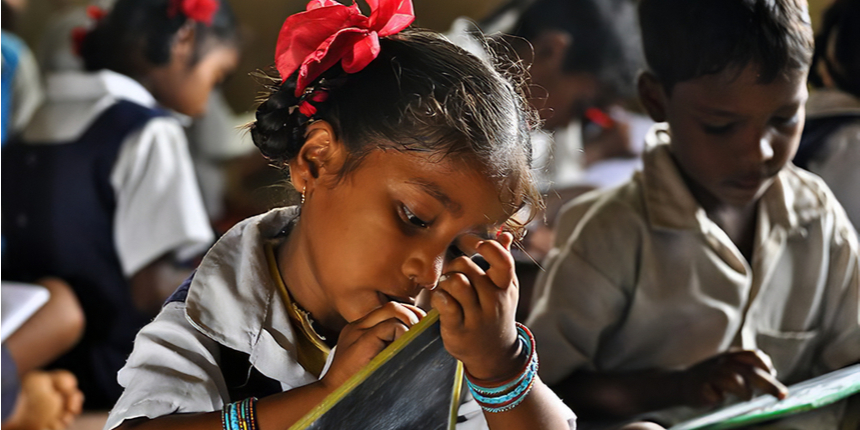
                       A nation like India should need to have efficient and effective mechanism in order to ponder and give proper education to all the citizens of the nation. Even though the educational system is well known to the whole world and is existed from time immemorial antiquity, the educational system in the nation did not meet the proposed criteria’s for attaining maximum effective output from the whole citizens. A nation with good and literate citizens will be a cornerstone of the nation for its whole development. Thus, the government should need to give proper and adequate education to all the citizens of the nation. After the implementation and enactment of Right to Education as a fundamental right as enshrined in the Constitution of India under Article 21A through the eighty eighth amendment in the year 2002, the government taken a new milestone in order to promote the educational standards of the whole nation. Through the implementation of the mid-day meal schemes, in one way the government was able to attract the students to come and join schooling while on a broader aspect, it provides an opportunity for the student s to get adequate nutritious food for their overall growth and holistic development. Thus, in order to attain a good civil society, proper education must need to be given for all.[1] By these ways, India can attain over development in a very wider perspective.

    KEYWORDS:Right to Education, Development of the Nation, Fundamental Rights, Educational Institutions, Standard of Living, Democracy


    [1] Kishore Singh, Right to Education, India International Centre Quarterly, WINTER 2015–SPRING 2016, Vol. 42, No.3/4, Education at the Crossroads (WINTER 2015–SPRING 2016), pp. 119-130, India International Centre, https://www.jstor.org/stable/26316578

  • A STUDY ON LIFE THREATENING DISEASE TO THE CHILDREN BY EXPOSING THEM TO THE RADIATION OF ELECTRONIC DEVICES IN TAMILNADU

    A STUDY ON LIFE THREATENING DISEASE TO THE CHILDREN BY EXPOSING THEM TO THE RADIATION OF ELECTRONIC DEVICES IN TAMILNADU

    A STUDY ON LIFE THREATENING DISEASE TO THE CHILDREN BY EXPOSING THEM TO THE RADIATION OF ELECTRONIC DEVICES IN TAMILNADU

    Authors: PADMESH R, Student of SAVEETHA SCHOOL OF LAW

    Best Citation – PADMESH R, A STUDY ON LIFE THREATENING DISEASE TO THE CHILDREN BY EXPOSING THEM TO THE RADIATION OF ELECTRONIC DEVICES IN TAMILNADU, Indian Journal of Legal Review (IJLR), 3 (1) of 2023, Pg. 224-231, ISSN – 2583-2344.

    ABSTRACT:

    In our day to day life, we are using many electronic devices for various uses like communication, navigation, work, medical needs, entertainment etc. They are very much convenient for us and also makes our work easier but they are very harmful to our health. They emit electromagnetic radiation which is a threat to our health. This electromagnetic radiation leads to many diseases like blood brain barrier, cancer, fertility and reproduction, electromagnetic hypersensitivity, and glucose metabolism. The research method used is empirical research, the sample collected for this research is simple random sampling method, total sample size is 250 which was collected to the public of poonamallee area. The dependent variables are anxiety, depression, shortened life span, reduced attention towards anything as a factor, parental supervision for children, light emitted from electronic devices affects sleep pattern. Independent variables are Age, gender, occupation, educational qualification, marital status. The aim of the study is to study the factors which are affected due to the electronic devices.

    KEYWORDS: Electromagnetic radiation, Metabolism, Hypersensitivity, Fertility, Communication

  • INDIA’S SOCIO- LEGAL QUANDARY IN COMPOUNDING SEXUAL OFFENCES

    INDIA’S SOCIO- LEGAL QUANDARY IN COMPOUNDING SEXUAL OFFENCES

    INDIA’S SOCIO- LEGAL QUANDARY IN COMPOUNDING SEXUAL OFFENCES

    Authors: Aamina Rafeek & Derene Gonsalvez, Students of His Highness The Maharaja’s Government Law College, Ernakulam

    Best Citation – Aamina Rafeek & Derene Gonsalvez, INDIA’S SOCIO- LEGAL QUANDARY IN COMPOUNDING SEXUAL OFFENCES, Indian Journal of Legal Review (IJLR), 3 (1) of 2023, Pg. 212-223, ISSN – 2583-2344.

    Abstract

    Yatra naryastu pujyante ramante tatra Devata, yatraitaastu na pujyante sarvaastatrafalaah kriyaah” translates to “Where Women are honoured, divinity blossoms, and wherever women are dishonoured, all action no matter how noble it may be, remains unfruitful.”. This shloka from Manusmriti outlines the divinity attached to women of our country since ancient times. The patriarchal impositions behind this being questionable, the proposal of compounding sexual offences against women is frowned upon by society. These are crimes against society and falls out of the purview of compromise. However the High Courts of our country are empowered to allow compromises of non-compoundable offences under special circumstances. This paper explores the scope of compounding sexual offences in India and the possible conditions for same without extinguishing the objective of serving justice. The concept sounds contradicting but is a novel situation cropped up recently with change in societal perspectives on male-female relationships, ideas on family and much more. The accused right issues due to fact that the victim would not assist the case after the compromise and would not provide any evidence, consuming the court’s time is also a point to ponder. The stance of Indian judiciary in this matter is perceived through a handful of judgements. As the criminal justice systems globally look into effectiveness and practicality of a “restorative” justice system, wherein when crime is done against an individual, there is need to focus on that particular individual rather than state displaying itself as a major victim, discussion on compoundability comes into scene.

  • HONOUR KILLING- A CRITICAL ANALYSIS OF THE SOCIAL AND MORAL ASPECT OF THE CRIME

    HONOUR KILLING- A CRITICAL ANALYSIS OF THE SOCIAL AND MORAL ASPECT OF THE CRIME

    HONOUR KILLING- A CRITICAL ANALYSIS OF THE SOCIAL AND MORAL ASPECT OF THE CRIME

    Authors: Maram Deepika, Students of Symbiosis Law School, Hyderabad

    Best Citation – Maram Deepika, HONOUR KILLING- A CRITICAL ANALYSIS OF THE SOCIAL AND MORAL ASPECT OF THE CRIME, Indian Journal of Legal Review (IJLR), 3 (1) of 2023, Pg. 205-211, ISSN – 2583-2344.

    ABSTRACT

    The issue of Honour Killing has been following humans like a shadow and has been haunting their lives constantly.  Every citizen of this country has to be responsible and aware of his own rights. No person should try to infringe the right of another person. A man or a woman has a right to live a life of their choice with liberty and dignity. No person should try to have a control on the other person’s decisions or actions. Killing a human being might be for family honour or any other reason is wrong. So, the more people become aware of such a crime and understand how wrong it is to take a person’s life for reasons like family honour and prestige the more they will be able to sympathise, empathise and as fellow citizens become responsible and fight for those facing such problems. So, this study will be useful for the people and the society at large. So, the researcher took up this topic to understand the crime and the points which trigger a person’s mind to commit the crime and to understand and analyse how morally and ethically the act is wrong. This research would also help the Judiciary to improve the law and bring necessary changes in the legal system to abolish such a crime. It would help the researcher understand the real problem ans estimate the mindset of a particular person or community committing the crime.

  • EXEMPTIONS UNDER RTI ACT- A COMPARATIVE STUDY

    EXEMPTIONS UNDER RTI ACT- A COMPARATIVE STUDY

    EXEMPTIONS UNDER RTI ACT- A COMPARATIVE STUDY

    Authors: ALEENA MARIA MONCY, Student of Christ (Deemed to be University)

    Best Citation – ALEENA MARIA MONCY, EXEMPTIONS UNDER RTI ACT- A COMPARATIVE STUDY Indian Journal of Legal Review (IJLR), 3 (1) of 2023, Pg. 199-204, ISSN – 2583-2344.

    ABSTRACT

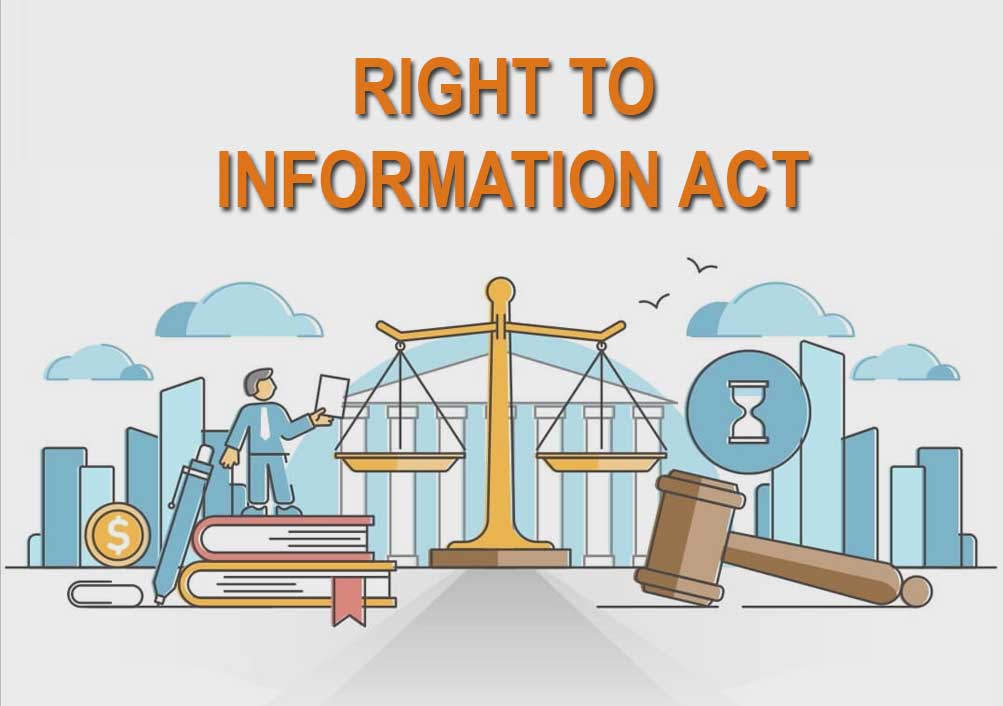
    Fundamental rights have been developed considering the existing natural rights to ensure that people can enjoy certain rights and freedoms for carrying out different functions. The right to freedom of speech and expression made available to citizens of India is one of the important rights provided to people which also includes the right to obtain different kinds of information and express your views and opinion on the same. The right to information has been discussed in this legal provision mentioned in the Constitution of India which was further made clear through the enactment of the Right to Information Act in 2005. It provided a complete mechanism for the fulfilment of functions concerning important information and data in different domains. In this paper, the researcher focuses on the right to information legislation in different countries like UK and Mexico compared with the provisions in India along with the exemptions concerning the same. The researcher has analyzed the constitutional provisions and the provisions mentioned under the Right to Information Act, 2005 to understand how the right is made available to the citizens in India. The Freedom of Information Act in the UK and Mexico are analyzed and compared with that of India to deal with the different aspects of the right to information. The right to access different kinds of information from public authorities is also discussed by the researcher in this paper where the provisions for the same in different countries are referred to.