Author: PRASANNASRI26092001

  • SODOMY LAWS AND THEIR EVOLUTION INTO HOMOPHOBIA

    SODOMY LAWS AND THEIR EVOLUTION INTO HOMOPHOBIA

    SODOMY LAWS AND THEIR EVOLUTION INTO HOMOPHOBIA

    Author – JAYA MAHATY MANDALAPARTHY, Student at ALLIANCE SCHOOL OF LAW, ALLIANCE UNIVERSITY

    Best Citation – JAYA MAHATY MANDALAPARTHY, SODOMY LAWS AND THEIR EVOLUTION INTO HOMOPHOBIA, Indian Journal of Legal Review (IJLR), 1 (1) of 2023, Pg. 32-37, ISBN – 978-81-961097-8-3.

    ABSTRACT

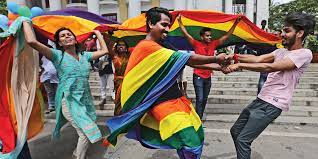
    Sodomy is a term that was initially defined as anal intercourse. Slowly, it included acts of sex with animals and oral sex as well. Laws against sodomy were put into place by governments across the world to prevent sexual assault. This pure intention tainted over time. With a rise in homophobic population and circulation of anti-gay ideas, sodomy laws were used to oppress and punish homosexuals for merely being themselves. The LGBTQ community in the 20th century was subject to witch hunts and their rights and freedom were curbed, if not snatched away. Sodomy was a concept brought to India by the British Raj, along with social homophobia. For ages this statute was used to accuse homosexuals of horrific acts such as child molestation despite their innocence. While many states of the US have already taken measures to remove this law, it only came to the notice of Indian judiciary not long ago. In recent times, thankfully, people are opening their eyes and finally fighting against this unjust precedent. In 2018, the Supreme Court of India decriminalized sodomy in a landmark judgment. This was a steppingstone for the queer community in India. Due to the intense backlash they face for their sexuality, this judgement provided them with protection and freedom to be themselves without as much fear. Many countries that were previously colonized and had this statute present in their law also removed it for protection of human rights. This paper aims to inform the reader about the very concept of sodomy, how it evolved in India and the US and its slow descent to decriminalization.

    Key words: sodomy, sex, homosexual, oppression, decriminalization
  • Domestic Violence Against the Elderly – An Analytical Study

    Domestic Violence Against the Elderly – An Analytical Study

    Domestic Violence Against the Elderly – An Analytical Study

    Author – Aman Mujeeb, Student at Alliance School Of Law

    Best Citation – Aman Mujeeb, Domestic Violence Against the Elderly – An Analytical Study, Indian Journal of Legal Review (IJLR), 1 (1) of 2023, Pg. 27-31, ISBN – 978-81-961097-8-3.

    ABSTRACT

    This study aims to examine and dissect elderly abuse in India and how it affects their quality of life. The present demographic system of the country shows a peak in the adult population. According to a 2011 census, 8.6% of the population constitutes the elderly, i.e., people aged 60 and above. Every year, hundreds of thousands of adults over 60 undergo abuse, neglect, or financial exploitation. Despite the number of cases, little evidence shows any intervention to thwart elder abuse. Fieldwork shows that the elderly that were abused are in a worse mental and physical state than those who were not. The elderly being physically and mentally weak and are seen to have poor decision making capabilities they are often taken advantage of and exploited despite rules and regulations existing in the state to prevent them from abuse. It maybe because rules are not stringent or maybe because of the inadequate knowledge and unawareness regarding the existing laws in force. The elderly are often ignored and their basic rights are often violated. This paper analyses how elder abuse takes place what leads to it and why it is not reported in large scale.

    Keywords: domestic violence, elderly, mistreatment

  • The Indian Version of Human Rights

    The Indian Version of Human Rights

    The Indian Version of Human Rights

    Author – Sifat Aasiya Ajmeri, Student at Amity law school, Noida

    Best Citation – Sifat Aasiya Ajmeri, The Indian Version of Human Rights, Indian Journal of Legal Review (IJLR), 1 (1) of 2023, Pg. 21-26, ISBN – 978-81-961097-8-3.

    ABSTRACT

    Human rights is Rights inherent to all human beings, regardless of race, religion, ethnicity, nationality, gender, sexual orientation, disability status or any other characteristic. India is a democratic country that guarantees certain rights to its citizens under the Constitution. . The Constitution of India is the supreme law of the land and it guarantees certain rights to its citizens. These rights include the right to equality, freedom of speech and expression, freedom of religion, and the right to life and liberty. This research paper will take you to a journey of human rights in india which will include historical developmet, the laws protecting human right,,  NHRC establishment and its purpose.This paper will also tell people’s role in human rights protection.

    Keywords– human rights, constitution, fundamental rights, NHRC, Article 21.

  • NEW MEDIA AND POLITICAL TRANSFORMATION

    NEW MEDIA AND POLITICAL TRANSFORMATION

    NEW MEDIA AND POLITICAL TRANSFORMATION

    Author – Shreya Srivastava, Student at University of Allahabad

    Best Citation – Shreya Srivastava, NEW MEDIA AND POLITICAL TRANSFORMATION, Indian Journal of Legal Review (IJLR), 1 (1) of 2023, Pg. 13-20, ISBN – 978-81-961097-8-3.

    ABSTRACT

    The present article analyses political modernity, or the transformation of politics under the impact of new media. Observing the change in dynamic concepts of politics and new media helps one to understand the implications of strong governance and new media dominance. This article sheds light on such political and  socio-cultural change in the age of new media systems. However, this study is done briefly and primarily focuses on issues due to this change, with a balanced analysis of its beneficial factors too. This transformation of media culture comes up with substantial issues in the political sphere as to how the dominance of new media creates a dilemma in politics, further empowering the potential of participation of the public without being actually in power, and the development of concepts such as “pop politics,” “echo chambers,” “political polarization,” and “political activism in new media.” The study further raises the question of how this new media is building a bridge to bring people into real politics, which is actually a double-edged sword. Moreover, the development of internet politics has raised the concern of the transfer of information without any limits, fact-checking, or filtering, and the question of how to know what is true and what is not without any editorial check and standards. The judicial aspect of new media has also been discussed, and to conclude, the future dilemma due to this change has also been put into shadow. The aim of this article is to enlighten readers with the above-mentioned concept and leave it to their discretion to conclude whether the dominance of new media in politics makes the political landscape a better or worse place than before. 

    KEYWORDS: New media, political modernity, political polarization, social media, media culture, politics

  • THE MOUNTING PROBLEM OF SPACE DEBRIS

    THE MOUNTING PROBLEM OF SPACE DEBRIS

    THE MOUNTING PROBLEM OF SPACE DEBRIS

    Author – AYUSH B. GURAV, STUDENT AT ILS LAW COLLEGE, PUNE

    Best Citation – AYUSH B. GURAV, THE MOUNTING PROBLEM OF SPACE DEBRIS, Indian Journal of Legal Review (IJLR), 1 (1) of 2023, Pg. 07-12, ISBN – 978-81-961097-8-3.

    Abstract

    The gateway of space has opened up a new frontier for the progress of mankind. The journey of space expedition has ushered transcendental development in space science. But with increasing space activities an unprecedented risk has emerged, the risk of space debris. The increased activities and the launch of space objects by the space-faring nations gave rise to certain regulations in the form of treaties and conventions with potential relevance to space debris. However, there is a terrifying large gap when it comes to dispute resolution, liability protocol and compensation mechanisms.

    India, as a space-faring nation aim for social benefits with long-term sustainability of outer space activity as a key guiding principle. Its standpoint on space debris, “common but differentiated responsibility” to maintain space environment has been supported by many developing countries.

    The subject matter of International Space Law particularly on the issue of Space debris is still in its nascent stage. However, a humble attempt is made in this Article to analyze the mounting problem of Space debris with respect to International as well as Domestic viewpoint.

    Keywords Space Debris, Orbital Debris, UNCOPUOS, ISRO, Space Junk, IADC, Sustainable space environment.

  • UNRAVELING THE DOMESTIC VIOLENCE LAWS IN INDIA

    UNRAVELING THE DOMESTIC VIOLENCE LAWS IN INDIA

    UNRAVELING THE DOMESTIC VIOLENCE LAWS IN INDIA

    Author – Charu Kohli, Student at Vivekananda Institute of Professional Studies, Delhi

    Best Citation – Charu Kohli, UNRAVELING THE DOMESTIC VIOLENCE LAWS IN INDIA, Indian Journal of Legal Review (IJLR), 1 (1) of 2023, Pg. 01-06, ISBN – 978-81-961097-8-3.

    Abstract

    Domestic violence or domestic abuse is the act of superiority and getting things done the way one likes in a household by the use of violence. Domestic abuse is a heinous act of violence and abuse in the family setup. The NFHS Survey which was conducted over a span of thirteen years from 2006 to 2019 clearly showcases that the amount of domestic abuse incidents is actually on the rise in India and consistently they are growing in numbers. The present legislation of the Republic of India precisely focuses to safeguard and prevent the female population from facing any kind of violent act domestically and protects them from abuse from male members of the society. However, the male segment of the population too faces emotional, economic, and physiological domestic violence predominately but it has not been addressed therefore protection of both is mandatory. Even after the honorable courts of India time and again reinstated the need for 60 days per case, the cases of domestic violence seem to stretch on for years and years on end.

    KEYWORDS- domestic violence, Indian law, domestic abuse, protection of Women from domestic violence act 2005, dowry prohibition act 1961, Indian penal code 498a, social stigma against victims of domestic violence, support services

  • “MEDICAL NEGLIGENCE DURING COVID-19 ERA IN BANGLADESH: AN ANALYSIS OF LAW AND PRACTICE”

    “MEDICAL NEGLIGENCE DURING COVID-19 ERA IN BANGLADESH: AN ANALYSIS OF LAW AND PRACTICE”

    “MEDICAL NEGLIGENCE DURING COVID-19 ERA IN BANGLADESH: AN ANALYSIS OF LAW AND PRACTICE”

    Author – Md. Mohsin Hasan Abir, Student at Department of Law and Human Rights, University of Asia Pacific, Dhaka, Bangladesh.

    BEST CITATION – Md. Mohsin Hasan Abir, MEDICAL NEGLIGENCE DURING COVID-19 ERA IN BANGLADESH: AN ANALYSIS OF LAW AND PRACTICE, INDIAN JOURNAL OF LEGAL REVIEW (IJLR), 3 (1) OF 2023, PG. 840-855, ISSN – 2583-2344.

    ABSTRACT

    Medical negligence is a major human rights concern that has a strong impact on the right to life and the right to healthcare services. Many of the significant amounts of medical negligent cases proceed without legal remedy that leads to a rigid situation in which public faith in medical care providers is lost. The Constitution of Bangladesh ensures the right to life and recognizes the right to health care. Bangladesh is already a party to a number of international treaties through which the government is supposed to maintain and support the rights. During Covid-19 pandemic era, medical negligence has recently become a well-liked subject of concern and debate in many developed states, and many of them have already enacted and created different health care laws to improve health care laws. However, in Bangladesh there is no specific and comprehensive legislation to prevent medical negligence though many legal provisions are there under different statutes, which are not precisely codified. The quality of care in medical negligence has traditionally been important for external professional decision assessment. This article provides a review of medical negligence by the USA and the United Kingdom. In addition to that, this paper explained the available remedy or legal actions under the present laws. Under the supervision of the civil society, a responsible medical institutional framework supported by effective laws and regulations may create a fair and convenient health care system in Bangladesh.

    Keyword: Medical Negligence, Medical Protection, Healthcare Law, Bangladesh, Covid-19 Pandemic.

  • UPI PAYMENTS AND THEIR ATROCITIES

    UPI PAYMENTS AND THEIR ATROCITIES

    UPI PAYMENTS AND THEIR ATROCITIES

    Author – Sinrella Mittal, Student at Bharati Vidyapeeth (Deemed to be University) New Law College, Pune.

    BEST CITATION – Sinrella Mittal, UPI PAYMENTS AND THEIR ATROCITIES, INDIAN JOURNAL OF LEGAL REVIEW (IJLR), 3 (1) OF 2023, PG. 834-839, ISSN – 2583-2344.

    ABSTRACT

    The Barter system was a blotchy method of exchange of goods and services for consideration. Since ancient time money transfigured itself into many forms and today it had finally emerged in the form of currency. In the United Nations (UN) member states, UN General Assembly non-member observer states, partially recognized or unrecognized nations, and their dependent entities, 180 currencies are now accepted as legal money. Since independence, currency has made up at least two-thirds of the total amount of money in circulation. The amount of currency in circulation increased dramatically from Rs 1,230 crores in July 1951 to Rs 3,052 crores by the end of June 1967. Gold coins, bullion, foreign securities, and other precious metals made up 54% of the Issue Department’s assets in July 1951, with Government of India rupee securities making up the remaining 42%. By June 1967, the former proportion had come down to less than 10 per cent, while the latter had risen to 88 per cent and the trend is incessant.[1] The behaviour of people using currency in developing nations that are facing various socio-political and economic difficulties has been examined. While each of these nations faces unique difficulties, they all share a heavy reliance on cash and an extremely low adoption rate of other payment methods. India, where, 60% of individuals lack banking access, is a country with a cash-heavy economy that relies heavily on gold as a store of wealth. However, there is always a cost that the nations must bear for their strong reliance on finance.[2] To cope up with such a calamitous problem, the domestic economy welcomed a revolutionizing step towards easing out the reckoning activities and was named as Unified Payments Interface. But along with easing the payment activities, it has somewhere made these activities prone to attack with a fear of losing out data and of course, financial delinquency.  

    Keywords: UPI transactions, OTP/ PIN, Digital Payments, Attack and Fraud.


    [1] Currency: Changes and Challenges, RESERVE BANK OF INDIA (Jan 22, 2023, 07:04 PM), https://rbidocs.rbi.org.in/rdocs/content/PDFs/90042.pdf.

    [2] Bhaskar Chakravorti, The Hidden Costs of cash, HARVARD BUSINESS REVIEW (Jan 31, 2023, 12:23 PM), https://hbr.org/2014/06/the-hidden-costs-of-cash.

  • CONSTITUTIONAL VALIDITY OF SECTION 2(c)(i), CONTEMPT OF COURTS ACT, 1971: A CRITICAL ANALYSIS

    CONSTITUTIONAL VALIDITY OF SECTION 2(c)(i), CONTEMPT OF COURTS ACT, 1971: A CRITICAL ANALYSIS

    CONSTITUTIONAL VALIDITY OF SECTION 2(c)(i), CONTEMPT OF COURTS ACT, 1971: A CRITICAL ANALYSIS

    Author – Abhinav Viswanath, Student at School of Law, CHRIST (Deemed to be) University

    BEST CITATION – Abhinav Viswanath, CONSTITUTIONAL VALIDITY OF SECTION 2(c)(i), CONTEMPT OF COURTS ACT, 1971: A CRITICAL ANALYSIS, INDIAN JOURNAL OF LEGAL REVIEW (IJLR), 3 (1) OF 2023, PG. 827-833, ISSN – 2583-2344.

    ABSTRACT

    It is a well-known fact that the freedom of speech and expression is an important facet of any democratic nation. The Constitution of India recognises the freedom of speech and expression as a fundamental right under Art. 19(1)(a). However, it is also crucial to ensure this freedom is not absolute in nature to preserve sovereignty, public order, decency and morality in the nation. The freedom of speech and expression has been restricted in various platforms, and the Constitution provides that the same includes in matters of contempt of court to preserve the administration of justice, and the sanctity of the courts. The Contempt of Courts Act, 1971 was enacted to define and limit the powers of certain courts in punishing contempt of courts and the procedures involved therein. However, a particular provision of the law has led to the rise in various debates regarding its scope, extent and limitations due to its apparent vague phrasing. Sec. 2(c)(i) of the Act has been critically analysed in the paper by incorporating the test of reasonability under the right to equality as well as the freedom of speech and expression. The paper focuses on the scope of Art. 14 and the impugned section by critically analysing the judicial approach of the Supreme Court in situations regarding the arbitrariness, and the discretion to determine the meaning of the phrase ‘tendency to scandalise’. The paper further critically analyses the scope of Art. 19(1)(a) and the reasonable restrictions laid down under Art. 19(2) to determine the validity of the clauses mentioned in the impugned section. The paper has also referred to the certain judicial approaches in similar circumstances in the USA and UK to critically analyse the ambit of Sec. 2(c)(i). The paper concludes by providing an understanding of the test of due process of law involved in determining the constitutional validity of any statute to determine the constitutional validity of the impugned provision.

  • RIGHT TO DIE VIS-À-VIS EUTHANASIA: A CRITICAL ANALYSIS 

    RIGHT TO DIE VIS-À-VIS EUTHANASIA: A CRITICAL ANALYSIS 

    RIGHT TO DIE VIS-À-VIS EUTHANASIA: A CRITICAL ANALYSIS 

    Author – Abhinav Viswanath, Student at School of Law, CHRIST (Deemed to be) University

    BEST CITATION – Abhinav Viswanath, RIGHT TO DIE VIS-À-VIS EUTHANASIA: A CRITICAL ANALYSIS, INDIAN JOURNAL OF LEGAL REVIEW (IJLR), 3 (1) OF 2023, PG. 822-826, ISSN – 2583-2344.

    ABSTRACT

    Every person should have the right to life. The right to life is guaranteed by both Article 21 of the Indian Constitution and Article 3 of the 1948 Universal Declaration of Human Rights. Every component of the right to life has always been open to judicial review and depends on the circumstances. This heading also includes the right to die. Euthanasia is considered a “good death” or “mercy killing.” It is argued that there are some circumstances in which a person should be given the option to choose death rather than being forced to remain alive. There are various perspectives on this that either oppose the authorization of mercy killing or reject the authorization of the death as a right to die for certain reasons. Everyone has the right to have a respectable life while remaining within specified boundaries, and it is required of them to struggle when faced with challenging conditions. He shouldn’t slant forward toward the circumstances. Such lessons are taught to us through Indian culture. Hinduism holds that the soul is eternal. The only way to transform a body is through death. The soul is immortal and never dies. The Muslim faith rejects the idea that life should cease other than at Allah’s will and supports only natural death. However, under some circumstances in today’s culture, it is argued that a person should have the option to choose death. Therefore, in this situation, the administration and the Parliament should establish appropriate laws and rules to prevent abuses.

    KEY WORDS: Euthanasia, Right to Die, Art. 21