Author: PRASANNASRI26092001

  • PROTECTION OF WOMEN AGAINST VOILENCE WITH SPECIAL REFRENCE TO INTERNATIONAL PERSPECTIVE

    PROTECTION OF WOMEN AGAINST VOILENCE WITH SPECIAL REFRENCE TO INTERNATIONAL PERSPECTIVE

    PROTECTION OF WOMEN AGAINST VOILENCE WITH SPECIAL REFRENCE TO INTERNATIONAL PERSPECTIVE

    Author – ANITA VERMA, RESEARCH SCHOLAR AT AP GOYAL SHIMLA UNIVERSITY H.P

    Best Citation – ANITA VERMA, PROTECTION OF WOMEN AGAINST VOILENCE WITH SPECIAL REFRENCE TO INTERNATIONAL PERSPECTIVE, Indian Journal of Legal Review (IJLR), 3 (2) of 2023, Pg. 126-132, APIS – 3920 – 0001 & ISSN – 2583-2344.

    Abstract

    Violence against women is defined as any act of gender-based violence that results in, or is likely to result in, physical, sexual or mental harm or suffering to women and girls, including threats of such acts, coercion or arbitrary deprivation of liberty, whether occurring in public or in private life. Domestic violence is a global issue reaching across national boundaries as well as socio-economic, cultural, racial and class distinctions. Domestic violence against women is an age-old phenomenon. Women were always considered weak, vulnerable and in a position to be exploited. Violence has long been accepted as something that happens to women. Cultural mores, religious practices, economic and political conditions may set the precedence for initiating and perpetuating domestic violence, but ultimately committing an act of violence is a choice that the individual makes out of a range of options. This problem is not only widely dispersed geographically, but its incidence is also extensive, making it a typical and accepted behaviour. Domestic violence is wide spread, deeply ingrained and has serious impacts on women’s health and well-being. Its continued existence is morally indefensible. The main aim of present research paper to know about the different international perspective of word Domestic violence against women and protect women through different conventions, declaration etc.

    Keywords: Domestic Violence, Women, International, Act of Violence

  • THE CONSTITUTION AND REALITY OF THE GOVERNOR’S ROLE IN INDIA: AN EXAMINATION OF THE POWERS, DUTIES, AND RESPONSIBILITIES OF THE GOVERNOR

    THE CONSTITUTION AND REALITY OF THE GOVERNOR’S ROLE IN INDIA: AN EXAMINATION OF THE POWERS, DUTIES, AND RESPONSIBILITIES OF THE GOVERNOR

    THE CONSTITUTION AND REALITY OF THE GOVERNOR’S ROLE IN INDIA: AN EXAMINATION OF THE POWERS, DUTIES, AND RESPONSIBILITIES OF THE GOVERNOR

    Author – Ekshita Jain, Student at Christ (Deemed to be) University

    Best Citation – Ekshita Jain, The Constitution and Reality of the Governor’s Role in India: An Examination of the Powers, Duties, and Responsibilities of the Governor, Indian Journal of Legal Review (IJLR), 3 (2) of 2023, Pg. 120-125, APIS – 3920 – 0001 & ISSN – 2583-2344.

    Abstract

    A controversial discussion about the governors’ discretionary power has been going on since the Indian Constitution was adopted. Being an unelected constitutional government member, the Governor’s Office has been caught in the middle of turmoil. According to the Constitution of India, the governor is responsible for maintaining law and order in the state, appointing the chief minister and other ministers, and ensuring the functioning of the state’s legislative and executive bodies. However, in the reality of Indian politics, the governor’s role and power can vary widely depending on various factors, such as the political composition of the state, the ruling party at the Centre, and the personal beliefs and biases of the governor. In some cases, governors may act as a mere rubber stamp for the ruling party at the Centre, while in others, they may exercise significant influence over the state’s politics. There are several instances of the Governor’s position being abused, frequently at the direction of the Centre’s ruling party. Typically, the appointment process is what causes it. In several instances, the central government has selected politicians and former bureaucrats who identify with a specific political ideology as governors. This violates the neutral seat required by the constitution and has led to bias, as it appears to have in Karnataka and Goa. President’s Rule (Article 356) recommendations from governors have sometimes been based on ‘objective facts,’ but rather on political whims or preferences. Hence, this paper analyses some of the issues pertaining to choosing the chief minister, determining when to demonstrate legislative majority, requesting information about daily operations, appearing to take a long time to assent to bills or reserving bills for the President, criticizing specific state government policies. Therefore, the methodology used in this paper is primarily analytical and supported by statistical data. There are a lot of recommendations and suggestions given by various commissions like Punchhi and Sarkaria to solve these kinds of issues coming up. The “Punchhi panel – 2010” advocated including a clause allowing the state assembly to remove the governor from office. The governor’s appointment should include input from the state’s top minister. The Sarkaria Commission advised against frequently using Article 365. Enhancing India’s federal system is necessary to stop gubernatorial abuse. The governor must exercise his discretion and personal judgment while acting responsibly, impartially, and effectively for the smooth operation of the government.

  • SOCIAL STOCK EXCHANGE: A GLOBAL PERSPECTIVE WITH INDIAN FEASIBILITY

    SOCIAL STOCK EXCHANGE: A GLOBAL PERSPECTIVE WITH INDIAN FEASIBILITY

    SOCIAL STOCK EXCHANGE: A GLOBAL PERSPECTIVE WITH INDIAN FEASIBILITY

    Authors – HIMAJA CHALLAPALLI & MAANASI PILLA, STUDENTS AT BENNETT UNIVERSITY

    Best Citation – HIMAJA CHALLAPALLI & MAANASI PILLA, SOCIAL STOCK EXCHANGE: A GLOBAL PERSPECTIVE WITH INDIAN FEASIBILITY, Indian Journal of Legal Review (IJLR), 3 (2) of 2023, Pg. 107-119, APIS – 3920 – 0001 & ISSN – 2583-2344.

    Abstract

    In recent years, the idea of Social Stock Exchange (SSEs) has become more well-known as a way to support social enterprises and organizations with an impact.  Are stock exchanges that make it easier to trade shares issued by nonprofit organizations, social businesses, and other organizations with a social mission. A new generation of investors who are interested in social effects as well as financial profits may be drawn to since they have created new opportunities for socially conscious investing. With an emphasis on the viability of SSE in India under SEBI norms, this research study intends to understand what SSE is, and how they work and undertake a comparative analysis of SSE globally.

    The paper’s structure broadly is as follows: The methodology of the study is described here and then a comprehensive case study on India. An outline of the SSE, including its features, and prospective effects, is given in this research paper. Then follows, an analysis of the major conclusions for each country SSE is presented. In order to make a comprehensive and informative comparison of SSE implemented world over including that of India’s, this study will explore and analyze their organizational frameworks, legal frameworks, and regulatory frameworks. Six SSE that had been implemented—or, in the case of India, newly established—in various countries were chosen for research. The report mostly uses secondary research.

    The intention of this paper is to comprehend the idea of SSE and their history.

    • To assess international efforts related to SSE.
    • To venture into the advantages and disadvantages of SSE.
    • To delve into legal structure of SSE.
    • To determine whether social stock markets in India are feasible under SEBI regulations.
    • To offer advice on the challenges faced by SSE in India.

  • A COMPARATIVE ANALYSIS ON THE SEDITION LAW REGIME IN INDIA AND THE UNITED STATES

    A COMPARATIVE ANALYSIS ON THE SEDITION LAW REGIME IN INDIA AND THE UNITED STATES

    A COMPARATIVE ANALYSIS ON THE SEDITION LAW REGIME IN INDIA AND THE UNITED STATES

    Author – ANINDYA BHAN, STUDENT AT CHRIST (DEEMED TO BE UNIVERSITY)

    Best Citation – ANINDYA BHAN, A COMPARATIVE ANALYSIS ON THE SEDITION LAW REGIME IN INDIA AND THE UNITED STATES, Indian Journal of Legal Review (IJLR), 3 (2) of 2023, Pg. 100-106,  APIS – 3920 – 0001 & ISSN – 2583-2344.

    ABSTRACT

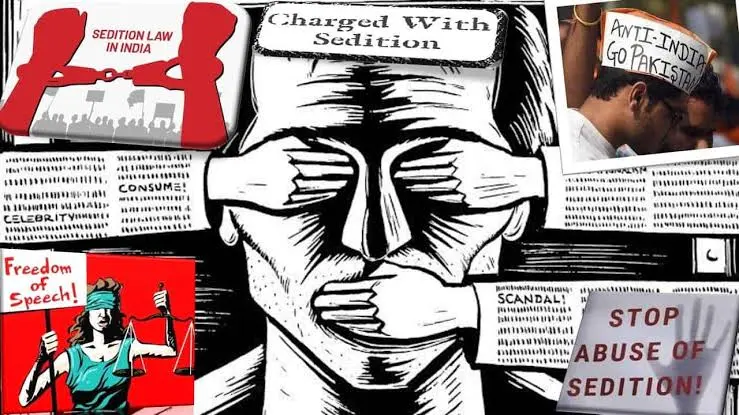
    All legislative and executive activities in India must comply with the provisions of the Constitution because it is the country’s supreme law. The most fundamental, inherent, and natural right that each man is endowed with from the moment of his birth is the right to free expression, which is protected by Article 19(1)(a). The most fundamental human right is therefore the freedom of speech and expression, whose restriction is a flagrant breach of human rights and cannot be permitted in any contemporary democratic government. Not always is the right to free speech guaranteed. By criminalising any kind of expression that incites hatred, contempt, or disaffection toward a legally created government in India, Section 124A of the Indian Penal Code, 1860 places restrictions on the right to freedom of speech and expression of the people. The punishment outlined in this section seems somewhat irrational considering that those found guilty under this part may get a life sentence. Its effectiveness in the contemporary democratic system is called into question as a result. There is constant discussion about the necessity and applicability of this clause in a democratic and independent India. There have been examples of the law of sedition being misused both before and after independence, which has raised major questions about whether such a legislation is necessary today. The First Amendment, on the other hand, guarantees the right to freedom of speech and expression in the USA, a country whose government is built on democratic principles. Despite having liberal and democratic beliefs, the US continues to have a sedition legislation, although the US Supreme Court has gradually limited its use over time.  The Sedition Act, passed in 1798, established sedition as a criminal offence for the first time in the US. This paper, revolves around the effort to analyse the current sedition statute in light of Article 19(1)(a) and seeks to determine if such a law is necessary in the current Indian context by doing a comparative analysis of the sedition laws in the United States.

    Key Words: Sedition, Constitution of India, Comparative Public Law, US Constitution.

  • CASE COMMENTARY ON DR. RAM RAJ SINGH V. BABULAL (AIR 1982 ALL 285)

    CASE COMMENTARY ON DR. RAM RAJ SINGH V. BABULAL (AIR 1982 ALL 285)

    CASE COMMENTARY ON DR. RAM RAJ SINGH V. BABULAL (AIR 1982 ALL 285)

    Author – GOWRI R NAIR, Student at MAR GREGORIOS COLLEGE OF LAW

    Best Citation – GOWRI R NAIR, CASE COMMENTARY ON DR. RAM RAJ SINGH V. BABULAL (AIR 1982 ALL 285), Indian Journal of Legal Review (IJLR), 3 (2) of 2023, Pg. 95-99,  APIS – 3920 – 0001 & ISSN – 2583-2344.

    ABSTRACT

    The given case that is Dr. Ram Raj Singh v. Babulal is based on the principle known as “nuisance”. The word nuisance originates from the Latin word “nocumentum” of which the French equivalent is “nuisance” which means no more than harm. Nuisance as a tort means an unlawful interference with a plaintiff’s use or enjoyment of land without physically entering into one’s property that is without a direct act of trespass. The interference can be in any way. It can be noise, vibrations, heat, smoke, smell, fumes, water, gas, electricity, disease-producing germs e t c…. Nuisance as tort law protects the citizens against discomfort. Nuisance can be distinguished from trespass. Trespass is a direct physical interference with the plaintiff’s possession of land through some material or tangible objects. In nuisance, there is unlawful interference without entering into one’s property. For example, if one plants a tree on another person’s land it is trespass whereas, if one plants a tree on his land and the roots or branches from the tree grows into or over another person’s land then that is a nuisance.

  • THE IMPACT OF JUS SOLI AND JUS SANGUINIS ON THE CONDITION OF STATELESSNESS

    THE IMPACT OF JUS SOLI AND JUS SANGUINIS ON THE CONDITION OF STATELESSNESS

    THE IMPACT OF JUS SOLI AND JUS SANGUINIS ON THE CONDITION OF STATELESSNESS

    Authors – PRAJAL JOSHI & SANYA SINGHAL, STUDENTS AT SYMBIOSIS LAW SCHOOL, HYDERABAD

    Best Citation – PRAJAL JOSHI & SANYA SINGHAL, THE IMPACT OF JUS SOLI AND JUS SANGUINIS ON THE CONDITION OF STATELESSNESS, Indian Journal of Legal Review (IJLR), 3 (2) of 2023, Pg. 86-94,  APIS – 3920 – 0001 & ISSN – 2583-2344.

    ABSTRACT

    Humans as a species have always been curious about finding new territories and defending their existing beliefs and areas. This has led to many wars, communal disputes and other vices that lead to displacement of people and various problems such as Statelessness. It may also be caused by various discrimination which may be based on race or gender or religion of the people. According to a report by the United Nation Refugee Agency over 4.3 million people are stateless in 95 countries[1]. The problem was realised at an international scale after the world war and Convention on Reduction of Statelessness[2] was introduced by the United Nation where the different states agreed to reduce the cases of statelessness around the world. Countries and International organisations over the years have recognized the human rights of Stateless People and have conducted various awareness drives to increase awareness about the same. The object of the present research paper firstly is to see the impact of “Jus Soli and Jus Sanguinis” on statelessness. Secondly the research paper will also look at the current causes of statelessness around the world and give suggestions to prevent the same.

    Keywords: Statelessness, Jus Soli, Jus Sanguinis, citizenship, UNHCR.


    [1] UNHRC, https://www.unhcr.org/refugee-statistics/ (last visited April 3, 2023).

    [2] Convention on the Reduction of Statelssness, 1961, 989 U.N.T.S 175.

  • CRITICAL ANALYSIS ON SUSTAINABLE DEVELOPMENT AS PER THE STOCKHOLM DECLARATION

    CRITICAL ANALYSIS ON SUSTAINABLE DEVELOPMENT AS PER THE STOCKHOLM DECLARATION

    CRITICAL ANALYSIS ON SUSTAINABLE DEVELOPMENT AS PER THE STOCKHOLM DECLARATION

    Author – ISHITA JHA, STUDENT AT AMITY LAW SCHOOL, AMITY UNIVERSITY, UTTAR PRADESH

    Best Citation – ISHITA JHA, CRITICAL ANALYSIS ON SUSTAINABLE DEVELOPMENT AS PER THE STOCKHOLM DECLARATION, Indian Journal of Legal Review (IJLR), 3 (2) of 2023, Pg. 78-85,  APIS – 3920 – 0001 & ISSN – 2583-2344.

    ABSTRACT

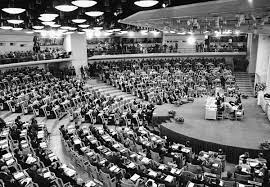
    In this paper, we will be discussing the concept of sustainable development as per the Stockholm Declaration. This paper will conduct an in-depth study as to how and why did the concept of sustainable development emerge. We shall start the research paper by answering certain basic questions in brief as to what the role of the United Nations Environment Programme is, what is Stockholm Declaration, why was is required, what is sustainable development, etc. Once we understand the basics we shall move to the deeper analysis where we analyse the concept of sustainable development as per the Stockholm Declaration looking at it from a multidisciplinary viewpoint. Most of the nations were rapidly consuming and depleting their natural resources at an alarming rate which led to the international organisations taking strict actions to control the damage for not just the present generations but also using resources in a judicious manner so that they can be replenished and be used by the future generations as well. There were multiple other reasons that led to the development of sustainable development, we shall discuss them all in this paper.

  • COSMETICS INCLUDE HEAVY METALS: LAWS RELATED TO IT AROUND THE WORLD

    COSMETICS INCLUDE HEAVY METALS: LAWS RELATED TO IT AROUND THE WORLD

    COSMETICS INCLUDE HEAVY METALS: LAWS RELATED TO IT AROUND THE WORLD

    AUTHOR – ANJANAH G J, STUDENT AT SASTRA DEEMED TO BE UNIVERSITY

    Best Citation – ANJANAH G J, COSMETICS INCLUDE HEAVY METALS: LAWS RELATED TO IT AROUND THE WORLD, Indian Journal of Legal Review (IJLR), 3 (2) of 2023, Pg. 71-77, APIS – 3920 – 0001 & ISSN – 2583-2344.

    ABSTRACT

    Beauty creates an impression of an individual when someone meets or looks at him/her. Beauty is gender neutral but it is mostly women who fall for this trap of looking better than men. The picturization of women is always done in an imaginary way and in such way, she is depicted as beautiful. But it is often not imagined that she is also a human being, having hormonal secretion and whatever way she looks it’s just “her”. In order to attain of what is being picturized, the consumers fall for these cosmetic products. These products deceive the consumers by saying that they it is safe and will add various kinds of contaminants. One such contaminant being the heavy metals puts the health of the consumers in huge trouble and continuous use of which might even affect the nervous system, kidney system and even reproductive system of the human body[1]. The author in this paper has tried to explain the hazardous outcome which emanates along with the use of cosmetics including personal and hygiene care products. The paper also tries to throw light on the laws related to cosmetics enacted in India as well as major countries with similar or better regulations. This paper is majorly based upon the study conducted by the Centre for Science and Environment (CSE)[2] on Heavy Metals in Cosmetics, January 2014[3].

    Keywords: Cosmetics Product, Heavy Metal, Drug and Cosmetics Act, 1940, ppm (parts per million), Coloring Agent


    [1] (Kim et al., 2015Bocca et al., 2014Senesse et al., 2004Agoramoorthy et al., 2008Al Amry et al., 2011Smith et al., 2015) and also in “Evaluation of heavy metals in cosmetic products and their health risk assessment” by Hamna Arshad,Moniba Zahid MehmoodMunir Hussain Shah, and Arshad Mehmood Abbasi (https://www.ncbi.nlm.nih.gov/pmc/articles/PMC7335825/) (visited on 24.03.2023)

    [2] Centre for Science and Environment (CSE) is a not-for-profit public interest research and advocacy organisation based in New Delhi, India. Established in 1980, CSE works as a think tank on environment-development issues in India, poor planning, climate shifts devastating India’s Sundarbans and advocates for policy changes and better implementation of the already existing policies. https://www.cseindia.org/ (Visited on 22.03.2023)

    [3] Heavy Metals in Cosmetics, Investigators: Mr. Ramakant Sahu, Ms. Poornima Saxena and Dr. Sapna Johnson; PML/PR-45/2014 (https://cdn.cseindia.org/userfiles/Heavy_Metals_in_Cosmetics_Report.pdf) (Visited on: 26.03.2023)

  • INCLUSIVE JUSTICE: THE JUDICIARY’S RESPONSIBILITY IN ADVANCING THE MARRIAGE RIGHTS OF THE LGBTQ+ COMMUNITY

    INCLUSIVE JUSTICE: THE JUDICIARY’S RESPONSIBILITY IN ADVANCING THE MARRIAGE RIGHTS OF THE LGBTQ+ COMMUNITY

    INCLUSIVE JUSTICE: THE JUDICIARY’S RESPONSIBILITY IN ADVANCING THE MARRIAGE RIGHTS OF THE LGBTQ+ COMMUNITY

    Author – K R SPANDANA, STUDENT ATBENNETT UNIVERSITY

    Best Citation – K R SPANDANA, INCLUSIVE JUSTICE: THE JUDICIARY’S RESPONSIBILITY IN ADVANCING THE MARRIAGE RIGHTS OF THE LGBTQ+ COMMUNITY, Indian Journal of Legal Review (IJLR), 3 (2) of 2023, Pg. 64-70, APIS – 3920 – 0001 & ISSN – 2583-2344.

    ABSTRACT

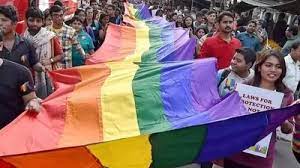
    A culture such as India places a high level of significance on the institution of marriage. Over the course of many millennia, ceremonies have always been performed in the same approach. The idea that a man and a woman are united in some way by means of these rites carries with it a great deal of weight and import. The recognition of a category of people who have always been a part of society but were never accepted is evolving along with the shifting times. These are people who have always been a part of society but were never accepted. The desires and hopes of the members of the LGBTQ+ community to have the same level of recognition and treatment that is accorded to heterosexual people. A person’s desire to be legally and spiritually bound to their partner is something that they are still working hard to achieve.

  • THE CURRENT INDIAN FINTECH INDUSTRY: EXPLORING THE EXPANSION, CONFUSIONS, AND OPPORTUNITIES FOR MSME’S

    THE CURRENT INDIAN FINTECH INDUSTRY: EXPLORING THE EXPANSION, CONFUSIONS, AND OPPORTUNITIES FOR MSME’S

    THE CURRENT INDIAN FINTECH INDUSTRY: EXPLORING THE EXPANSION, CONFUSIONS, AND OPPORTUNITIES FOR MSME’S

    Author – MUSKAAN AGGARWAL, Student at O. P. JINDAL GLOBAL UNIVERSITY

    Best Citation – MUSKAAN AGGARWAL, THE CURRENT INDIAN FINTECH INDUSTRY: EXPLORING THE EXPANSION, CONFUSIONS, AND OPPORTUNITIES FOR MSME’S, Indian Journal of Legal Review (IJLR), 3 (2) of 2023, Pg. 53-63, APIS – 3920 – 0001 & ISSN – 2583-2344.

    ABSTRACT

    Over the years, access to finances has been one of the key issues faced by MSMEs, especially considering that the emerging companies lack a proper CIBIL score, or the required credit history, making it difficult for them to secure loans, especially through the traditional methods of Banking. Regulatory and privacy concerns continue to surround the growing plans of the sector, leading to a precarious situation of unclear regulations and frequent changes. While it might be argued that the precarious situation shall only pave way for a robust ecosystem of lending in India, however, it cannot be denied that the current stage of confusion is capable of having a negative effect on the growth of MSMEs, especially considering the various regulations that are coming in and going out related to digital lending.Therefore, this article shall aim to highlight the regulatory concerns with the current digital lending regime, especially in the context of MSMEs, considering that they shall be the first to bear the brunt of the unclear fintech landscape. The first part of the article shall provide a brief summary about the historical transformation from traditional lending to digital lending in India, through a discussion on the shortcomings of traditional lending and the advantages of digital lending. The second part shall discuss the growth of fintech industries and digital lending, along with a discussion on Budget 2023. The third part of the article shall discuss RBIs digital lending regulations. The fourth part shall discuss the concerns with the current regime of digital lending, and the last part shall provide some recommendations for the government to provide a suitable lending mechanism for MSMEs in India.