Author: PRASANNASRI26092001

  • Study On Pledge By Non Owen

    Study On Pledge By Non Owen

    Study On Pledge By Non Owen

    Authors: K. Antony, Student of Saveetha School of Law, Saveetha University

    Best Citation – K. Antony, Study On Pledge By Non Owen, Indian Journal of Legal Review (IJLR), 3 (1) of 2023, Pg. 507-518, ISSN – 2583-2344.

    ABSTRACT

    A pledge of land is that the equivalent of the English weish mortgage wherever possession of land is given to the grownup either for an explicit or indefinite amount. Pledges of land are of two types: non-self liquidating pledge and self- liquidating pledge. Non- self liquidating pledge arises wherever the owner or occupier of land, in thought for an advance of cash or money value offers possession and use of a chunk of land to the pledgee human till he the pledgor repays the loan. Self liquidating pledge or term pledge applies during a scenario wherever the pledgor doesn’t ought to pay any cash so as to redeem for redemption is automatic in most cases particularly once the expiration of a given time-frame. A pledge of land is an autochthonous reasonably mortgage by that an owner occupier of land so as to secure an advance of cash or money’s value offers possession and use of the land to the pledge human till the debt is absolutely discharged; A pledge in customary law is akin to some reference to a mortgage in common law. Even with the origination of the land Use Act the character of a pledge has not modified, as what’s concerned during a pledge is simply a right of occupancy . a right to the possession and use of the land. The pledge confers sure rights on each the grownup and also the pledgor in relevancy the land. All the rights are customary law rights, because the pledge could be a customary law dealing.

    KEYWORDS: Pledge,possession,customary,law,rights,owner

  • A STUDY ON PRINCIPAL RIGHTS AGAINSTS AGENTS

    A STUDY ON PRINCIPAL RIGHTS AGAINSTS AGENTS

    A STUDY ON PRINCIPAL RIGHTS AGAINSTS AGENTS

    Authors: G. Bose, Student of Saveetha School of Law, Saveetha University

    Best Citation – G. Bose,, A STUDY ON PRINCIPAL RIGHTS AGAINSTS AGENTS, Indian Journal of Legal Review (IJLR), 3 (1) of 2023, Pg. 499-506, ISSN – 2583-2344.

    Abstract

    Under customary law, an operator is just qualified for compensation for his administrations as a specialist if the details of the organization understanding so give. Where the organization understanding does not explicitly accommodate installment of compensation to the specialist, and there is a question between the head and operator with regards to one side to guarantee any compensation and the sum and terms of installment of such compensation, the court may need to decide whether, on the realities of the case, there are any suggested terms in regard of the equivalent in the office understanding.  In choosing whether there are any inferred terms in regard of any issues in an organization understanding, the court will have respect to every one of the conditions of the case, for example, the nature and length of the administrations given by the specialist, the express terms of the office understanding, the traditions and practices of the calling or exchange of the operator, any past course of dealings between the head and the operator, and so forth. In the business world, if administrations are rendered by the operator and acknowledged by the head, there is regularly

    Keywords: Agents, rights, against, principal.

  • APPLICATION OF NARCO ANALYSIS IN CRIMINAL JUSTICE SYSTEM IN INDIA: AN ANALYTICAL PERSPECTIVE

    APPLICATION OF NARCO ANALYSIS IN CRIMINAL JUSTICE SYSTEM IN INDIA: AN ANALYTICAL PERSPECTIVE

    APPLICATION OF NARCO ANALYSIS IN CRIMINAL JUSTICE SYSTEM IN INDIA: AN ANALYTICAL PERSPECTIVE

    Authors: Sharmista Sigdel, Ph.D Scholar, Sikkim University

    Best Citation – Sharmista Sigdel, APPLICATION OF NARCO ANALYSIS IN CRIMINAL JUSTICE SYSTEM IN INDIA: AN ANALYTICAL PERSPECTIVE, Indian Journal of Legal Review (IJLR), 3 (1) of 2023, Pg. 490-498, ISSN – 2583-2344.

    Abstract

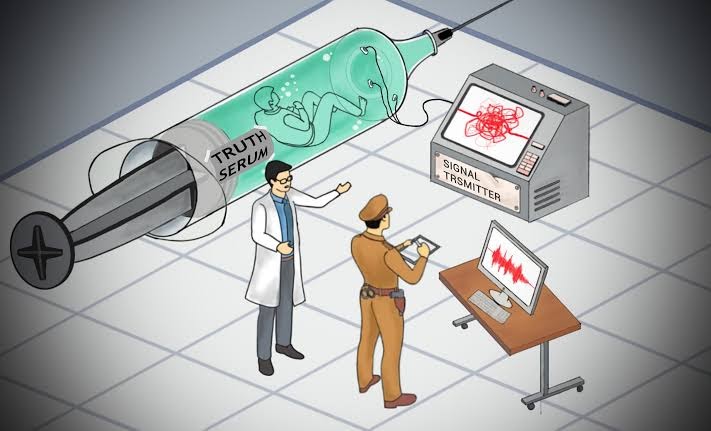
    The development of science and technology has made it necessary for investigators to rely on numerous scientific deception methods. The goal of which is to identify and associate criminals with the crime. One such field that has become increasingly important in recent years in criminal investigations is forensic science. Although remarkably, the discipline of forensic science incorporates several distinctive aspects of the period in which it has been used, there is also a little more to it than first appears. The application of narcoanalysis in the criminal justice system is a modern breakthrough in this scientific field that has significant implications for the criminal justice system in India. Hence, a detailed analysis of the nature of these new forensic science techniques shall be undertaken. Narco analysis, which applies science to criminal legislation during the criminal inquiry, is incomprehensible. There is a likelihood of injustice occurring because the validity and reliability of narco analysis are sustained in light of the issues in which it was administered and this needs to be verified as the efficacy of the test is yet to be recognized.  Individual liberty is a major issue in the current criminal justice system, as crimes have become commonplace and criminals are taking advantage of the defects of the legal system.  The modus operandi involved in narco analysis remains using drugs as psychoactive measures used to extract information from the subjects who are incapable of shelling out. However, it has been claimed that the judicial system adopted a unified approach to the use of this procedure and provided a notion of conditional use, making it clear that neither the process nor its application in every criminal case could be overlooked.  This paper provides a brief analytical approach to the application of the narco analysis in criminology.

    Keywords: Constitution, Criminal Justice, Deception, Evidence, Investigation, Narco analysis, Scientific techniques

  • “CONSTITUTIONAL VALIDITY OF JUDICIAL REVIEW AND THE RISK OF JUDICIAL OVERREACH”

    “CONSTITUTIONAL VALIDITY OF JUDICIAL REVIEW AND THE RISK OF JUDICIAL OVERREACH”

    “CONSTITUTIONAL VALIDITY OF JUDICIAL REVIEW AND THE RISK OF JUDICIAL OVERREACH”

    Authors: Himasree Bommishetty & M. Bhuvaneswari Ram, Students of DAMODARAM SANJIVAYYA NATIONAL LAW UNIVERSITY

    Best Citation – Himasree Bommishetty & M. Bhuvaneswari Ram, “CONSTITUTIONAL VALIDITY OF JUDICIAL REVIEW AND THE RISK OF JUDICIAL OVERREACH”, Indian Journal of Legal Review (IJLR), 3 (1) of 2023, Pg. 484-489, ISSN – 2583-2344.

    ABSTRACT

    In every Government, three organs are distinct from each other. They are Legislative, Executive, and Judiciary. The role of the Legislative organ of the State makes laws, the executive organ enforces the laws, and the Judiciary interprets, applies them, and reviews the laws.  Each organ while performing their specific powers and responsibilities they tend to intrude with the other branch functions. Thus, without overlapping with the functions and duties of other organs, The Indian Constitution draws a line between the three organs of the Indian Government by introducing a concept called the Separation of powers. They provide checks and balances to ensure that there is a separation of power, so no single organ has too much power over the other. The Judiciary plays a pivotal role among the other three branches because it has a responsibility to maintain the balance between the powers of other branches. The Judiciary should perform its functions and act like an independent and impartial body to protect the citizens’ rights and maintain the balance between the authorities. Further, in this article, we discuss in detail the concepts of Judicial Review and Judicial Overreach.

  • Live – In Relationship in India

    Live – In Relationship in India

    Live – In Relationship in India

    Authors: Divyanshi singh, Student of SVKM NMIMS KIRIT P. MEHTA SCHOOL OF LAW

    Best Citation – Divyanshi singh, Live – In Relationship in India, Indian Journal of Legal Review (IJLR), 3 (1) of 2023, Pg. 479-483, ISSN – 2583-2344.

    ABSTRACT

    An unmarried couple living together in a long-term relationship that resembles marriage is known as a live-in relationship. It’s referred to as cohabitation in everyday speech. The law grants married people a number of rights and privileges in an effort to uphold and promote marriage. These rights and privileges are not conferred through cohabitation. In a live-in relationship, two people voluntarily decide to live together in order to maintain a long-term connection that mimics marriage. In this essay, the legal and sociological perspectives on cohabitation in India are analysed, with a focus on the status of women in such relationships.

  • DATA PROTECTION BILL: A CRITICAL STUDY

    DATA PROTECTION BILL: A CRITICAL STUDY

    DATA PROTECTION BILL: A CRITICAL STUDY

    Authors: Abhijit Ghosh, Student of School of Law, CHRIST (Deemed to be) University

    Best Citation – Abhijit Ghosh, DATA PROTECTION BILL: A CRITICAL STUDY, Indian Journal of Legal Review (IJLR), 3 (1) of 2023, Pg. 471-478, ISSN – 2583-2344.

    ABSTRACT

    This paper aims to shed light on various data protection-related provisions in Indian laws. The development of technology has made it possible for devices that are connected to the internet to collect user data, sometimes even without the user’s knowledge. Concerns over the right to privacy have arisen as a result of this. In order to understand the gaps in Indian law, a comparative analysis with other legal systems has also been conducted. These days, it is common to hear public employees threaten privacy in the name of “Procedure Established by Law” or “Public Duty,” two concepts that are arguably the most important to human survival on this planet. A person’s right to privacy, which is essentially what Article 21 of our Indian Constitution guarantees, is as essential to a peaceful life with dignity and freedom as oxygen is to the human body. The fundamental connections between data protection and privacy make them a very important and delicate area of law today. To address this issue The Data Protection Bill 2021 is the result of the Joint Parliamentary Committee’s report on the Personal Data Protection Bill of 2019, which was recommended to it. Both personal and non-personal data are covered under the Bill. Since its inception, the Bill has come under fire for being skewed in favour of the company collecting the data and for potentially having serious problems with user rights. Globally, data privacy laws have properly given users primary control over data gathering and consent.

    Keywords: Privacy, Rights, Data, Data protection rights, Constitution

  • Deceptive Similarity In Trademark Law

    Deceptive Similarity In Trademark Law

    Deceptive Similarity In Trademark Law

    Authors: Manisha Chakravarti, Student of Jagran Lakecity University, Bhopal

    Best Citation – Manisha Chakravarti, Deceptive Similarity In Trademark Law, Indian Journal of Legal Review (IJLR), 3 (1) of 2023, Pg. 466-470, ISSN – 2583-2344.

    Abstract

    Every individual on this planet has various rights over their property, be it immovable or movable. Similarly, there are some legal protections given to intellectual property like inventions, logos, symbols, designs, etc., and offenders who violate the owner’s rights by copying them face consequences. In this paper, we covered the infringement of the rights of the owner of a trademark, one of the intellectual properties. Sometimes, the defendant does not exactly copy the work of the owner but creates a similar product that resembles the former or the original product, which means deceptive similarity. In this paper, we discussed the meaning of deceptive similarity, how we can test for trademark infringement, and some judicial interpretations.

  • IT (Intermediary Guidelines and Digital Media Ethics) Rules, 2021: Constitutionally Justified Or Not?

    IT (Intermediary Guidelines and Digital Media Ethics) Rules, 2021: Constitutionally Justified Or Not?

    IT (Intermediary Guidelines and Digital Media Ethics) Rules, 2021: Constitutionally Justified Or Not?

    Authors: Abhishek Charan, Student of Alliance School of Law, Alliance University, Bangalore

    Best Citation – Abhishek Charan, IT (Intermediary Guidelines and Digital Media Ethics) Rules, 2021: Constitutionally Justified Or Not?, Indian Journal of Legal Review (IJLR), 3 (1) of 2023, Pg. 459-465, ISSN – 2583-2344.

    Abstract

    On 25th February, 2021, the Ministry of Electronics and Information Technology and the Ministry of Information and Broadcasting notified the Information Technology (Intermediary Guidelines and Digital Media Ethics Code) Rules, 2021(herein after referred to as “IT Rules, 2021”). These rules triggered a discourse from all the stakeholders who are directly and indirectly affected by these guidelines. This comes after couple incidents of violence which are believed to have been caused through messages over platforms like WhatsApp, Facebook, Twitter, etc. and also on few films or shows which are released over platforms like Netflix, Amazon Prime, etc. 2021 has introduced significant due diligence requirements which need to be followed by any intermediary be it a significant social media intermediary, a news and current affairs content intermediary or an OTT platform. These rules relate to compelling interception, monitoring, and decryption of communications. These rules seem to violate Article 19(1) (a) by seeking to impermissibly deprive intermediaries of their safe-harbour protection under Section 79 of the IT Act, and violates the K.S Puttaswamy judgment- Article 21’s guarantee of privacy by requiring traceability by design. This paper focuses on whether the IT Rules of 2021 complies the law set by the Hon’ble Supreme Court in K.S Puttaswamy v Union of India (2017) 10 SCC 1 and also whether the traceability mandate of the IT Rules would be helpful or not.

    Keywords: IT Rules 2021, Traceability, Puttaswamy judgment and Right to Privacy

  • CHILD ABUSE: GLOBAL CONCERN & HUMAN RIGHTS BASED APPROACH

    CHILD ABUSE: GLOBAL CONCERN & HUMAN RIGHTS BASED APPROACH

    CHILD ABUSE: GLOBAL CONCERN & HUMAN RIGHTS BASED APPROACH

    Authors: Avantika Hebbar, Student of School of Law, CHRIST (Deemed to be) University

    Best Citation – Avantika Hebbar, CHILD ABUSE: GLOBAL CONCERN & HUMAN RIGHTS BASED APPROACH, Indian Journal of Legal Review (IJLR), 3 (1) of 2023, Pg. 453-459, ISSN – 2583-2344.

    Abstract:

    “Childhood should be carefree, playing in the sun; not living a nightmare in the darkness of the soul.”
                                                                                                                                        Dave Pelzer  

    Child Trafficking is a widespread issue on a global level. A very high number of children and women have become the victim of trafficking for forced labour and commercial sex. The United Nations has stated that approximately one million to four million people are trafficked on a global level every year which values more than 10 billion dollars. 20% of the total victim who are trafficked fall in the children category (below the age of 18). Such children go through various forms of violence and sexual exploitation once trafficked. The victims of child trafficking are taken away from their family  and are deprived of normal and healthy growth and development process. This consequently results in mental health problems and a negative well being.

    The research paper attempts to deliberate on the violation of Child Rights through Child Trafficking and analyse the role of the family in increasing number of trafficking. The paper further compares the characteristics between the countries comprising of highest and lowest number of trafficking, lastly analyses the existing law framework around Child trafficking on a global level to understand the efficiency on a deeper level.

    Key Words: Child Trafficking, Forced Labour, Sexual Exploitation, Child Rights.

  • ARTIFICIAL INTELLIGENCE AND INTELLECTUAL PROPERTY LAW: A COMPLEX RELATIONSHIP

    ARTIFICIAL INTELLIGENCE AND INTELLECTUAL PROPERTY LAW: A COMPLEX RELATIONSHIP

    ARTIFICIAL INTELLIGENCE AND INTELLECTUAL PROPERTY LAW: A COMPLEX RELATIONSHIP

    Authors: Srishti Roy Barman, Student of Hidayatullah National Law University

    Best Citation – Srishti Roy Barman, ARTIFICIAL INTELLIGENCE AND INTELLECTUAL PROPERTY LAW: A COMPLEX RELATIONSHIP, Indian Journal of Legal Review (IJLR), 3 (1) of 2023, Pg. 440-452, ISSN – 2583-2344.

    Abstract

    Human beings are quick witted. They have the ability to make life easy. But what if the ability to think is possible for machines? Intellectual property rights confer protection to creation of human intellect through copyright, patents, trademarks, etc. But what about creative works made by machines? The term coined for recognition of the ability of machines to think, act, learn is artificial intelligence. The ability to create as well as develop like human brain is a developing field of technology. However, now it has become a reality. Just like human beings, artificially intelligent technologies are able to create, learn, imitate. The conundrum lies on the intersection of artificial intelligence and intellectual property rights. What if AI could write a poem, can it be an author? What if AI comes up with new invention, can we give a patent to such inventions? What if AI technology is used to sell counterfeit goods on the internet. The major issue lies about personhood of artificial intelligence and liability in infringement claims. The article will discuss on the concept of artificial intelligence and challenges to enforcement of intellectual property rights over AI creations. The legal issues pertaining to artificial intelligence will be highlighted. The copyright regime on authorship of AI within different jurisdictions will be analyzed. The article will study the impact of artificial intelligence on patent ownerships and trademark law within various jurisdictions. The article will also discuss on the possibility of trade secret law to protect artificially intelligent innovations.