Category: Printed Version-Volume 1 and Issue 1 of 2023

  • ARTICLE ON INTERNET AND SOCIETY

    ARTICLE ON INTERNET AND SOCIETY

    ARTICLE ON INTERNET AND SOCIETY

    AUTHOR- ANSHIKA AGGARWAL, Student of BHAGAT PHOOL SINGH MAHILA VISHWAVIDAYALAYA, Department of Law, SONIPAT

    Best Citation – ANSHIKA AGGARWAL, ARTICLE ON INTERNET AND SOCIETY, Indian Journal of Legal Review (IJLR), 1 (1) of 2023, Pg. 59-63, ISBN – 978-81-961097-8-3.

    ABSTRACT

    Internet is a decisive technology of the Informative age, and in the 21st century there is a development of wireless technology. We can say that the humankind is now entirely connected with great level of inequality in bandwidth, efficiency, and price. Over the past several years, the internet has transformed the world and created large, interconnected, network society. This research article contain the effects of the internet on many aspects of the society. The research is based on varieties of journals and has been described by many subjects and keywords. Lastly, the analysis highlights specific impact of internet on human beings. The contribution of this paper is highlighting the many different perspective regarding the impact of internet on society. This paper explores the potential role of the Internet in promoting equitable development in third world countries.

    Keywords:- Internet, Development, Technology, Education, Society, Health.
  • Empowering Dalit and Minority Women: The Role of State and Central Government

    Empowering Dalit and Minority Women: The Role of State and Central Government

    Empowering Dalit and Minority Women: The Role of State and Central Government

    Author – Shashank Shekhar, Student at SVKM NMIMS

    Best Citation – Shashank Shekhar, Empowering Dalit and Minority Women: The Role of State and Central Government, Indian Journal of Legal Review (IJLR), 1 (1) of 2023, Pg. 52-58, ISBN – 978-81-961097-8-3.

    ABSTRACT

    It focuses on the challenges faced by Dalit and minority women in India, who are often subjected to discrimination and marginalization due to their caste, religion, and gender. The article highlights the importance of the government’s role in promoting social, economic, and political inclusion for these women and explores the current state of government policies and initiatives aimed at promoting equality. The article discusses the intersectionality of discrimination, gender-based violence, access to justice, empowerment and participation, and international human rights obligations. While some improvements have been made, significant disparities still exist, and the government needs to take proactive steps to address these challenges. The article concludes by offering recommendations for enhancing the effectiveness of existing policies and initiatives and promoting greater inclusion and equality for all citizens.

    Keywords: Equality, Empowerment, Justice, Discrimination, Marginalization

  • Defamation Laws in India: Balancing the Right to Reputation and Freedom of Expression

    Defamation Laws in India: Balancing the Right to Reputation and Freedom of Expression

    Defamation Laws in India: Balancing the Right to Reputation and Freedom of Expression

    Author – Shraddha Rai, Student at Faculty of Law, BHU, Varanasi

    Best Citation – Shraddha Rai, Defamation Laws in India: Balancing the Right to Reputation and Freedom of Expression, Indian Journal of Legal Review (IJLR), 1 (1) of 2023, Pg. 48-51, ISBN – 978-81-961097-8-3.
    Abstract

    Defamation is a legal concept that protects an individual’s reputation and dignity from harm caused by false statements. Defamation laws have evolved over time and have been applied differently across various jurisdictions. The Indian legal system has also seen various instances of the misuse of defamation laws for political gains or to silence critics and opponents.

    This paper provides an overview of the concept of defamation, its historical development, and the application of defamation laws in India. The paper discusses important case laws related to defamation in India, including the recent case of Rahul Gandhi, a prominent Indian politician who faced a defamation suit for corruption allegations.

    The paper also highlights the need for balancing the right to free speech with the right to reputation and how the Indian judiciary has tackled this issue. The paper concludes with the importance of raising awareness and sensitivity in the implementation of defamation laws to prevent their misuse and to ensure that they serve their intended purpose.

    Keywords: Defamation, Laws, Reputation, Expression

  • Cyber Crime- Types & Remedies

    Cyber Crime- Types & Remedies

    Cyber Crime- Types & Remedies

    Author – Areej Khalid, Student at Jitendra Chauhan College of Law

    Best Citation – Areej Khalid, Cyber Crime- Types & Remedies, Indian Journal of Legal Review (IJLR), 1 (1) of 2023, Pg. 42-47, ISBN – 978-81-961097-8-3.

    ABSTRACT

    The paper focuses on the emerging trend of online crimes and frauds. Any crime that involves a computer and a network is called computer crime also popularly known as cybercrime. Therefore, a crime which involves network and computer or is done through any digitalised platform is known as Cybercrime. There are four most common cybercrime Phishing Scam, Identity Theft, Salami Attack and Ransomware attack. The Government of India has looked into the rising rates of cybercrimes and has provided its citizens with respective legal remedies. Therefore, if a person gets victimised by these attacks there are certain legal remedies for the same that the person can seek.

  • Warren court – A Legal Analyses

    Warren court – A Legal Analyses

    Warren court – A Legal Analyses

    Author – Haripriya S, Student at School of Law, SRM University

    Best Citation – Haripriya S, Warren court – A Legal Analyses, Indian Journal of Legal Review (IJLR), 1 (1) of 2023, Pg. 38-41, ISBN – 978-81-961097-8-3.

    Abstract

    From 1953, when Count Warren became Chief Justice, until 1969, when Earl Warren resigned as Chief Justice, it was a constitutional revolution occurred Constitutional revolutions are rare in American history. In fact, the only constitutional revolution before the Warren Court was new. The transactional revolution of 1937, which fundamentally changed relations between the federal government and the states and between the government and the economy. Before 1937, America had great continuity   constitutional history. The first abrupt break occurred in 1937 with a new Agree with the court. Another sharp upheaval occurred in 1953-1969 with Warren Court. Will we experience a similar turnaround after this we still have to wait for 1969. However, it is certain that some resonance Warren’s trial continued at Burger Court, and perhaps even later.  The constitutional revolution initiated by the Warren Court is based on two general concepts that may have conflicted. First of all it was the idea of ​​a living constitution: a constitution that evolves with it to changing values ​​and circumstances. The other was marked updating the discourse of rights into a dominant constitutional form.

  • SODOMY LAWS AND THEIR EVOLUTION INTO HOMOPHOBIA

    SODOMY LAWS AND THEIR EVOLUTION INTO HOMOPHOBIA

    SODOMY LAWS AND THEIR EVOLUTION INTO HOMOPHOBIA

    Author – JAYA MAHATY MANDALAPARTHY, Student at ALLIANCE SCHOOL OF LAW, ALLIANCE UNIVERSITY

    Best Citation – JAYA MAHATY MANDALAPARTHY, SODOMY LAWS AND THEIR EVOLUTION INTO HOMOPHOBIA, Indian Journal of Legal Review (IJLR), 1 (1) of 2023, Pg. 32-37, ISBN – 978-81-961097-8-3.

    ABSTRACT

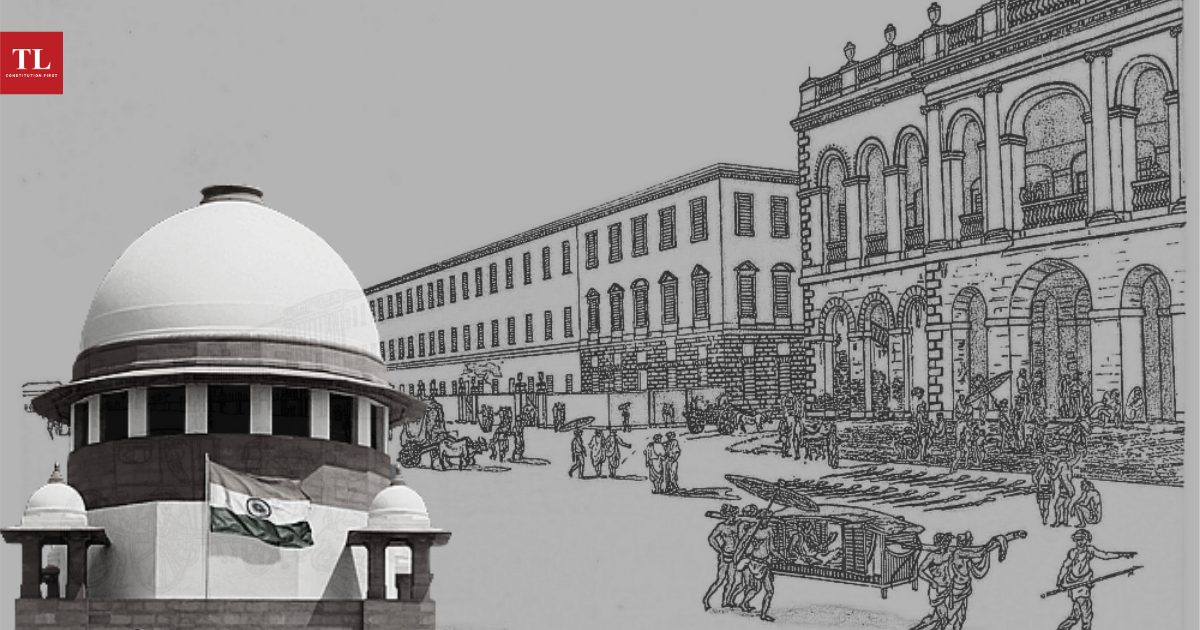
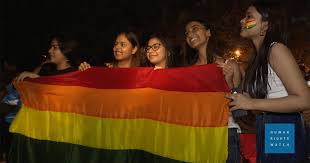
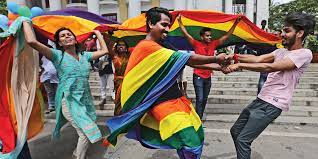
    Sodomy is a term that was initially defined as anal intercourse. Slowly, it included acts of sex with animals and oral sex as well. Laws against sodomy were put into place by governments across the world to prevent sexual assault. This pure intention tainted over time. With a rise in homophobic population and circulation of anti-gay ideas, sodomy laws were used to oppress and punish homosexuals for merely being themselves. The LGBTQ community in the 20th century was subject to witch hunts and their rights and freedom were curbed, if not snatched away. Sodomy was a concept brought to India by the British Raj, along with social homophobia. For ages this statute was used to accuse homosexuals of horrific acts such as child molestation despite their innocence. While many states of the US have already taken measures to remove this law, it only came to the notice of Indian judiciary not long ago. In recent times, thankfully, people are opening their eyes and finally fighting against this unjust precedent. In 2018, the Supreme Court of India decriminalized sodomy in a landmark judgment. This was a steppingstone for the queer community in India. Due to the intense backlash they face for their sexuality, this judgement provided them with protection and freedom to be themselves without as much fear. Many countries that were previously colonized and had this statute present in their law also removed it for protection of human rights. This paper aims to inform the reader about the very concept of sodomy, how it evolved in India and the US and its slow descent to decriminalization.

    Key words: sodomy, sex, homosexual, oppression, decriminalization

  • Domestic Violence Against the Elderly – An Analytical Study

    Domestic Violence Against the Elderly – An Analytical Study

    Domestic Violence Against the Elderly – An Analytical Study

    Author – Aman Mujeeb, Student at Alliance School Of Law

    Best Citation – Aman Mujeeb, Domestic Violence Against the Elderly – An Analytical Study, Indian Journal of Legal Review (IJLR), 1 (1) of 2023, Pg. 27-31, ISBN – 978-81-961097-8-3.

    ABSTRACT

    This study aims to examine and dissect elderly abuse in India and how it affects their quality of life. The present demographic system of the country shows a peak in the adult population. According to a 2011 census, 8.6% of the population constitutes the elderly, i.e., people aged 60 and above. Every year, hundreds of thousands of adults over 60 undergo abuse, neglect, or financial exploitation. Despite the number of cases, little evidence shows any intervention to thwart elder abuse. Fieldwork shows that the elderly that were abused are in a worse mental and physical state than those who were not. The elderly being physically and mentally weak and are seen to have poor decision making capabilities they are often taken advantage of and exploited despite rules and regulations existing in the state to prevent them from abuse. It maybe because rules are not stringent or maybe because of the inadequate knowledge and unawareness regarding the existing laws in force. The elderly are often ignored and their basic rights are often violated. This paper analyses how elder abuse takes place what leads to it and why it is not reported in large scale.

    Keywords: domestic violence, elderly, mistreatment

  • The Indian Version of Human Rights

    The Indian Version of Human Rights

    The Indian Version of Human Rights

    Author – Sifat Aasiya Ajmeri, Student at Amity law school, Noida

    Best Citation – Sifat Aasiya Ajmeri, The Indian Version of Human Rights, Indian Journal of Legal Review (IJLR), 1 (1) of 2023, Pg. 21-26, ISBN – 978-81-961097-8-3.

    ABSTRACT

    Human rights is Rights inherent to all human beings, regardless of race, religion, ethnicity, nationality, gender, sexual orientation, disability status or any other characteristic. India is a democratic country that guarantees certain rights to its citizens under the Constitution. . The Constitution of India is the supreme law of the land and it guarantees certain rights to its citizens. These rights include the right to equality, freedom of speech and expression, freedom of religion, and the right to life and liberty. This research paper will take you to a journey of human rights in india which will include historical developmet, the laws protecting human right,,  NHRC establishment and its purpose.This paper will also tell people’s role in human rights protection.

    Keywords– human rights, constitution, fundamental rights, NHRC, Article 21.

  • NEW MEDIA AND POLITICAL TRANSFORMATION

    NEW MEDIA AND POLITICAL TRANSFORMATION

    NEW MEDIA AND POLITICAL TRANSFORMATION

    Author – Shreya Srivastava, Student at University of Allahabad

    Best Citation – Shreya Srivastava, NEW MEDIA AND POLITICAL TRANSFORMATION, Indian Journal of Legal Review (IJLR), 1 (1) of 2023, Pg. 13-20, ISBN – 978-81-961097-8-3.

    ABSTRACT

    The present article analyses political modernity, or the transformation of politics under the impact of new media. Observing the change in dynamic concepts of politics and new media helps one to understand the implications of strong governance and new media dominance. This article sheds light on such political and  socio-cultural change in the age of new media systems. However, this study is done briefly and primarily focuses on issues due to this change, with a balanced analysis of its beneficial factors too. This transformation of media culture comes up with substantial issues in the political sphere as to how the dominance of new media creates a dilemma in politics, further empowering the potential of participation of the public without being actually in power, and the development of concepts such as “pop politics,” “echo chambers,” “political polarization,” and “political activism in new media.” The study further raises the question of how this new media is building a bridge to bring people into real politics, which is actually a double-edged sword. Moreover, the development of internet politics has raised the concern of the transfer of information without any limits, fact-checking, or filtering, and the question of how to know what is true and what is not without any editorial check and standards. The judicial aspect of new media has also been discussed, and to conclude, the future dilemma due to this change has also been put into shadow. The aim of this article is to enlighten readers with the above-mentioned concept and leave it to their discretion to conclude whether the dominance of new media in politics makes the political landscape a better or worse place than before. 

    KEYWORDS: New media, political modernity, political polarization, social media, media culture, politics

  • THE MOUNTING PROBLEM OF SPACE DEBRIS

    THE MOUNTING PROBLEM OF SPACE DEBRIS

    THE MOUNTING PROBLEM OF SPACE DEBRIS

    Author – AYUSH B. GURAV, STUDENT AT ILS LAW COLLEGE, PUNE

    Best Citation – AYUSH B. GURAV, THE MOUNTING PROBLEM OF SPACE DEBRIS, Indian Journal of Legal Review (IJLR), 1 (1) of 2023, Pg. 07-12, ISBN – 978-81-961097-8-3.

    Abstract

    The gateway of space has opened up a new frontier for the progress of mankind. The journey of space expedition has ushered transcendental development in space science. But with increasing space activities an unprecedented risk has emerged, the risk of space debris. The increased activities and the launch of space objects by the space-faring nations gave rise to certain regulations in the form of treaties and conventions with potential relevance to space debris. However, there is a terrifying large gap when it comes to dispute resolution, liability protocol and compensation mechanisms.

    India, as a space-faring nation aim for social benefits with long-term sustainability of outer space activity as a key guiding principle. Its standpoint on space debris, “common but differentiated responsibility” to maintain space environment has been supported by many developing countries.

    The subject matter of International Space Law particularly on the issue of Space debris is still in its nascent stage. However, a humble attempt is made in this Article to analyze the mounting problem of Space debris with respect to International as well as Domestic viewpoint.

    Keywords Space Debris, Orbital Debris, UNCOPUOS, ISRO, Space Junk, IADC, Sustainable space environment.