Blog

A STUDY ON THIRD PARTY FUNDING IN COMMERCIAL ARBITRATION

A STUDY ON THIRD PARTY FUNDING IN COMMERCIAL ARBITRATION

Authors: Elamathi. J & Soorya. S, Students of Christ (Deemed to be University), Bangalore

Best Citation – Elamathi. J & Soorya. S, A STUDY ON THIRD PARTY FUNDING IN COMMERCIAL ARBITRATION, Indian Journal of Legal Review (IJLR), 3 (1) of 2023, Pg. 78-87, ISSN – 2583-2344.

Abstract:

The growth of third-party funding is inevitable given the complexity of international commercial disputes and the variety of requests for dispute resolution. The third-party funding model compensates for the absence of a legal aid system in the arbitration field, which indirectly enhances the quality of arbitration trials, thereby promoting the better development of arbitration as a dispute settlement method. It also provides investment opportunities for the funders and shares the financial burden and arbitration risks with the parties to disputes. However, the practice of arbitration also faces considerable difficulties due to resulting conflicts of interest, case confidentiality, enforcement issues, and other dangers. Therefore, it is essential to set up reliable regulatory frameworks to safeguard the advancement of third-party finance models. The hazards that the model faces in practice are examined in this study, and the pertinent issues that prevent the model from developing more effectively are made clear. This foundation allows for the consideration of all subjects’ interests, the detailed regulation of each stage of the process, and the overall organisation of the “regulation” of third-party funding.

Keywords: Arbitration, Third party funding

POLLEN AS EVIDENCE

POLLEN AS EVIDENCE

Authors: Alpesh Kumar, Students of CHANAKYA NATIONAL LAW UNIVERSITY PATNA

Best Citation – Alpesh Kumar, POLLEN AS EVIDENCE, Indian Journal of Legal Review (IJLR), 3 (1) of 2023, Pg. 71-77, ISSN – 2583-2344.

Abstract: –

Pollen from spermatophytes, fungi, ferns, and bryophytes, as well as other organic-walled microfossils like dinoflagellates and acritarches, are all included under the umbrella term palynomorph. The area of forensic botany has been significantly impacted by developments in plant genetics. More lately, forensic paleontology has been effectively utilized and applied to criminal inquiry. Pollen DNA profiling has yet to be used in forensic investigations, nevertheless.

Pollen was once used as a sort of botanical dust debris in several forensic examinations that used dust traces. Comparative morphological information, hints to unanticipated elements of breeding systems, pollination biology, and hybridization can all be found in the study of pollen grains.[1]

To better comprehend the conditions necessary for its development, forensic palynology is examined in relation to other forensic sciences. Additionally, recent developments are examined. Palynomorphs have the potential to produce great trace evidence since they may transmit, remain, and be detected with ease. Palynological evidence can offer incredibly strong associative and investigative evidence. Nevertheless, the effectiveness of palynology in forensic research has been uneven. There are numerous anecdotal instances when pollen evidence has achieved outstanding results.

But because it is labor-intensive, takes a great deal of knowledge and experience, lacks oversight over sample collection, lacks proper resources and funding, and is not widely renowned for its ability to solve crimes, it is grossly underutilized in most countries. Palynology has been applied to forensic issues in an unorganized manner, leaving the basic ideas without systematic debate. There is a need to establish palynological evidence through validation-type investigations and experiments, the introduction of independent proficiency testing, and the reevaluation of the acceptability of most evidence forms in the current legal climate.[2]

Keywords – Pollen, Evidence, Palynology, Forensic, Investigation


[1] Mildenhall, D., Wiltshire, P.E. & Bryant, V.M. (2006). Forensic palynology: why do it and how it works, Forensic Science International

[2] Woodhouse, R.P. (1935). Pollen Grains, McGraw Hill, New York

CRIME SCENE INVESTIGATION & TECHNICIANS

CRIME SCENE INVESTIGATION & TECHNICIANS

Authors: S.INDHU, Student of KARNATAKA STATE LAW UNIVERSITY & DR.N.KARTHIKEYAN, CLINICAL CARDIOLOGIST OF SREE ABIRAMI HOSPITAL PRIVATE LIMITED

Best Citation – S.INDHU, CRIME SCENE INVESTIGATION & TECHNICIANS, Indian Journal of Legal Review (IJLR), 3 (1) of 2023, Pg. 64-70, ISSN – 2583-2344.

ABSTRACT

                Crime Scene Investigation is primarily a collection of information and evidence or can be said as the reconstruction of a past event to identify or apprehend a suspect and to convict the same. Crime Scene Investigation involves a series of processes and deductions to connect a person to the crime. In this paper, we are explaining the importance of Forensic Technicians aiding in the process of identifying, apprehending, and deducting crime. Expert Analysis is highly availed by crime scene investigators in solving crimes and utilizing scientific methods to process the crime more efficiently. In a crime scene, the place of occurrence of a crime is considered to be three-dimensional and the evidence is scattered around the crime scene. Various Forensic Technicians are brought into service by the investigative officers to interpret multiple aspects of a crime scene. In this technological era, crimes being committed had also evolved alongside other developments and traditional investigation methods do not help in solving the crime nor convicting the suspect the investigators require cybercrime experts to deduce the crime and to find the source of the crime. Similarly, every Crime has advanced and criminals are adopting new methods in the commission of crimes. Forensic Technicians provide evidentiary support to connect a person to the crime scene and make it easier for the Justice system to conclude. The Forensic Community is of a wide range consisting of conglomerates of experts aiding the investigators by providing factual assertions and opinions about a crime. This paper primarily focuses on all the Forensic Expert Communities and their support in interpreting a crime. In addition to this, the paper also explains various forensic technics adopted by the experts in processing a crime scene and the latest development in forensic technologies that are being availed by Crime Scene Investigators.

Keywords: crime scene, fingerprint. Latent, patent, toxins, drugs, posions, autopsy, projectile, residues, firearms,arson, radioassay, spectroscopy

A Critical Assessment of Artificial Intelligence in Law

A Critical Assessment of Artificial Intelligence in Law

Authors: Ayesha Khan, Student of SVKM’s NMIMS’ Kirit P. Mehta School of Law

Best Citation – Ayesha Khan, A Critical Assessment of Artificial Intelligence in Law, Indian Journal of Legal Review (IJLR), 3 (1) of 2023, Pg. 59-63, ISSN – 2583-2344.

Abstract

The widespread coverage of Artificial Intelligence, its history, development and future prospects has made people more familiar with the concept of AI and its usage. However, the amalgamation of AI and law is an area which has just begun to be studied and examined by academicians and scholars primarily. The delay in the study of this area is primarily due to the ‘human-centric’ nature of law. This research provides a preliminary understanding of AI’s integration into legal and judicial systems, and its assistive and replacive capabilities in law. AI models have several predictive capabilities which function by processing large amounts of information which form, predictive models for legal assistance. For example, detecting the chances of a convict reoffending, providing low-cost legal remedies, eliminating biases etc. Recent developments have also seen the emergence of Robot lawyers, which function through AI chatbots and provide speedy and cost-effective legal aid. This research further looks at the complications and obstacles in AI systems, which have proved to be significant drawbacks in implementing and utilizing them to achieve justice.

Keywords: Artificial Intelligence, Law, Robot Lawyers, Predictive systems, Biases

THE BEIJING RULES ON JUVENILE DELINQUENCY: IMPLEMENTATION IN INDIA.

THE BEIJING RULES ON JUVENILE DELINQUENCY: IMPLEMENTATION IN INDIA.

Authors: Mrunmayi Vaidya, Assistant Professor, V. M. Salgaocar College Of Law, Goa

Best Citation – Mrunmayi Vaidya, THE BEIJING RULES ON JUVENILE DELINQUENCY: IMPLEMENTATION IN INDIA, Indian Journal of Legal Review (IJLR), 3 (1) of 2023, Pg. 55-58, ISSN – 2583-2344.

Introduction

Childhood is expected to be a happy phase of individuals life. A life of health, proper nutrition, recreation and an environment; safe and conducive for wholesome growth, is a rosy picture of childhood. However, not all children are fortunate to enjoy such a favourable life. Most children in the world are undernourished, deprived and abused. Therefore, a world suitable for the happy growing up, seems a distant dream. Children face a number of challenges all around, which impact their mind and body. This many a times leads to their deviance, thus pushing them to delinquency. A delinquent child is looked down by the society as well as the justice delivery system which has pre-conceived notions about its guilt.

Rape Laws In India: Gender Neutral?

Rape Laws In India: Gender Neutral?

Authors: Dhruv Bhanushali, student of SVKM’s NMIMS’ Kirit P. Mehta School of Law & Lekisha Daga, student of Jindal Global Law School

Best Citation – Dhruv Bhanushali, Rape Laws In India: Gender Neutral?, Indian Journal of Legal Review (IJLR), 3 (1) of 2023, Pg. 49-54, ISSN – 2583-2344.

Abstract

The Oxford Dictionary defines rape as the unlawful act of forcing someone to have intercourse when they do not want to or are unable to consent. This definition is a very gender-neutral definition. S.375 of the Indian Penal Code defines what is ‘Rape’. It starts by saying ‘A man is said to have committed rape if he-’. There is an emphasis on the person who is committing the act to be a man. A woman cannot be said to have ‘raped’ another woman. At maximum, she can be held for outraging another woman’s modesty, but not rape. This was held in Priya Patel v. State of Madhya Pradesh, which we will explain in depth in the paper. Another interesting aspect of the Indian Penal Code is that a man cannot be said to be ‘raped’. He can be held as to be ‘sodomized’ as covered under S.377 of the IPC but not ‘raped’. Even socially people believe that a man cannot be raped. Is this country in the right state of society now to make provisions for sexual offenses of the highest degree gender neutral? Will it result in a higher number of countersuits to rape accusations, or will it result in higher chances of justice for male victims? This is a question that needs to be discussed in greater detail. 

Keywords: Rape, Gender Neutral, Indian Penal Code

INTERNATIONAL BUSINESS MERGER AND LEGALITY OF INTERNATIONAL TRADE

INTERNATIONAL BUSINESS MERGER AND LEGALITY OF INTERNATIONAL TRADE

Author: Kaarthik Balaji V.G & Lathangi G, Students, VIT School of Law, VIT Chennai.

Best Citation – Kaarthik Balaji V.G & Lathangi G, INTERNATIONAL BUSINESS MERGER AND LEGALITY OF INTERNATIONAL TRADE, Indian Journal of Legal Review (IJLR), 3 (1) of 2023, Pg. 40-48, ISSN – 2583-2344.

ABSTRACT

There is a rapid growth in Business, Trade, and commerce. Due to the underlying competence in the global market and monopolistic competition the concept of International Business Merger has become indispensable. When a business merges with or acquires another business across international borders, this is referred to as an international merger or acquisition. International Business Merger is a huge term. It is also known as global merger. It involves an inbound merger, Outbound Merger with respect to Indian Context in terms of Cross Border Merger and there many also be a Cross Border Demerger. There may be a variety of reasons for a company to merge. These include market growth, reduce competition, diversify business, tax evasion, improve supply chain, acquire new technology etc. Customs laws, trade remedies, and anti-corruption laws are all included in the body of international trade law. Loss of tasks and inputs for the production process may result from this. Due to the inclusion of retroactive assessment of taxes, tariffs, and penalties, liability may be much higher, if the vendor’s assets are no longer reachable. After mergers, there won’t be any indemnity if the validity of these laws isn’t verified. A secure thorough due diligence can stop these trade concerns.

 This paper discusses about the rules and regulation associated with International Business Mergers such as FEMA, Companies Act, Tax Act and enables to devise a proper structure to gain control over the whole process efficiently and highlights important due diligence steps to mitigate the shortcomings. Further this paper also set out an analogy between international mergers and legality of Trade.

Keywords: Corporate restructuring, Inbound Mergers, Cross Border Merger, Due Diligence, Trade

Holding Armed Non-State Actors Responsible Under International Law: An Analysis to Broaden the Extent of International Humanitarian Law

Holding Armed Non-State Actors Responsible Under International Law: An Analysis to Broaden the Extent of International Humanitarian Law

Author: Aayush Akar & Aditya Gautam, Students, National Law University, Odisha

Best Citation – Aayush Akar & Aditya Gautam, Holding Armed Non-State Actors Responsible Under International Law: An Analysis to Broaden the Extent of International Humanitarian Law, Indian Journal of Legal Review (IJLR), 3 (1) of 2023, Pg. 34-40, ISSN – 2583-2344.

Abstract

Terrorism, which is far more brutal and barbaric than the two world wars, is wreaking the greatest destruction on humankind in recorded history in the 21st century. Even as humanity sobs, war lords and terrorist organisations continue to grow like wildfire and claim the lives of innocent people. Especially dangerous instances of the threat machines are the armed non-state actors of terrorist groups like Al-Qaeda, the Taliban, ISIS, and Boko-Haram. However, they are still exempt from the scope and application of international criminal law and are not subject to ICC prosecution. In both law and practise, the range of international obligations that apply to non-state organisations is surprisingly underdeveloped.

This essay tries to investigate and analyse how non-state actors, such as terrorist groups, might be included under the purview of international humanitarian law and how to prosecute them at the ICC for crimes against humanity. As international criminal law can play a crucial role in combating terrorism by providing equal justice for victims, fair treatment of suspects, and alternatives to collective assignments of guilt that result in the perpetuation of group-based hatred, discrimination, and xenophobia, as well as by holding terrorist organisations accountable before international criminal tribunals and by incorporating international humanitarian law and fundamental human rights norms into its corpus juris. The same legal remedies that the system of international criminal justice has provided should be available to terrorism victims.

Keywords: Terrorism, non-state actors, violence, human rights, obligations & international law

IDENTIFYING PRESSURE POINTS AND SOLUTIONS TO INTERNATIONAL REFUGEE LAW: AUSTRALIAN AND JORDANIAN REFUGEE LAWS AND POLICIES

IDENTIFYING PRESSURE POINTS AND SOLUTIONS TO INTERNATIONAL REFUGEE LAW: AUSTRALIAN AND JORDANIAN REFUGEE LAWS AND POLICIES

Author: Sohum Sakhuja & Aliza Khatoon, Students, Rajiv Gandhi National University of Law, Punjab

Best Citation – Sohum Sakhuja & Aliza Khatoon, IDENTIFYING PRESSURE POINTS AND SOLUTIONS TO INTERNATIONAL REFUGEE LAW: AUSTRALIAN AND JORDANIAN REFUGEE LAWS AND POLICIES, Indian Journal of Legal Review (IJLR), 3 (1) of 2023, Pg. 23-33, ISSN – 2583-2344.

Abstract

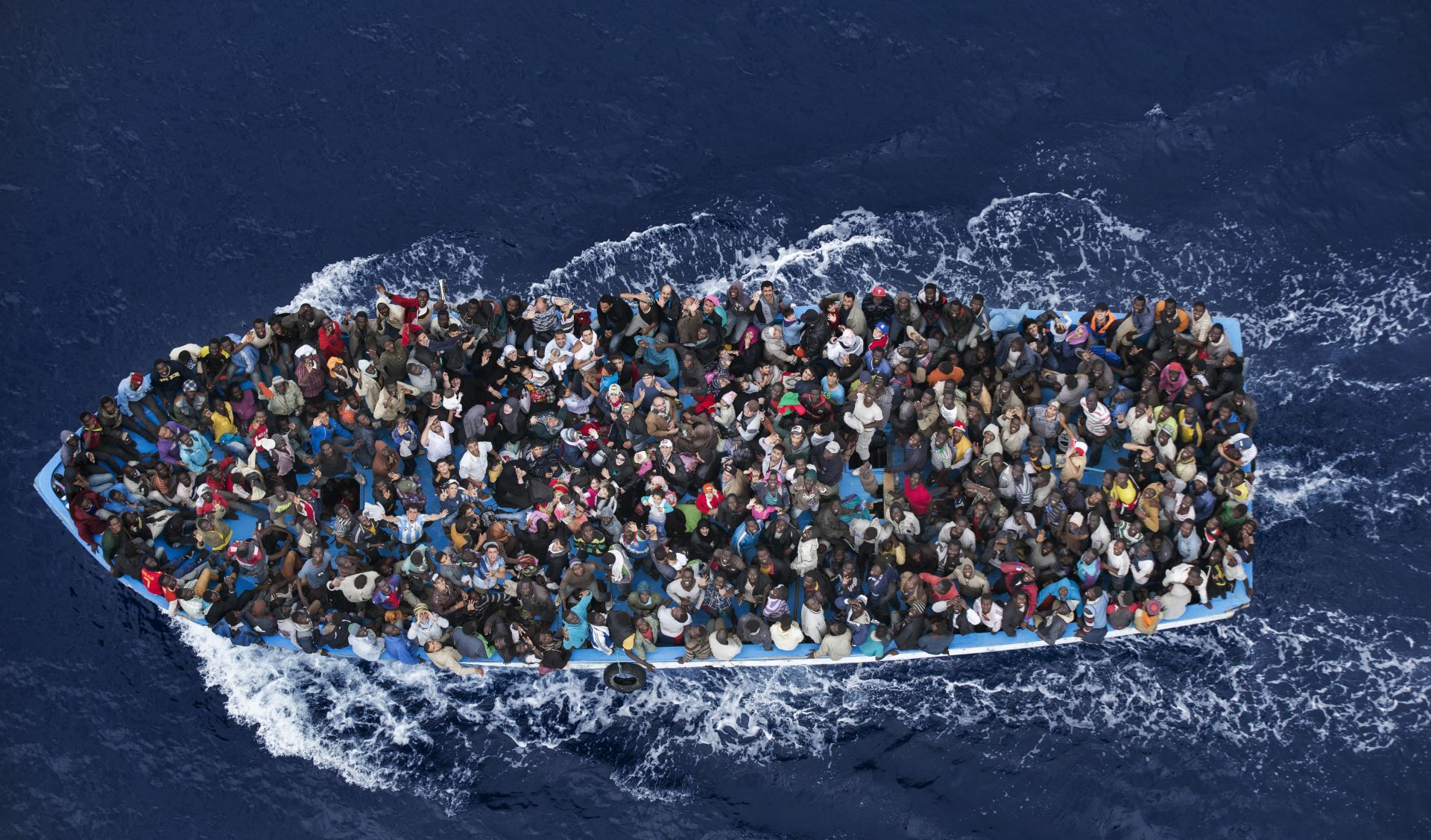
International Refugee Law (IRL), despite of its pre-eminence, has not ensured effective protection of the most intrinsic human rights for refugees around the world. An exposition of the refugee laws and policies of Australia and Jordan followed by a comparative analysis, provides potential solutions for the challenges faced by the international framework for protection of refugees. The research expounds the striking differences between these two nations’ laws and policies. Australia being a signatory to most major conventions protecting rights of refugees including the Refugee Convention 1951, has not developed a national framework that comprehensively protects the rights of refugees. Refugees are held in detention centres in and around Australia for prolonged periods constituting violation of various international conventions and treaties by which Australia is bound. Jordan’s diametrically different case is such that it is not a signatory to even the Refugee Convention and has abstained from signing various significant refugee conventions, yet it has the second largest population percentage of refugees. Minors in these groups are provided with education and adults with the right to work.  Both these models are representations of significant elements of IRL. The Australian model is a representation of challenges of enforcement and prioritization of national interests that exist with regards to IRL. The Jordanian model on the other hand puts forth solutions to many such challenges. This paper identifies the existing pressure points in IRL in co-relation to the Australian model and rethinks solutions for the same based on the Jordanian model.

“Import Substitution vs. Export Promotion, What works?”

“Import Substitution vs. Export Promotion, What works?”

Author:  Anushka Malkhare, Symbiosis Law School, Pune

Best Citation – Anushka Malkhare, “Import Substitution vs. Export Promotion, What works?” Indian Journal of Legal Review (IJLR), 3 (1) of 2023, Pg. 10-22, ISSN – 2583-2344.

Abstract

The import mechanism renders the growth of more local businesses and facilitates the money to be circulated within the walls of the economy while the export mechanism suggests the manufacturing of products specifically for the international market which increases the exports of the country. Initially the import mechanism was followed but eventually because of extensive government intervention it failed. Further, in light of the failure of the previous approach, the countries started to adopt export strategies to build a better competitive edge over others. But the current scenario in the global economy shows a shift in the strategy and the new trend of being self-reliant is being developed. This new trend suggests the adoption of more import substitution related trade policies. Irrespective of anything, ultimately the final objective of every country is to enhance the industrial and economic performance by adopting either of the mechanisms based on each country’s objectives. In this paper these two opposing strategies are discussed which include import substitution and export promotion. The paper aims to analyze both the mechanisms based on the available data and the case studies and draw out conclusions on what works better. Based on the examples of other countries the paper examines the past trends and draws out a way forward for the world particularly in the after effects of the covid-19 pandemic. The focus of the research paper is on the current scenario and how the world is recovering after the pandemic, it further tries to give suggestions on what path India follow for economic development should.

Keywords – Import substitution, export promotion, trade policy, foreign exchange, international market.