Blog

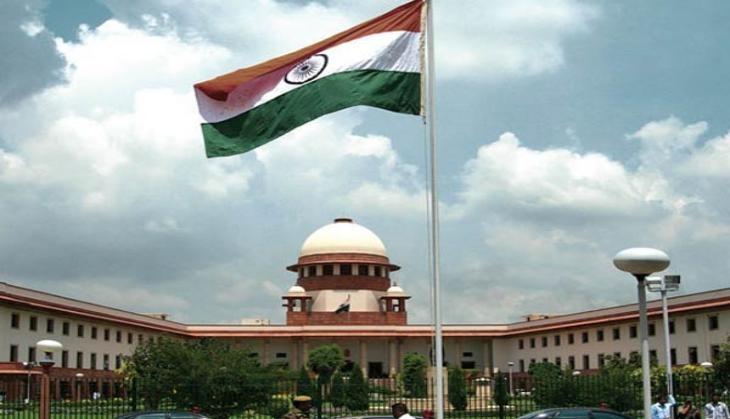
CASE COMMENTARY - NATIONAL LEGAL SERVICE AUTHORITY VERSUS UNION OF INDIA (AIR (2014) 5 SCC 438).

CASE COMMENTARY – NATIONAL LEGAL SERVICE AUTHORITY VERSUS UNION OF INDIA (AIR (2014) 5 SCC 438).

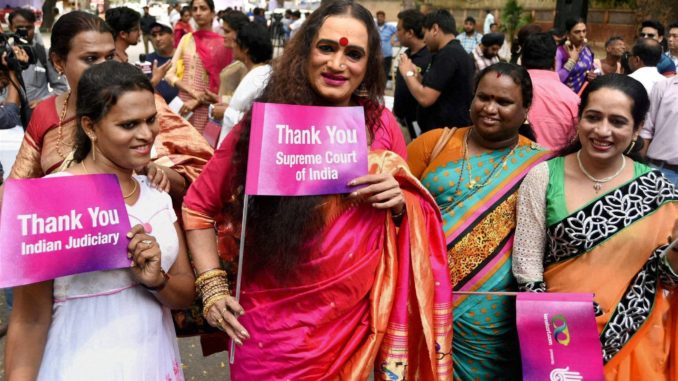
        (DECLARATION OF TRANSGENDER PEOPLE AS THE ‘THIRD GENDER’ BY SUPREME COURT OF INDIA AND PROVIDING THE TRANSGENDER PEOPLE WITH GENDER RECOGNITION)

Author – Sadaf, Student of Kristu Jayanti College of Law.

BEST CITATION – Sadaf, CASE COMMENTARY – NATIONAL LEGAL SERVICE AUTHORITY VERSUS UNION OF INDIA (AIR (2014) 5 SCC 438), INDIAN JOURNAL OF LEGAL REVIEW (IJLR), 3 (1) OF 2023, PG. 796-800, ISSN – 2583-2344.

ABSTRACT

                 The constitution has enforced certain rights to each individual for their recognition in the society so that they can live life with dignity. There are people who are specified as ‘third gender’ in the Indian constitution who were discriminated, humiliated and disgraced because of their identity. National legal service authority V. UOI is a landmark supreme court judgement which was laid down to recognise the transgender community as the ‘third gender’ to provide them with fundamental rights and identification on the same aspects of men and women. Due to the lack of legislation protecting the rights and recognition of the transgender people, this community faced a lot of discrimination because gender recognition is important in various fields like rights in relation to marriage, adoption, succession, taxation and other important aspects. This article shall emphasize on how the judgement had given the right to be identified and categorized as ‘third gender’ to the transgender community.         

KEYWORDS: Transgender, Gender regognition, Supreme court, Right to life and personal liberty, Gender Identity etc.


Right to Counsel: Limited or Unfettered?

Right to Counsel: Limited or Unfettered?

Authors – Akshat Khanna & Isha, Students at Jindal Global Law School

BEST CITATION – Akshat Khanna & Isha, Right to Counsel: Limited or Unfettered?, INDIAN JOURNAL OF LEGAL REVIEW (IJLR), 3 (1) OF 2023, PG. 790-795, ISSN – 2583-2344.

Abstract

In India, the right to counsel has always been neglected, with only limited applicability in the pre-trial stage. Such limited access to an integral right is detrimental to the accused, who is unaware of his legal rights. The lack in legal knowledge possessed by the common man opens the possibility to a plethora of mistreatment, abuse and exploitation by the police who take undue advantage of the prevalent illiteracy in the society. Corrupt practices shame the fair justice and trial system promised to the citizens of the democracy, as their fundamental rights are violated by state authorities themselves. In light of these violations the court imposes guidelines on the police regarding the presence of the lawyer in a pre-trial stage. However, these guidelines fall a step too short, as the presence is merely limited, and need not be for the entirety of the interrogation and other pre-trial procedures. This limited nature doesn’t prevent exploitation, but merely postpones it to times wherein the lawyer is not present. Thereby these provisions do not reduce the absolute nature of the power possessed by the police during investigation. This paper explores the need for concrete legislative action and establishment of punitive measures regarding enforcement of the right to counsel in the pre-trial stage.

Key Words: Right to counsel; Police exploitation; Rights of accused; Pre-trial procedures; Interrogation and investigation.

Constitutional Analysis on Railway Protection Force Amendment Act, 1985 and Railway Protection Force Rules, 1987

Constitutional Analysis on Railway Protection Force Amendment Act, 1985 and Railway Protection Force Rules, 1987

Author – I.Paulraj, LL.M, Government Law College, Tiruchirappalli, Tamilnadu.

BEST CITATION – I.Paulraj, Constitutional Analysis on Railway Protection Force Amendment Act, 1985 and Railway Protection Force Rules, 1987, INDIAN JOURNAL OF LEGAL REVIEW (IJLR), 3 (1) OF 2023, PG. 778-789, ISSN – 2583-2344.

ABSTRACT:

                This study attempt to review the Constitutional validity of Railway Protection Force Amendment Act 1985 and Railway Protection Force Rules 1987. The Railway Protection Force established for the purpose protection Railway Property and recruited by Railway Board. The Railway Protection Force employees come under civil servants and they have Right to form Association or Union. The General Manager of Southern Railway has banned the Southern Railway Protection Force Member Association for the reason states that employees are comes under Armed Force. The research question is whether Railway Protection Force is an Armed Force or Civil Service. The article reveals that the Railway Protection Force employees are civil servants and not an Armed Force with the review of various related judgements delivered by Hon’ble Supreme Court and High Courts and Parliament debates about the Railway Protection Force.Keywords; Constitution of India- Railway Protection Force Act 1957- Railway Protection Force Rules 1987- Railway Establishment Rules- Police Force Restriction Act- Central Administrative Tribunal Act 1985- Armed Force Tribunal Act 2007- Principles of Natural Justice- Civil servant rules.

“DEVELOPMENT OF THE DOCTRINE OF SOVEREIGN IMMUNITY IN ENGLAND AND INDIA- COMPARATIVE ANALYSIS”

“DEVELOPMENT OF THE DOCTRINE OF SOVEREIGN IMMUNITY IN ENGLAND AND INDIA- COMPARATIVE ANALYSIS”

Author – Neelagowri, Student at Christ (deemed to be university) Bengaluru

BEST CITATION – Neelagowri, “DEVELOPMENT OF THE DOCTRINE OF SOVEREIGN IMMUNITY IN ENGLAND AND INDIA- COMPARATIVE ANALYSIS”, INDIAN JOURNAL OF LEGAL REVIEW (IJLR), 3 (1) OF 2023, PG. 772-777, ISSN – 2583-2344.

ABSTRACT

                According to the Doctrine of Sovereign Immunity, a king is immune from punishment. Around the world, this idea has been widely adopted. King is above the Law. Throughout the period of and during the reign of the monarchy, this principle was created. Today, it is considered that this theory must have lost its lustre in this era of democracy where voters make or break governments. But the sad reality is that governments all across the world have opted to rely on this antiquated principle even after proclaiming democracy. According to the Rule of Law No one is above the law, in essence, sovereign immunity protects a government from being sued in its own courts without its permission. The British Common Law has established sovereign immunity. “Rex non potest peccare” or “the king can do no wrong,” is a legal principle. However, most international constitutions prohibit holding politicians accountable in the same way as regular people. The idea has its origins in the notion that the King of England, who exercised divine power, was impervious to wrongdoing. The courts would not permit a lawsuit against the king as a result, with a few carefully stated exceptions. The English colonisers later took this idea of sovereign immunity to the Indian colonies, and it eventually made its way into our legal system as well. Sovereign immunity, in its most basic definition, is the legal immunity enjoyed by governmental bodies. The writings of Bodin, Austin, and Hege provided the philosophical foundation for the early concepts of sovereign immunity. The article charts the development of the doctrine of sovereign immunity in India and the UK, focusing in particular on the state’s tort responsibility. The emphasis is on using case law to draw analogies and define and explain the application and repeal of this concept.

KEYWORDS: Sovereign Immunity, State, King, India, US, Doctrine

Case Commentary - Reliance Life Insurance Co Ltd & Anr vs Rekhaben Nareshbhai Rathod, Civil Appeal No. 4261 of 2019 (SC)

Case Commentary – Reliance Life Insurance Co Ltd & Anr vs Rekhaben Nareshbhai Rathod, Civil Appeal No. 4261 of 2019 (SC)

Author – DEEPTHI RODDA, RESEARCH ASSISTANT at DAMODARAM SANJIVAYYA NATIONAL LAW UNIVERSITY

BEST CITATION – DEEPTHI RODDA, Case Commentary – Reliance Life Insurance Co Ltd & Anr vs Rekhaben Nareshbhai Rathod, Civil Appeal No. 4261 of 2019 (SC), INDIAN JOURNAL OF LEGAL REVIEW (IJLR), 3 (1) OF 2023, PG. 767-771, ISSN – 2583-2344.

ABSTRACT

This case highlights the principle of utmost good faith which is one of the foundational principles, which governs of any type of insurance. A contract of insurance is one of trust, and principle of utmost good faith by emphasizing on the disclosures helps to develop a trust between the insurers and insured which will ultimately help both the parties in settling the claim when it is made. It highlights how the principle of utmost good faith has evolved over time by highlighting the related cases. The relevant statutory provisions regarding the principle of good faith has also been discussed in this paper  by referring to the domestic insurance statutes in India. Different dimensions of principle of utmost good faith have also been discussed in this paper. The duties of insurer and the insured in consonance with principle of utmost good faith have been discussed in this paper. The case is about the non-disclosure of the information regarding previous insurance policy in the proposal form

CASE COMMENT- Imax Corporation v E-City Entertainment(I) Pvt. Ltd. & Ors., (Bombay High Court)

CASE COMMENT- Imax Corporation v E-City Entertainment(I) Pvt. Ltd. & Ors., (Bombay High Court)

Author – RACHIT SHARMA, Faculty Associate at IILM University, Greater Noida

BEST CITATION – RACHIT SHARMA, CASE COMMENT- Imax Corporation v E-City Entertainment(I) Pvt. Ltd. & Ors., (Bombay High Court), INDIAN JOURNAL OF LEGAL REVIEW (IJLR), 3 (1) OF 2023, PG. 764-766, ISSN – 2583-2344.

BOMBAY HIGH COURT: The Limitation Period for seeking execution of a foreign arbitral award is the same of execution of a Decree

CASE: Imax Corporation v E-City Entertainment(I) Pvt. Ltd. & Ors[1]., (Bombay High Court, 13 November 2019)

BENCH: Single Judge Bench [G. S. Kulkarni J.]

ABSTRACT: In 2019, A Single Judge Bench of Bombay High Court clarified that the limitation period for enforcing a foreign award is twelve years from the date of the award, holding that the limitation period for foreign awards is same as that for the execution of a foreign decree as enforcement and execution proceedings are synonymous for foreign awards.

KEYWORDS: Challenge Petition, notice of motion seeking condonation of delay, Enforcement Petition, Execution Petition, period of limitation, Composite Proceedings


[1] Commercial arbitration petition no.414 of 2018

ACCUSED RIGHTS: A COMPARATIVE STUDY OF ACCUSED AND VICTIM RIGHTS IN INDIA

ACCUSED RIGHTS: A COMPARATIVE STUDY OF ACCUSED AND VICTIM RIGHTS IN INDIA

Author – Priya Yadav, Student at Deen Dayal Upadhyay Gorakhpur University

BEST CITATION – Priya Yadav, ACCUSED RIGHTS: A COMPARATIVE STUDY OF ACCUSED AND VICTIM RIGHTS IN INDIA, INDIAN JOURNAL OF LEGAL REVIEW (IJLR), 3 (1) OF 2023, PG. 756-763, ISSN – 2583-2344.

ABSTRACT

As Democracy and Rule of Law are fundamentals of the Indian constitution, the concept of fair trial is a constitutional mandate and the basic principle of criminal law revolves around the Natural Justice which gives the accused equal opportunity to present their side of the story along with the victim. The accused is also granted certain rights, provisions. In this paper, the author has gone through various journals, internet sources and research documents to present the various rights given to the accused and victim under the Indian legal system. Discussing all the rights given to accused and victims in India, the author has further comparatively analysed the rights enjoyed by the accused and the victim. Concluding with a conclusion, few suggestions are given to fill the gap between the provision and the practical application of the rights.

The Concept of Originality under the Copyright Law

The Concept of Originality under the Copyright Law

Author – Aashi Jain, Student at National Law University and Judicial Academy

BEST CITATION – Aashi Jain, The Concept of Originality under the Copyright Law, INDIAN JOURNAL OF LEGAL REVIEW (IJLR), 3 (1) OF 2023, PG. 751-755, ISSN – 2583-2344.

Abstract

Originality in works protected by copyright is a requirement of every copyright regime in existence. The definition of “original” as it is generally understood is “new” or “not done before.” There has been more than one ideology that has attempted to define “originality,” but there isn’t a clear-cut, universal definition of the term and hence various doctrines have been introduced. The researcher in this article tries to talk about the concept of originality and its application in different jurisdictions. However, the researcher also believes that while giving copyright the standard set for originality should not be way too high so that it becomes difficult to get the right nor shall it be too low so that anyone by making a few modifications qualify for the copyright protection as this will only lead to the less qualified works. Hence, it is utterly important that a balance between the two is done so as to maintain decorum.

Keywords: Copyright, producer, original, doctrine, creative

CHALLENGES OF COMMERCIAL ELECTRONIC ARBITRATION IN E-COMMERCE

CHALLENGES OF COMMERCIAL ELECTRONIC ARBITRATION IN E-COMMERCE

Author – UMA NARAYANAN, ASSISTANT PROFESSOR at PRESIDENCY UNIVERSITY

BEST CITATION – UMA NARAYANAN, CHALLENGES OF COMMERCIAL ELECTRONIC ARBITRATION IN E-COMMERCE, INDIAN JOURNAL OF LEGAL REVIEW (IJLR), 3 (1) OF 2023, PG. 743-750, ISSN – 2583-2344.

ABSTRACT

This paper talks about E-Commercial Arbitration and how online dispute resolution methods and in the world of E-commerce today that people purchase things it plays a very important role. This paper also talks about how the consumer should be aware of the facts regarding the process and his rights and remedies. E-Commercial contracts have become a major part in everyone’s life or just say it is unavoidable as the public today prefer to purchase majority through online and do their shopping online as it is very easy and home delivery is also provided. The services provided by such e-commerce chains are also subject to certain terms and conditions. The e-commerce may not always have a proper jurisdiction as the supply place and the recipient place may not be the same and basically both parties wouldn’t like to travel for such disputes. In all this case the online arbitration plays a great role and also it is easier, less time consuming and keeps in mind interest of both the parties while making an award. The submission of evidences is also easier in such cases. Online Dispute Resolution has become a important part of the ADR system in today’s fast pace of life.Keywords: Online arbitration, virtual arbitration, electronic means of communication, New York Convention of 1958, UNCITRAL Model Law on International Commercial Arbitration, seat of arbitration, agreement in writing

NARCOANALYSIS: CONNECTING SCIENCE WITH CRIMINAL JUSTICE

NARCOANALYSIS: CONNECTING SCIENCE WITH CRIMINAL JUSTICE

Author – Khusbu Priyadarshinee, Student at National Law University, Odisha

BEST CITATION – Khusbu Priyadarshinee, NARCO ANALYSIS: CONNECTING SCIENCE WITH CRIMINAL JUSTICE, INDIAN JOURNAL OF LEGAL REVIEW (IJLR), 3 (1) OF 2023, PG. 737-743, ISSN – 2583-2344.

ABSTRACT

Criminal justice system in India is conventional but criminals today are evolving, so we need to reconfigure the entire system. There needs to be incorporation of both science and the law, i.e., addition of scientific evidence to aid in the efficient administration of justice. The system of justice has become increasingly dependent on medical science to administer justice, yet it is still debatable to what extent this medical information should be considered admissible. An effort in this article to show so that this kind of evidence can be used for effective administration of justice. With the recent Shraddha Walker Murder Case, where the accused named Aftab Poonawala has murdered his live-in-partner and the court has ordered for the narcoanalysis test, the debate as to whether the usage of such procedures in investigation lead to violation of fundamental rights of the accused has surfaced again. This Article states the position of Narcoanalysis in India starting with its origin, the procedure, and its legality under the Indian Evidence Act. It also discusses about its admissibility as scientific evidence in Court with help of cases where such procedure has aided in investigation.