
E-FILING OF CASES AS A TOOL FOR JUDICIAL DIGITALIZATION: OPPORTUNITIES AND CHALLENGES IN INDIA
ABSTRACT
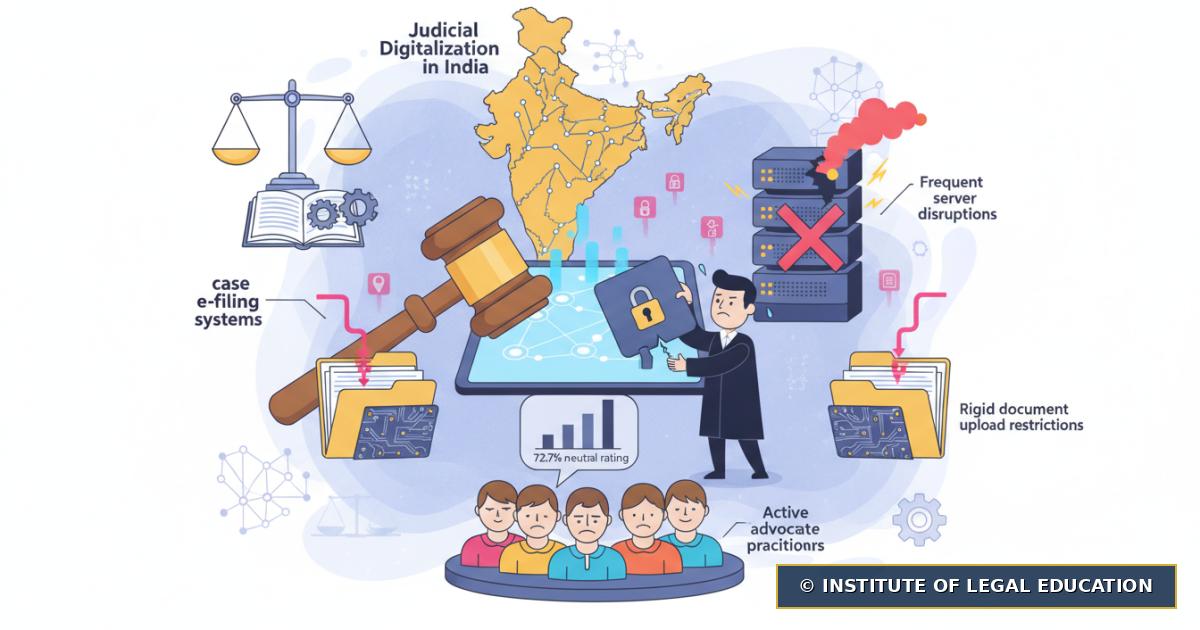
The foundation of Phases II and III of India's e-Courts Integrated Mission Mode Project is the digitalisation of judicial operations via Electronic Filing (e-Filing). This empirical non-doctrinal study explores the operational effectiveness, structural friction, and human-computer interactions inside Indian court e-Filing platforms, going beyond normative legal analysis and statutory demands. This study offers practical empirical insights into digital court administration based on a systematic empirical survey of active advocate practitioners (N=11) and a thorough qualitative thematic analysis of registry procedures. According to the survey, systemic satisfaction is still stuck in a "average usability trap" (72.7% neutral rating), despite baseline adoption being absolute (100% active usage). Rigid document upload restrictions (45.5%) and frequent server disruptions (90.9% agreement on reason) were noted as major operational friction factors. The foundation of Phases II and III of India's e-Courts Integrated Mission Mode Project is the digitalisation of judicial operations via Electronic Filing (e-Filing). This empirical non-doctrinal study explores the operational effectiveness, structural friction, and human-computer interactions inside Indian court e-Filing platforms, going beyond normative legal analysis and statutory demands. This study offers practical empirical insights into digital court administration based on a systematic empirical survey of active advocate practitioners (N=11) and a thorough qualitative thematic analysis of registry procedures. According to the survey, systemic satisfaction is still stuck in a "average usability trap" (72.7% neutral rating), despite baseline adoption being absolute (100% active usage). Rigid document upload restrictions (45.5%) and frequent server disruptions (90.9% agreement on reason) were noted as major operational friction factors.