
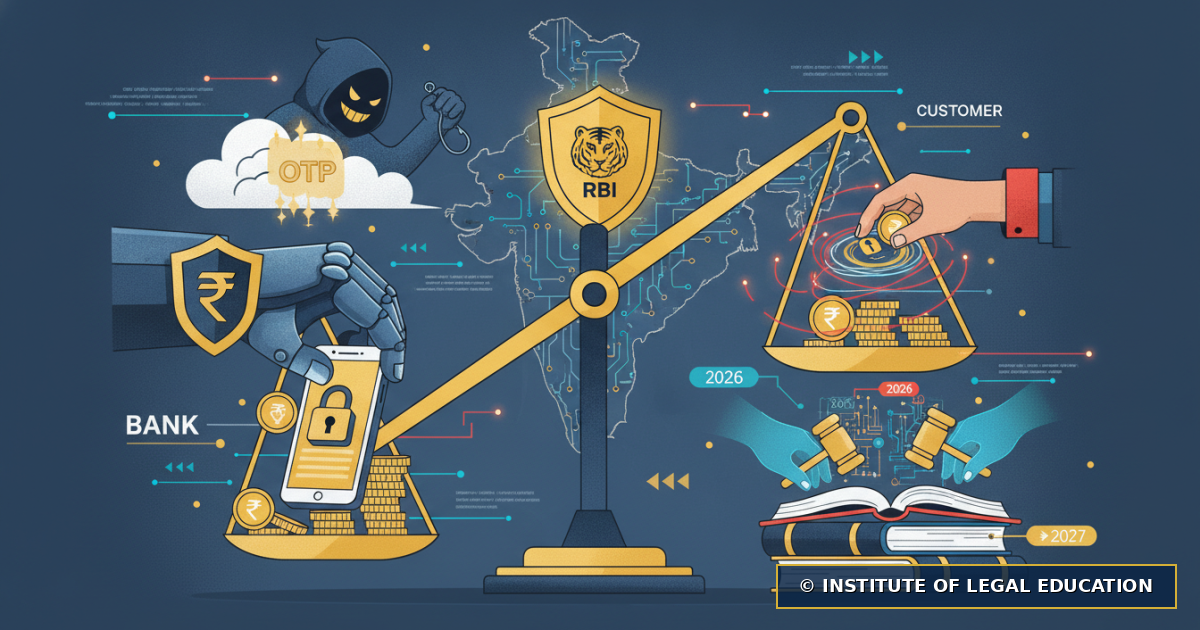
Digital Banking Fraud in India: Bank Liability and Customer Protection
A customer who disputes an electronic transfer may be asked whether an OTP was used or a password was shared. Those questions matter, but they do not explain the whole transaction. A payment may pass the bank’s authentication process even though a fraudster initiated it, while a customer may personally instruct a transfer after being deceived about its purpose. The legal consequences of these situations differ. This paper examines how Indian law distributes the resulting loss between customers, banks and payment intermediaries. It adopts a doctrinal method, reading legislation, RBI directions and judicial decisions alongside selected United Kingdom and United States materials. The analysis distinguishes the rules applicable on 14 November 2026 from the RBI amendments scheduled to apply from 1 January 2027. It finds that India already has substantial customer protection and a burden on banks to prove customer liability. The difficulty lies in classifying disputed payments and turning that burden into a reasoned examination of the evidence. The paper proposes a structured determination that identifies who initiated the transfer, examines the bank’s safeguards, connects any alleged customer negligence to the loss and separates losses arising before and after notice. It also argues for accessible disclosure of transaction records and a clearer treatment of payments induced by deception. Reimbursement should follow the applicable legal category and established facts; neither the use of an OTP nor the customer’s denial should decide the claim by itself.