
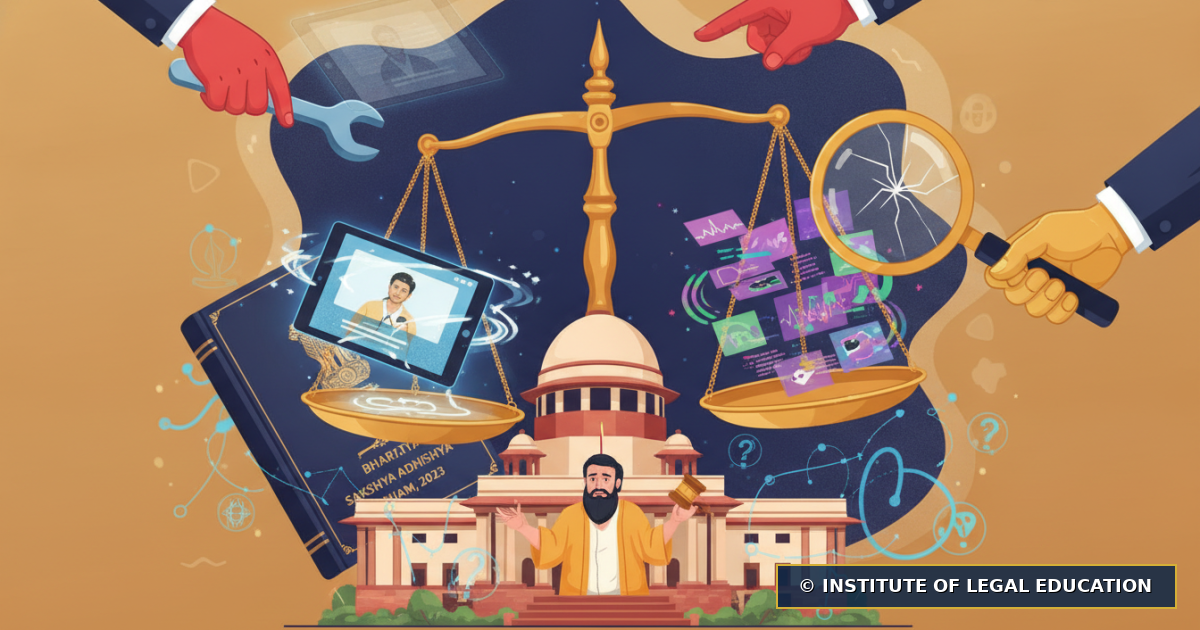
Deepfakes And The Admissibility Of Digital Evidence: Challenges Under Indian Law
Advances in artificial intelligence now allow anyone with the right tools to produce strikingly realistic audio, images and video showing people say or do things they never did. This kind of content, usually called a deepfake, causes trouble for evidence in two ways. A fabricated clip can be passed off as a genuine record, and a genuine recording can just as easily be waved away as machine-made. The second risk deserves real attention, because it erodes the probative value of authentic digital material and leaves courts unsure what to trust. This paper looks at how deepfake-related digital material is admitted and assessed under Indian law, focusing on the Bharatiya Sakshya Adhiniyam, 2023 (BSA). It studies Sections 61, 62 and 63 of the BSA, the role of expert opinion under Section 39, and the lasting relevance of the Supreme Court’s rulings in Anvar P.V. v. P.K. Basheer and Arjun Panditrao Khotkar v. Kailash Kushanrao Gorantyal. It also turns to the Information Technology Act, 2000 and the 2026 amendments to the Information Technology (Intermediary Guidelines and Digital Media Ethics Code) Rules, 2021, keeping the regulation of online content separate from the question of judicial proof. The argument made here is that meeting the statutory requirements, including certification, may satisfy the conditions for receiving an electronic record, yet it does not settle whether the event shown really happened or whether the recording was synthetically altered. A dependable approach needs the original data to be preserved, a documented chain of custody, forensic examination proportionate to the dispute, expert evidence that explains itself, and a fair chance for the other side to challenge the material. The paper closes with recommendations for a technology-neutral and procedurally fair framework, one that shields courts from fabricated evidence without letting bare claims of manipulation undermine genuine recordings.